
ACI Prensa Staff, Dec 8, 2025 /
08:00 am
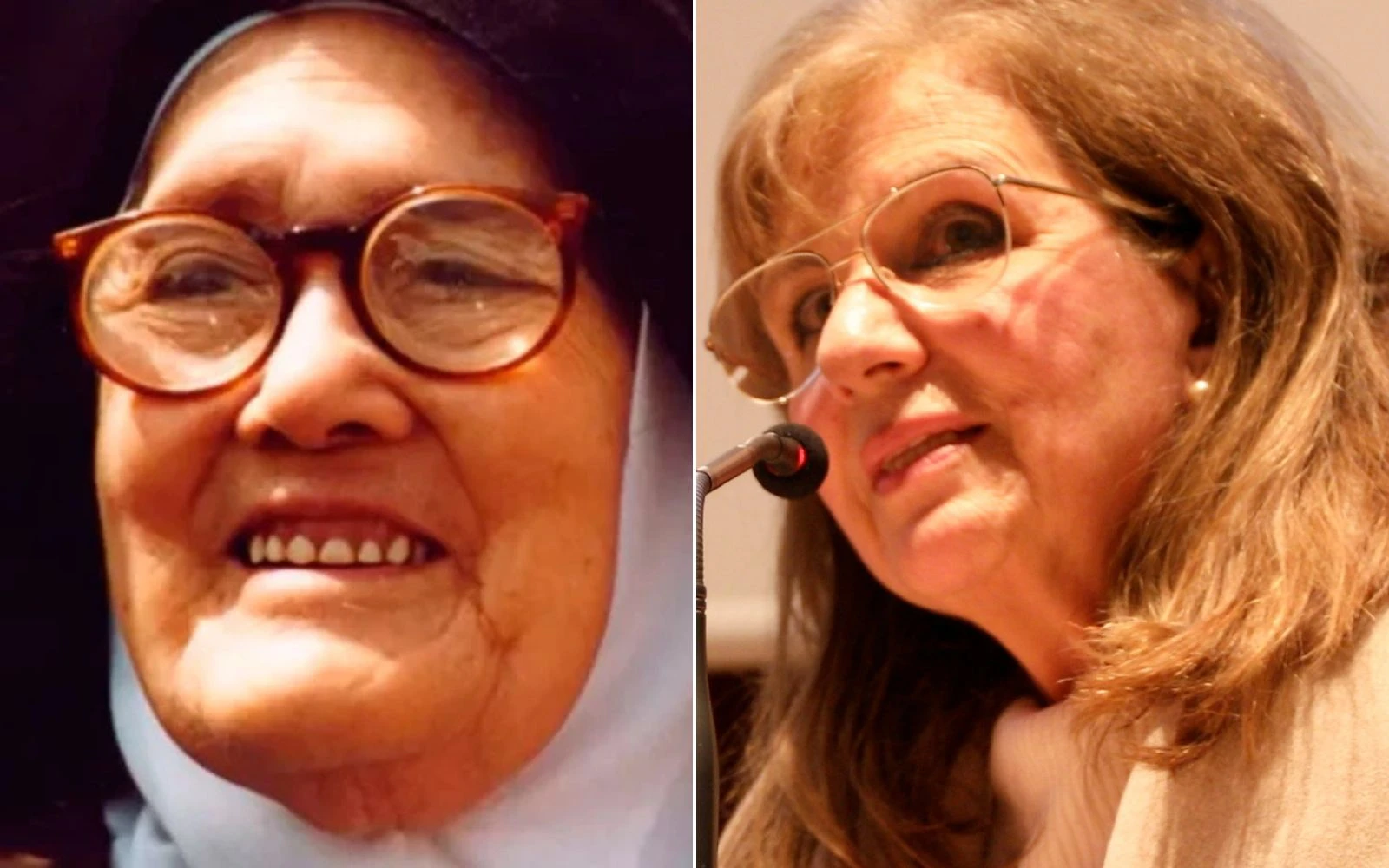
“I was her doctor for her body, but she was my spiritual doctor,” said Dr. Branca Pereira Acevedo while describing her relationship with Sister Lucia dos Santos, one of the visionaries of Our Lady of Fátima, whom she cared for during the last 15 years of Sister Lucia’s life.
Lucia — the only one of the three shepherd children still alive at the time — moved in 1925 to the Spanish city of Tui in Pontevedra province, where she lived for more than a decade before returning to Portugal and professing her vows as a Carmelite nun in 1949. In this city in northwestern Spain, the visionary received “a new visit from heaven” with apparitions of the Virgin Mary and the child Jesus.
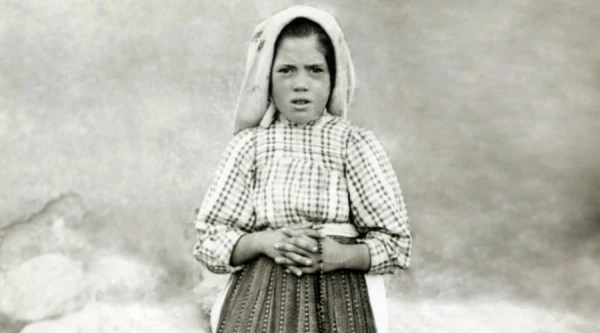
Dec. 10 marks the centenary of these apparitions, an occasion for which the Holy See has granted a jubilee year in the place where they occurred, the “House of the Immaculate Heart of Mary,” in reference to the devotion that the little shepherdess of Fátima promoted until the end of her days.
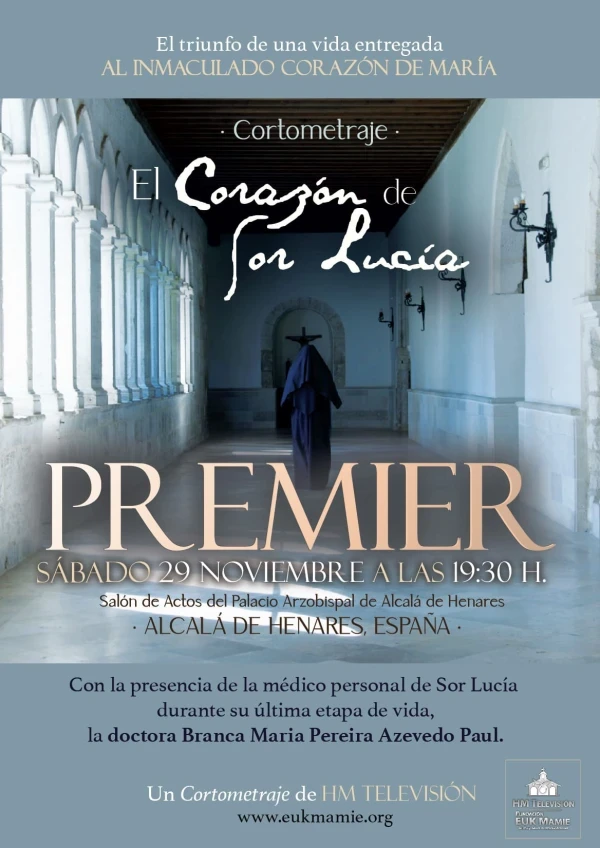
A witness to that fervent testimony was her physician, Pereira, who shared her experiences Nov. 29 at the presentation of the short film titled “The Heart of Sister Lucia” at the archbishop’s palace in Alcalá de Henares. This film is a project of HM Television.
Pereira accompanied Sister Lucia at the Carmelite convent in Coimbra, Portugal, until her death on Feb. 13, 2005, at the age of 97, a time during which she experienced a profound conversion thanks to the example and witness of her patient. “It was a period of my life that is difficult to explain, due to the intensity of the experiences I had with her,” the Portuguese doctor said.
Sister Lucia’s humility and good humor
Pereira described the visionary’s personality in detail, like someone describing a dear childhood friend: “She was a person just like all of us; those who didn’t know her wouldn’t have distinguished her from anyone else. There was nothing proud or vain about her; she used to say that she was simply an instrument of God.”
The doctor particularly emphasized her humility and obedience, especially to God and to the Carmelite order, “which she loved so much.”
At that time, Pereira said her faith had grown cold: “I didn’t go to Mass, I didn’t receive the sacraments… my career, my work, and my family took up all my time, and I used that as an excuse not to go to church,” she explained.
Serenity and steadfastness in difficulties
“She taught me that through God and through the Church, we can do everything well. I experienced very close moments with her, I think even closer than with the sisters she lived with,” the doctor said.
One of the most significant moments she experienced alongside Sister Lucia was the publication in 2000 by the Vatican’s Secretary of State at the time, Cardinal Angelo Sodano, of the third part of the secret of Fátima, revealed on July 13, 1917, to the three shepherd children in Cova da Iria and transcribed by Sister Lucia in 1944.
The doctor witnessed what she called the seer’s serenity and steadfastness in the face of the insistence of those who claimed that part of the secret still remained to be revealed. “She told us that what mattered most was written in the word of God, in the Bible. She encouraged us to obey God, which was what was truly important, and that everything else was secondary.”
Even at these times, the doctor revealed, Sister Lucia maintained a cheerful disposition. “Her good humor was very constant. She lived in faithfulness and truth. And she remained that way, lucid and faithful until the hour of her death, at which I was present.”
(Story continues below)
Subscribe to our daily newsletter
“She received many insulting letters at the Carmelite convent, from various parts of the world. But she said that there was no problem, that we had to pray for those people, that they were children of God, so that they would convert,” she commented.
A beacon of light that illuminates all of humanity
Pereira shared that Sister Lucia prepared for the beatification of her cousins, the shepherd children Jacinta and Francisco Marto, “with an intensity and an indescribable joy.” Since that ceremony in 2000, presided over by Pope John Paul II in Fátima, Sister Lucia seemed “more joyful and more transcendent” than ever. “She was always aware of her physical limitations and fulfilled her duties, but she seemed totally detached from this world,” her doctor related.
In the final stages of Sister Lucia’s life, Pereira recounted, the visionary always remained cheerful, never ceasing to be attentive to those around her, despite her suffering. Up to her last days, she noted, Sister Lucia lived a life of prayer and penance “to spread the message that Our Lady had asked of her: the consecration to her Immaculate Heart on the first five Saturdays of the month.”
“The Virgin asked her to make reparation for offenses and outrages and that her Immaculate Heart be venerated,” the doctor recalled. She also had the mission of praying for the Holy Father: “She shared a very intense friendship and a real intimacy with St. John Paul II,” Pereira noted.
“The Heart of Sister Lucia” will premiere in Spanish on YouTube on Dec.10, the centenary of the apparitions in Pontevedra, at 9:30 p.m. local time in Spain. The film shows how the simple woman led an intense battle in which there was no shortage of adversities, “becoming for the popes and for the entire Church a beacon of light that will illuminate all of humanity.”
This story was first published by ACI Prensa, CNA’s Spanish-language news partner. It has been translated and adapted by CNA.

Almudena Martínez-Bordiú is Rome correspondent for ACI Prensa and EWTN.