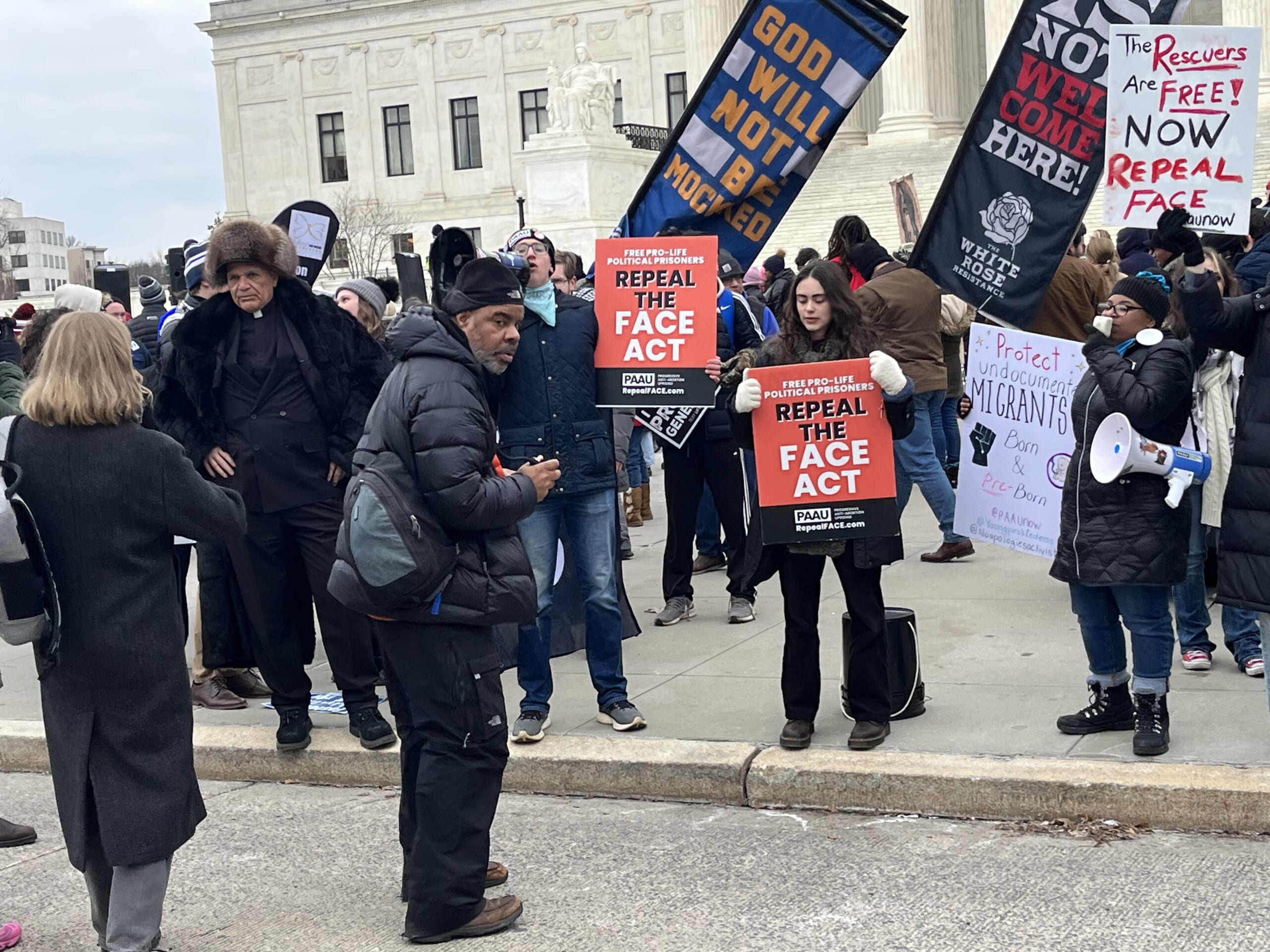
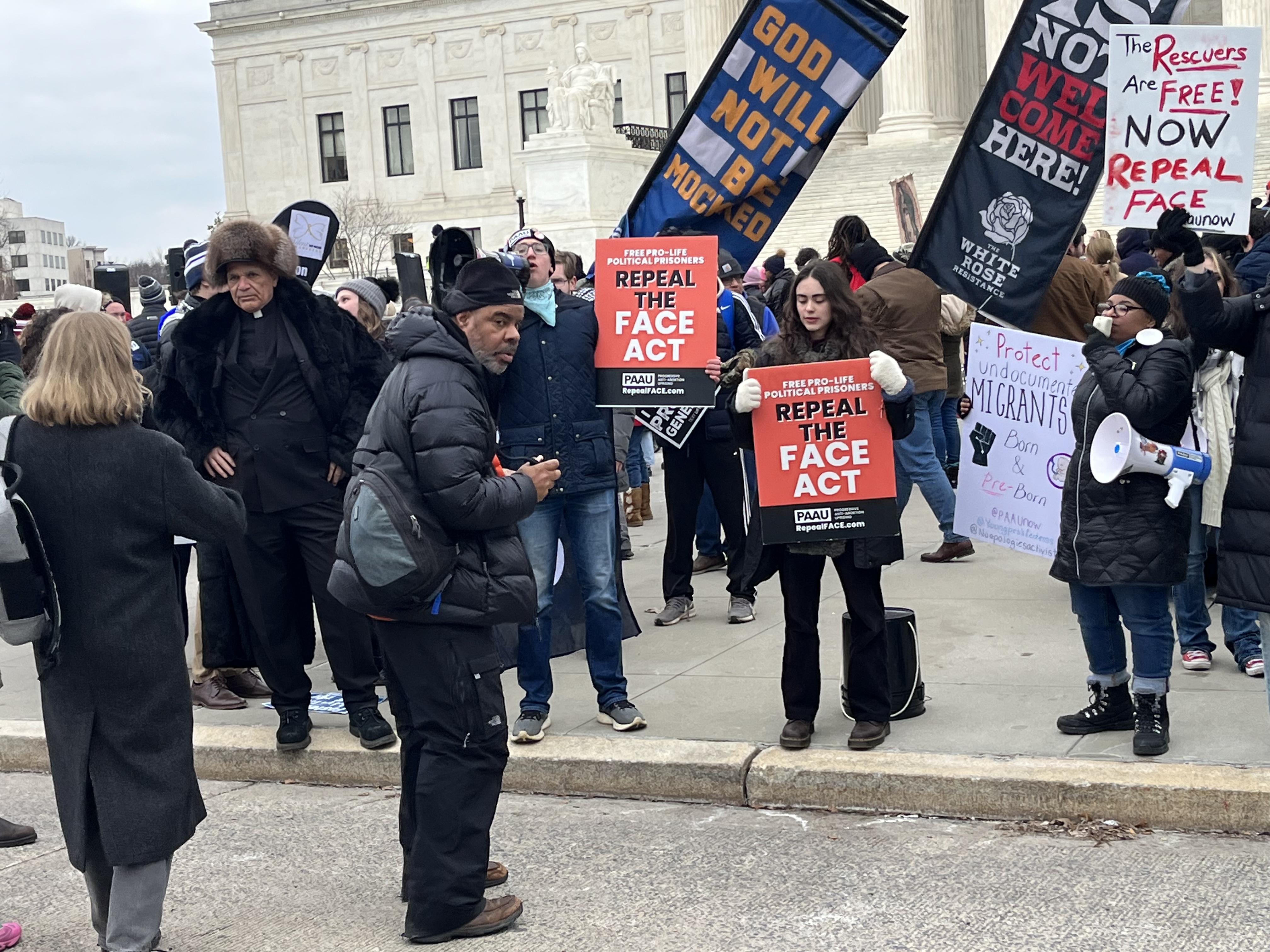
In a virtual panel hosted by the conservative Federalist Society on Friday, three lawyers questioned the constitutionality of the Freedom of Access to Clinic Entrances (FACE) Act and discussed the alleged selective enforcement against pro-life activists.
The FACE Act, which became law in 1994, imposes federal criminal penalties on people who use physical force or intimidation to interfere with access to abortion clinics, pro-life pregnancy centers, and houses of worship.
Under former President Joe Biden’s administration, enforcement focused mostly on pro-life advocates, who were later pardoned by President Donald Trump. Under Trump, it has been used more sparingly, but it was invoked to charge people who staged protests and a church and a synagogue.
Matthew Cavedon, director of the Project on Criminal Justice at the libertarian Cato Institute, argued that the FACE Act is unnecessary and unconstitutional. He said “most police powers are exercised at the state level — not the federal level,” which is where he thinks the enforcement of those violations should be handled.
“States can absolutely respond to that with criminal charges, and it often is appropriate to do so,” he said, noting that every state has laws that protect private property rights and enforce criminal trespass violations.
Cavedon said the federal government “can step in in order to enforce people’s rights” if states are failing to protect them. However, without proof of such failures at the state level, he argued “this is not something the federal government can proactively step in and federalize.”
“I don’t think it’s constitutional because I don’t see what enumerated power of Congress justifies it,” he said.
Congress justifies the law based on its right to regulate interstate commerce, which lawmakers often cite to justify federal intervention. Cavedon called the reasoning “absolutely bonkers” and cautioned against such a broad interpretation of the commerce clause.
Erin Hawley, who serves as counsel at Alliance Defending Freedom and has argued cases at the U.S. Supreme Court, also said she has “serious constitutional concerns with the FACE Act.”
In addition to the concerns raised by Cavedon, she said it should be evaluated for its “selective’ enforcement against pro-life advocates and courts should determine “whether this statute has been evenly applied.”
“It has been dramatically targeted at pro-life individuals who have been protesting, most of them peacefully, at abortion clinics,” Hawley said.
She specifically cited the prosecution of Eva Edl, a survivor of a Soviet-run concentration camp, who was sentenced to three years of probation at the age of 87. Other pro-life advocates were given prison sentences that ranged from a few months to several years.
“If it’s going to be enforced, it should … [be] enforced equally,” Hawley said.
Jeremy Dys, senior counsel for First Liberty, acknowledged the constitutional concerns but said federal courts have consistently upheld the constitutionality of the law and he doubts Congress would repeal it, saying: “The question’s probably completely off the political table.”
If the law remains in place, he said enforcement should “stop being dis-equal” and prosecutors should enforce it in a balanced way.
Dys cited the Trump administration’s enforcement of the FACE Act against protesters who entered a church in St. Paul, Minnesota, which prompted charges against protesters and journalist Don Lemon. Dys said the video shows protesters were “agitating through intimidation or interference,” which is a proper justification for bringing charges.
“The law has not been faithfully applied,” he said.
In 2025, Rep. Chip Roy, R-Texas, introduced a bill to repeal the FACE Act. The bill failed to get a full vote on the floor of the House of Representatives. Other legislative attempts have also had little success.