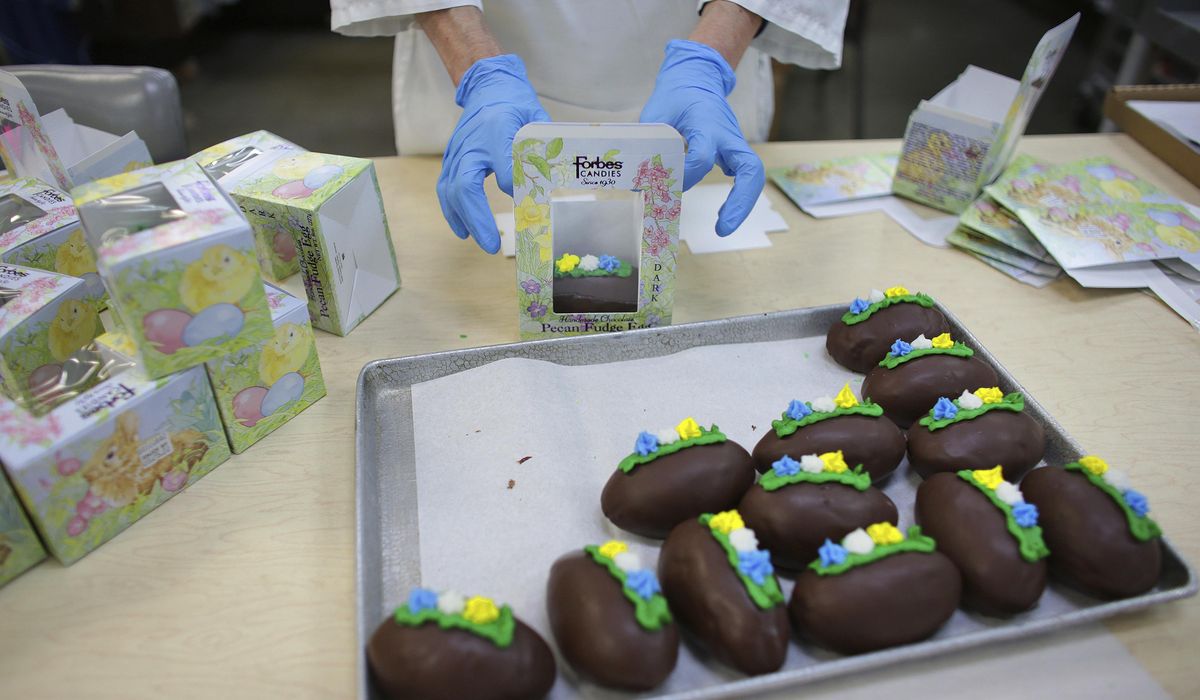
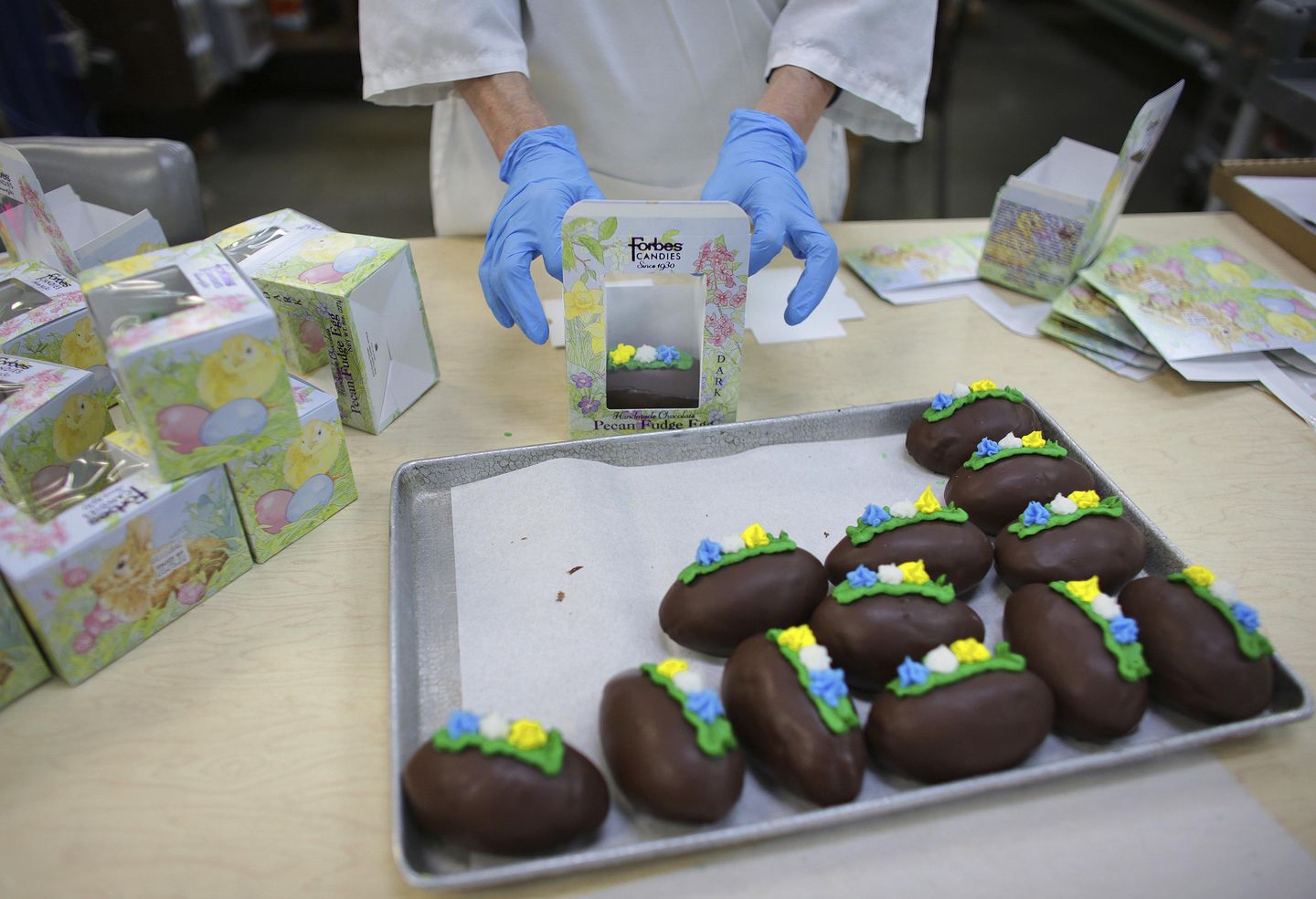
Easter Sunday has always carried profound religious weight for Christians, a day commemorating the resurrection of Jesus Christ, rooted in centuries of sacred tradition. But walk into any big-box retailer in late February, and you’ll find pastel-colored aisles stocked with chocolate bunnies, foil-wrapped eggs and stuffed animals well before Holy Week arrives. The holiday’s commercial footprint has never been larger.
According to the National Retail Federation, consumer spending on Easter is expected to reach a record $24.9 billion in 2026, surpassing the previous record of $24 billion set in 2023. On a per-person basis, shoppers are budgeting a record $195.59 this year, up from the previous high of $192.01 in 2023 — roughly in line with what Americans planned to spend on Valentine’s Day. For context, total Easter spending stood at $16.4 billion in 2015, according to a National Retail Federation survey, meaning the holiday has added more than $8.5 billion in projected consumer spending over the past decade.
That trajectory reflects a holiday that has, over roughly 150 years, transformed from a solemn religious observance into one of the most significant retail events on the American calendar.
From dyed eggs to chocolate empires
The commercialization of Easter did not happen overnight. In 1828, Dutch chemist Coenraad van Houten patented a cocoa-press process that separated cocoa butter from ground cacao, a development Britannica credits as foundational to modern chocolate production. The later breakthrough of solid eating chocolate, using cocoa butter and chocolate liquor, is attributed to Fry and Sons in 1847, setting the stage for mass-produced confectionery across Europe.
John Cadbury began selling tea, coffee and drinking chocolate in Birmingham, England, in 1824, and his sons Richard and George eventually built the company into a dominant force in British confectionery. It was not until 1875 that the first Cadbury Easter eggs were made.
By the turn of the 20th century, industrial production had scaled the Easter candy market dramatically. Easter candy as a commercial institution is largely a product of industrial-age confectionery — manufacturing advances made it possible to produce novelty shapes in chocolate and sugar at scale, and the timing was built right in: Easter traditionally marks the end of Lent, when many observers give up sweets. Cadbury, Mars, founded in the 1910s, and Nestle all expanded their seasonal ranges as production costs fell and mass advertising took hold. By the early 20th century, improvements in equipment and increased demand led candy makers to produce Easter candy on a much larger scale — moving beyond handcrafted eggs to molded rabbits, birds, nests and other chocolate designs. Jelly beans became strongly associated with Easter by the 1930s, according to candy historians, as the basket tradition took firmer commercial shape.
What families are actually spending
Today, Easter is far more than a candy holiday. Food spending is expected to reach $7.5 billion nationally, followed by gifts at $3.9 billion, clothing at $3.7 billion, candy at $3.5 billion and flowers at $2.2 billion.
Candy remains the top shopping category, with 92% of consumers planning to purchase sweets, while food is close behind at 90%. Decor has emerged as one of the fastest-growing categories in recent years: according to NRF’s own trend analysis, 51% of those celebrating planned to purchase decorations in 2025, up from 41% in 2019, with total spending on those items rising from $1 billion to $1.7 billion over that period.
Even Americans who do not celebrate Easter are contributing to the total. In 2025, NRF found that 54% of non-celebrators still expected to spend an average of $25.43 per person on holiday-related items, totaling roughly $800 million. The 2026 NRF survey found a similar pattern: 54% of consumers who do not plan to participate in Easter festivities still expect to shop holiday-related sales, particularly for candy, food and apparel.
Budget-consciousness is shaping where shoppers go, if not how much they spend. Discount stores remain the most popular Easter shopping destination, with 55% of consumers planning to shop there, followed by department stores at 42% and online at 34%.
Tradition as the driver
Despite the scale of the retail machinery behind Easter, consumers largely say they are motivated by something older than advertising. Tradition is the primary inspiration for Easter-related purchasing, cited by 58% of survey respondents, followed by sales or promotions at 36% and shopping as a social activity with family and friends at 30%.
Among those celebrating Easter, 56% said they will be cooking a holiday meal, 52% said they will be visiting friends and family, and 43% said they will be attending church.
That balance, between commerce and meaning, is something NRF’s own economists have noted as a stabilizing force for seasonal retail. “While economic uncertainty remains on the minds of many, consumers are still focused on holiday celebrations like Easter,” NRF Chief Economist Mark Mathews said. “Holidays provide an important opportunity for families to reconnect and create lasting memories, even as economic conditions fluctuate.”
For candy makers, chocolatiers and big-box retailers alike, that instinct to preserve tradition — regardless of economic headwinds — has proven to be one of the most durable engines in the American retail calendar.
This article was constructed with the assistance of artificial intelligence and published by a member of The Washington Times’ AI News Desk team. The contents of this report are based solely on The Washington Times’ original reporting, wire services, and/or other sources cited within the report. For more information, please read our AI policy or contact Steve Fink, Director of Artificial Intelligence, at sfink@washingtontimes.com
The Washington Times AI Ethics Newsroom Committee can be reached at aispotlight@washingtontimes.com.








![Kamala Comes Unglued, Makes Bogus Claim About Her Landslide Loss to Trump [WATCH]](https://www.right2024.com/wp-content/uploads/2025/10/Kamala-Comes-Unglued-Makes-Bogus-Claim-About-Her-Landslide-Loss-350x250.jpg)