DHAKA, Bangladesh — As Lent calls Catholics around the world to prayer, fasting, and almsgiving, many faithful in Bangladesh are embracing a fourth practice this year: serving the country’s street children.
On a recent Sunday at Tejgaon Church in Dhaka, Pontifical Institute for Foreign Missions (PIME) missionary Brother Lucio Beninati invited parishioners to join Potho Shishu Sheba Sangathon, a volunteer-run ministry he founded nearly 20 years ago to accompany children who sleep in rail stations, bus terminals, and city sidewalks. His appeal moved dozens. In the weeks that followed, more than 50 Catholics submitted their names to begin weekly service.
“You can almost see children lying on the sidewalks everywhere in Dhaka,” said Catholic volunteer Mukta Rozario, who joined the ministry for the first time this Lent. “I always wished I could do something for them. Today, I finally played with them, talked with them, and felt so much joy. I hope to return every week.”
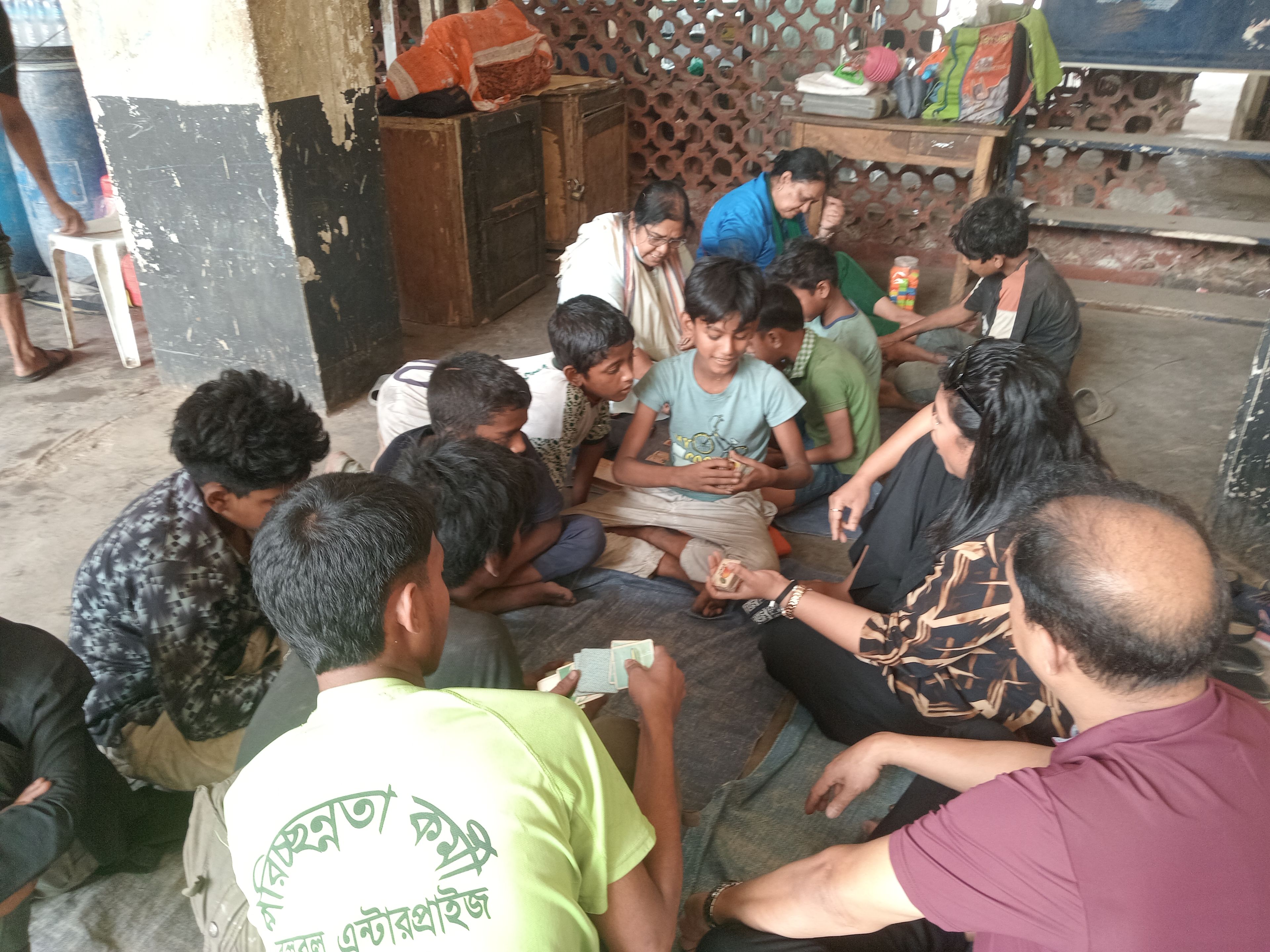
Catholic volunteers sit with street children during an activity session
in Dhaka, Bangladesh, on March 14, 2026. | Credit: Sumon Corraya
The ministry works with some of the most vulnerable children in Bangladesh — girls and boys who have fled violence at home, been abandoned by parents, or migrated alone to the city in search of work. With no guardians, many end up sleeping beside train tracks or market stalls, surviving through begging, carrying loads, or becoming entangled in petty crime, drug trafficking, or exploitation.
Teacher Maria Baroi, another new volunteer, said her time with the children transformed her Lenten journey. “These are not ‘street children’ to me. They are children living in helplessness,” she said. “If even one of them returns to a stable life because someone cared, that is a blessing.”
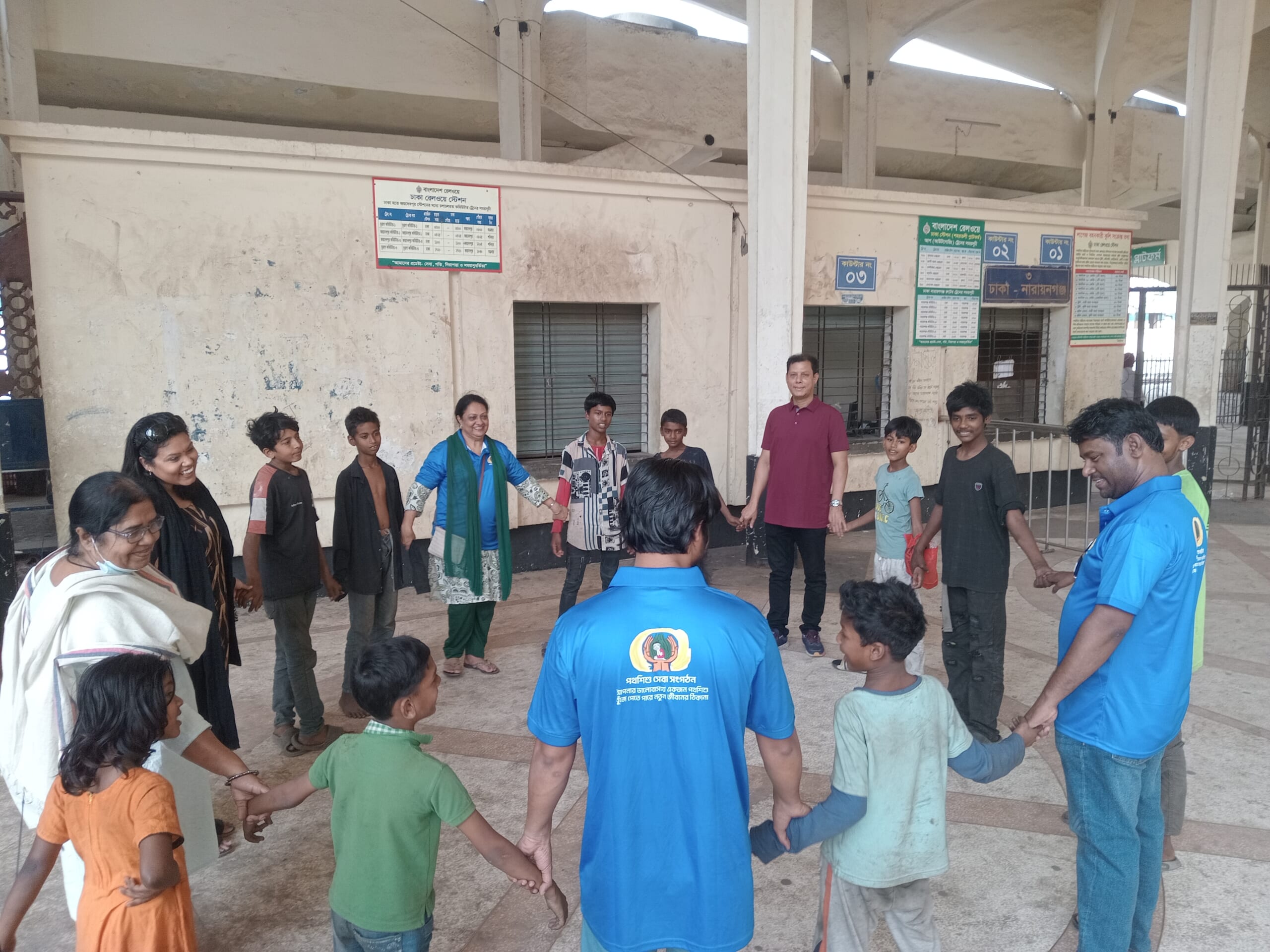
Volunteers gather at railway stations — especially Dhaka’s Kamalapur — to offer informal lessons, games, art activities, storytelling, and emotional support. They also provide basic health care, accompany sick children to hospitals, and help reunite those who want to return home. If returning home is not possible, the team arranges shelter in orphanages or rehabilitation centers.
“In the eyes of society, these children are often rejected,” said volunteer Samuel Mondol. “But serving them is pure joy. This is selfless service, and I want to continue it long after Lent.”
A mission rooted in love
Beninati, a 70-year-old Italian missionary, has spent decades working with abandoned children. Before coming to Bangladesh, he served seven years in Brazil, where he first learned street-child outreach. He later spent 24 years in Bangladesh before relocating again in 2022. From Jan. 6 to March 3 this year, he returned to Dhaka to strengthen the volunteer network.
“When parents abandon them, there is no one left to care,” he said. “But love can change a life. Good behavior, compassion, and accompaniment — these are the tools that bring a child back to normal life. Without love, no one can return.”
The organization operates without foreign funding. Every cost — from medical emergencies to sports equipment to educational materials — is covered by the volunteers themselves.
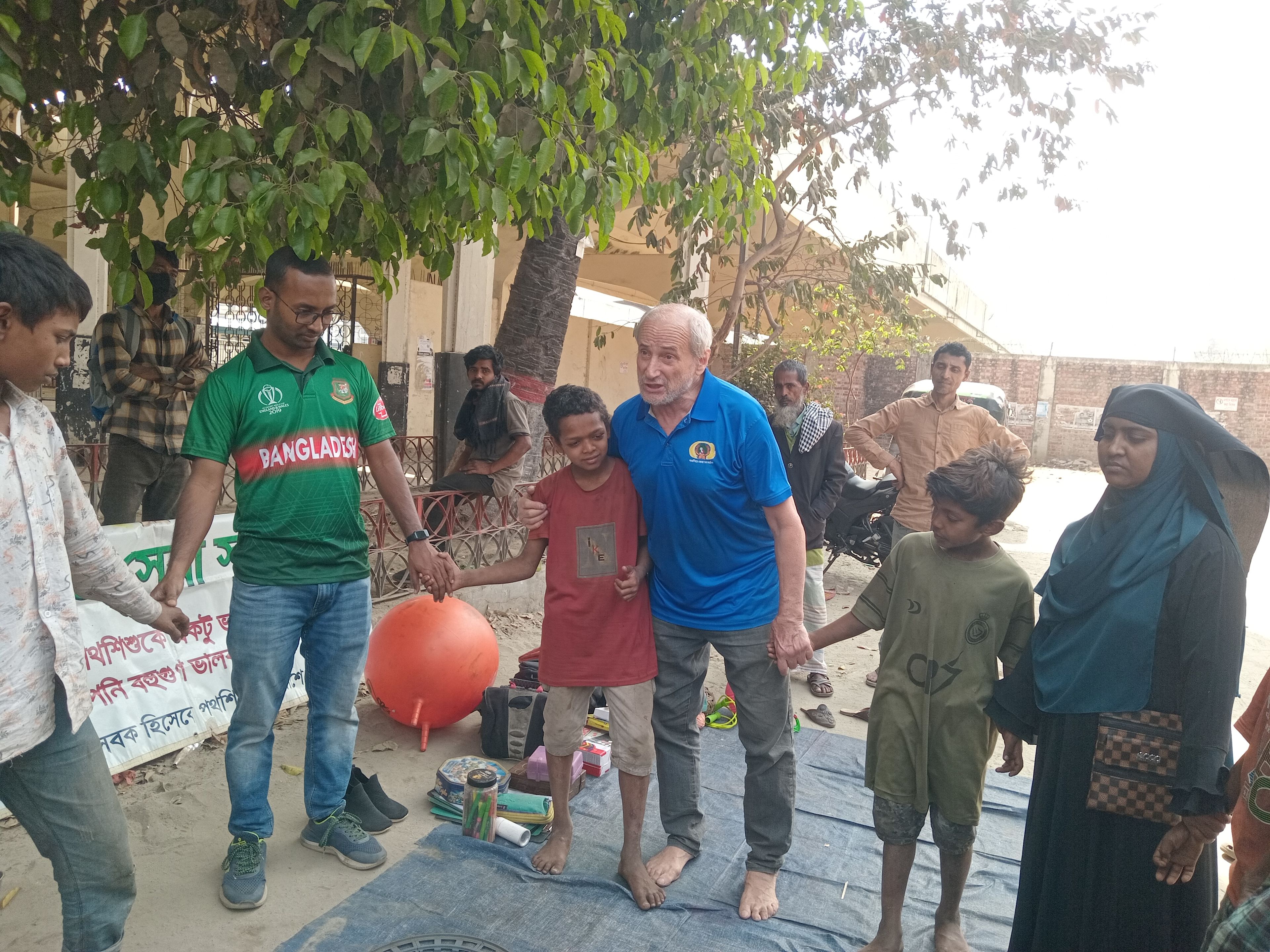
Brother Lucio Beninati during an outreach session at Kamalapur Railway Station in Dhaka, Bangladesh, on Feb. 27, 2026. | Credit: Sumon Corraya
One of the most moving testimonies involves Tamim, a young Muslim who once worked as a porter at Kamalapur Railway Station. He lost contact with his family and suffered a severe accident while getting off a train, leading to the amputation of one leg. Volunteers helped him receive treatment at the Center for Rehabilitation of the Paralyzed, where he also received a prosthetic limb and enrolled in mobile phone repair training. Last year, he played with his team in the National Wheelchair Basketball Championship — and they won.
“If it weren’t for Brother Lucio and the other volunteers, I would still be sleeping at the station,” Tamim said.
Another child, Muslim Rakib, fled home at age 8 after being beaten by his stepmother. Now 10, he regularly meets volunteers at the station. “Here we play and draw,” he said. “We get medicine. As long as they are here, we feel safe.” He hopes to go home soon.
A ministry for all religions
Although the ministry was founded by a Catholic missionary, nearly 90% of its volunteers are Muslim. The service has become a bridge of harmony in a country where Christians are a small minority.
Muslim volunteer Shafiqul Islam said the interreligious unity is one of the group’s greatest strengths. “Serving these children feels like serving God,” he said. “Here we are Muslims, Hindus, and Christians. We respect each other’s faith and work together for the welfare of children. Our harmony has grown through this service.”
Catholic teacher Bridget Corraya, who joined the ministry 20 years ago, said her motivation comes from her own story. “I grew up in an orphanage run by the Congregation of Our Lady of the Missions [RNDM Sisters],” she said. “I received so much love. Serving street children is how I repay that gift.”
Transforming Lent through service
For many Catholics in Dhaka, this Lent has taken on new meaning through their encounters with the children. Playing, teaching, and simply listening have become acts of penance, charity, and spiritual renewal.
“Lent is not only about sacrifice or fasting,” Beninati reminded the faithful. “It is also about serving — especially those who have no one.”
As more volunteers join the mission, the ministry hopes to expand its work across Dhaka. But its heart remains simple: one encounter at a time, one child at a time, offering dignity to those the world often overlooks.