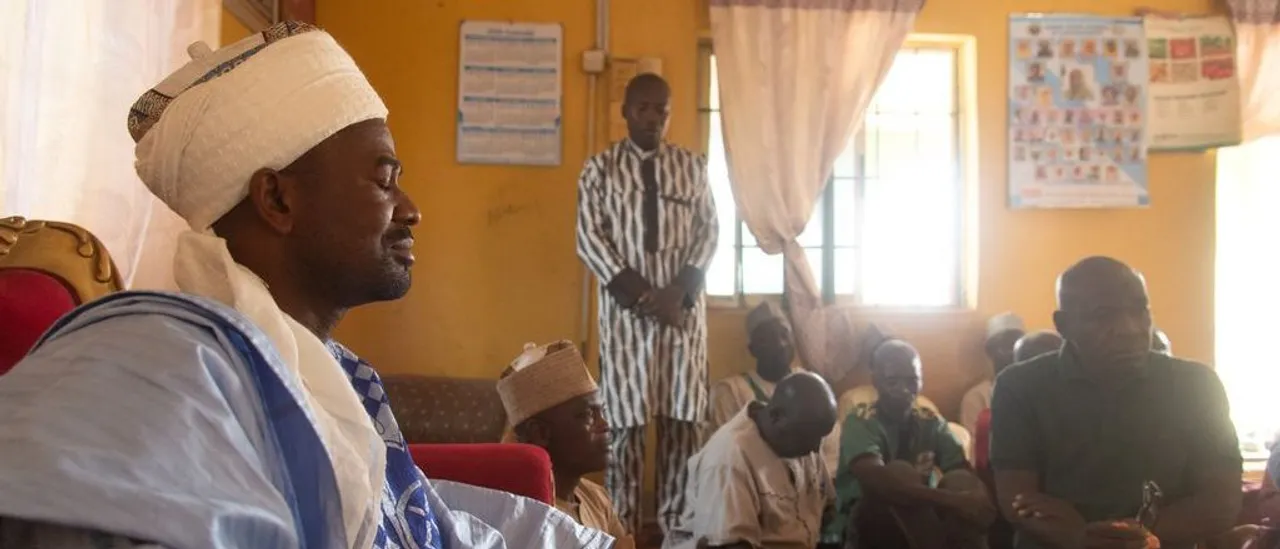
I sat in a room in Sarkin Pawa, Niger State, surrounded by Muslim and Christian men and women waiting to speak.
A Nigerian Army Major in charge of a Forward Operating Base (F.O.B.) had told them I was coming and they gathered to meet with me. Sarkin Pawa sits in a hot zone, and this F.O.B. is the last line of defense against criminal gangs of armed Fulani herders who roam the North Central states looking for victims to kidnap or even kill.
The village of Sarkin Pawa has swelled because rural families have fled inward from farms and smaller settlements toward this military F.O.B. for safety. There are too many people for the village to hold, families are sleeping on school floors, and this F.O.B. is an oasis.
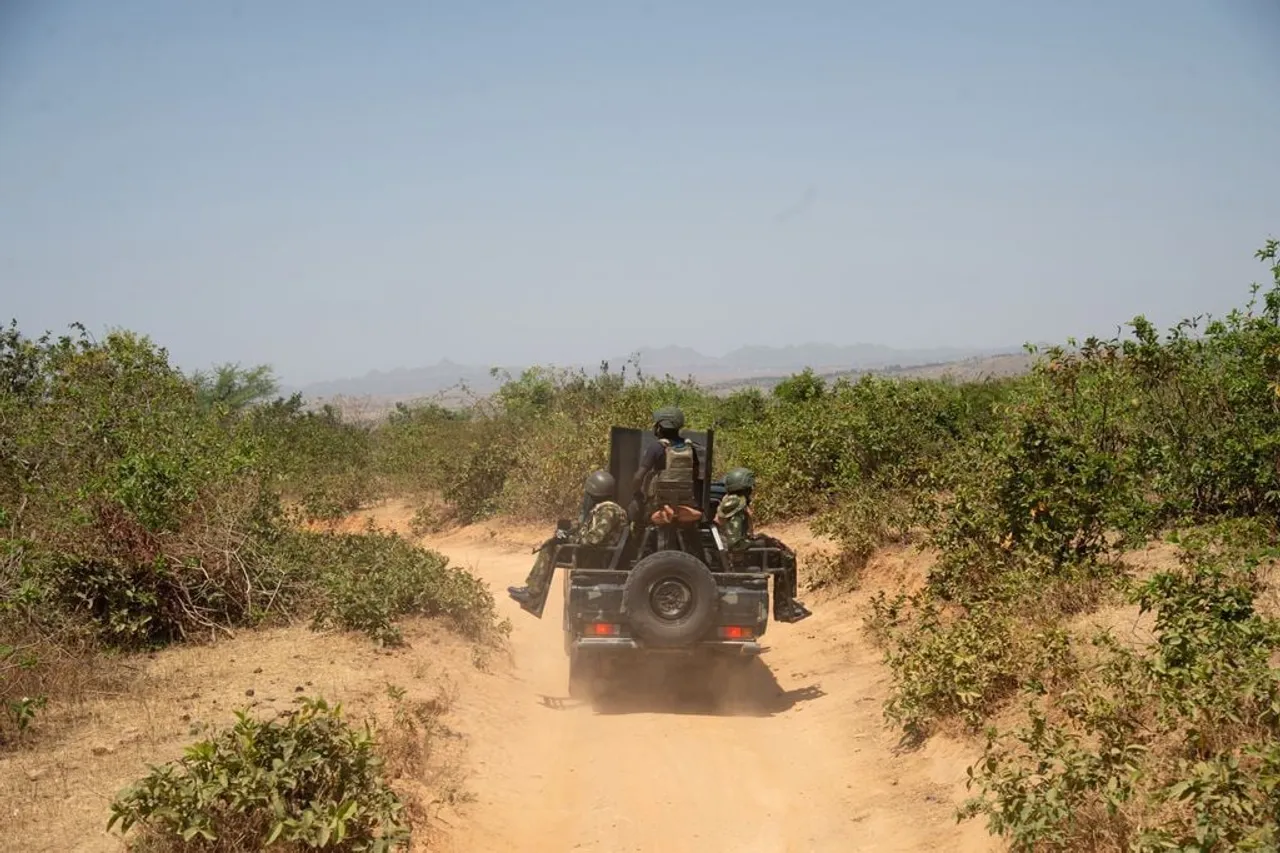
Security Forces in Sarkin Pawa/Photos by Philip Holsinger
Sarkin Pawa was my final stop on an initial month of reporting that took me through Abuja and across the North Central states of Plateau State, Benue State, Kaduna State, and Niger State. Throughout the trip, we were surrounded by capable soldiers, kind men, and tender people in villages and cities who retained their kindness despite the constant threat of violence, which was not the picture I had expected. I travelled with Nigerian security forces in their armored vehicles across rugged terrain to get access to the communities they were serving and protecting, giving me an unusually intimate look at their operations far beyond the reach of media handlers.
Operation Savannah Shield, a security surge launched by President Tinubu’s administration in February, is one recent example of the Nigerian government’s effort to confront the security crisis. Other examples include arming the Forest Guards, redeploying VIP security forces from Nigeria’s capital city of Abuja to the hot zones, and establishing F.O.B.s in parts of the North Central states, the exact number of which remains classified.
Back in the room in Sarkin Pawa, a Muslim community leader named Alhaji Adamu Ibrahim invited everyone who so desired to speak. One by one, people described kidnapping, terror, what they abandoned, and why they came to the F.O.B. in the first place. They spoke of armed bandits driving them from farms. They said they are hungry because they cannot return to plant or harvest. (RELATED: US Moves Troops Into Nigeria Amid Escalating Violence Against Christians)
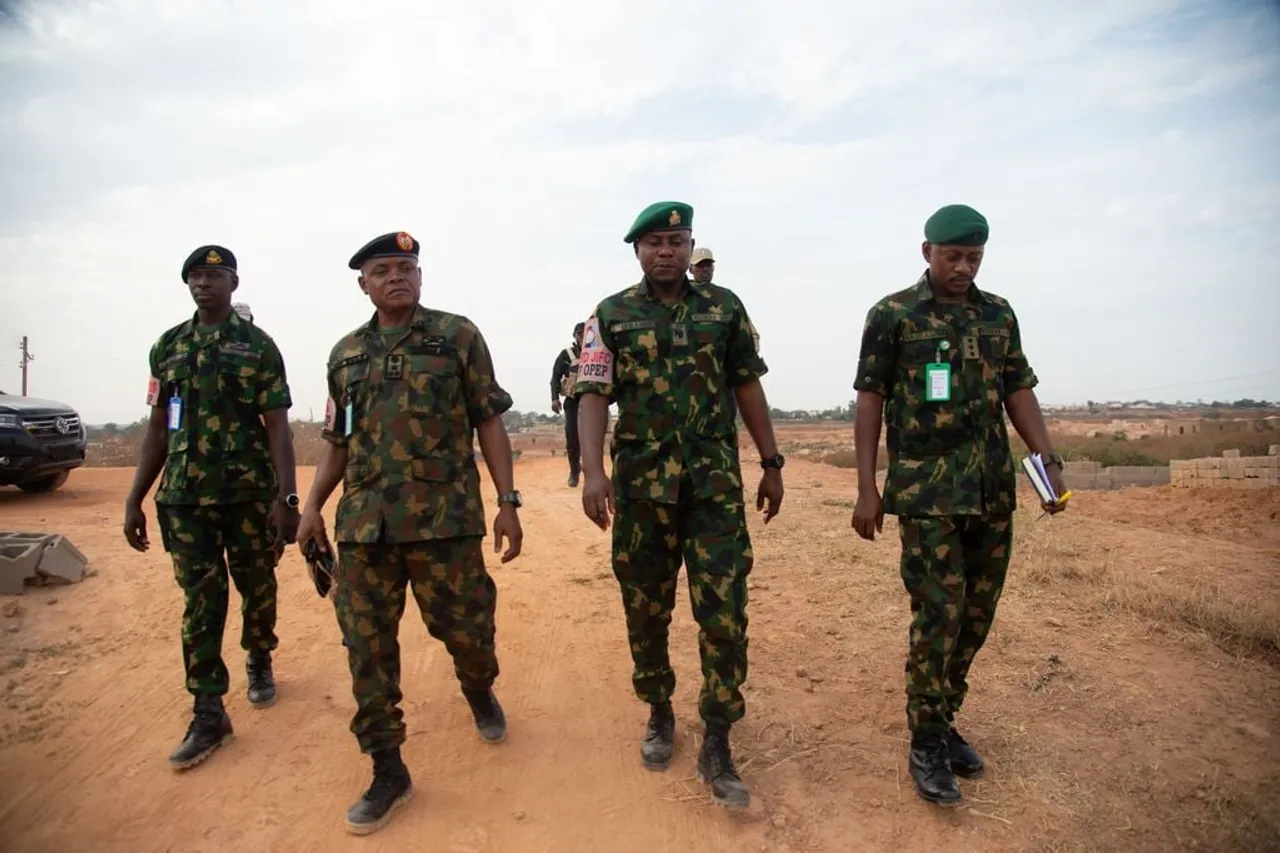
Security Forces in Sarkin Pawa/Photos by Philip Holsinger
To my surprise, Alhaji asked me to speak. I acknowledged the friendship I observed between him and his Christian minister friend Rev. James Idi, remarking on the stark difference between the reality of their bond of unity and the picture the world outside Nigeria has painted of religious war in the North Central states. Rev. Idi said, “We live in peace in this town. We share gifts between Muslims and Christians. Now we are all fasting together.” I was surprised to learn the Christians join the Muslims in fasting during Ramadan, at least in Sarkin Pawa. I said, “I see how you love one another,” and the room broke into cries and clapping.
Over the past month traveling across the North Central states, I visited churches and mosques, farms and mines, prisons and private homes, army bases and rural outposts. I interviewed dozens of kidnapping victims, survivors of mass killings, clergy, Imams, security officials, herders, and farmers. None said religion alone explained the violence they had witnessed. Some described religious tension. Others pointed to ethnic contempt, land conflict, banditry, cattle theft, reprisals, and financially motivated kidnappers who target places where people gather, including houses of worship.
This distinction matters because Nigeria is not one war. It is several conflicts unfolding across the same landscape.
In the far north, Boko Haram and the Islamic State West Africa Province (ISWAP) operate as jihadist terror movements with their own history, geography, and funding. In the Middle Belt, by contrast, the violence I witnessed was something else: a murky mix of blood feud, armed banditry, land struggle, opportunistic militia violence, and rural terror that is sometimes tinged by religion but not reducible to it. One of the great failures of outside reporting is the collapse of these separate theaters into a single narrative of jihad. (RELATED: REPORT: US Surveils Islamic Terrorists In Nigeria Following Trump’s Calls To Stop Christian Persecution)
While headlines in the United States describe a campaign of targeted religious extermination against Christians, this trip taught me that the prevailing narrative in America about Nigeria’s security crisis is inaccurate, and it’s playing right into the hands of terrorists. As James Barnett from the Hudson Institute explains:
“The jihadi groups themselves employ simplistic and reductive narratives of Nigerian religious identities to justify their violence and appeal to new recruits. In their efforts to reframe all of Nigeria’s social divisions as fundamentally religious ones and spark a broader Muslim-Christian conflagration, these jihadists conveniently paper over significant complexities in the interplay between religion and ethnicity in Nigeria.”
Precision matters. Misdiagnosing a war changes how it is understood and how it is fought, and reducing the security crisis in Nigeria to a religious war only helps terrorists sow division. So far, in the areas I have reported from, I have not seen evidence of a centrally directed extermination campaign against one faith community. The violence in the North Central states is real, and it is lethal, but based on the villages, churches, farms, mosques, and military posts I have visited, it does not match the singular picture of Christian genocide that many Americans have been given.
I have heard the accusations that the Nigerian government is secretly working with the Fulanis, and in a country with this much corruption I do not dismiss the possibility that informers, sympathizers, and compromised local actors exist. But I have not seen evidence that President Tinubu or the top national security leadership are conspiring to support Fulani violence or some broader Islamic project.
What I saw instead, deep in the bush and at remote outposts, were soldiers patrolling constantly between villages, responding to reports of armed movement, and placing themselves between communities that expect retaliation after every attack. The posture I witnessed appeared focused on preventing the next cycle of reprisals rather than launching large punitive operations, even if that approach can look like appeasement to communities that have suffered terribly.
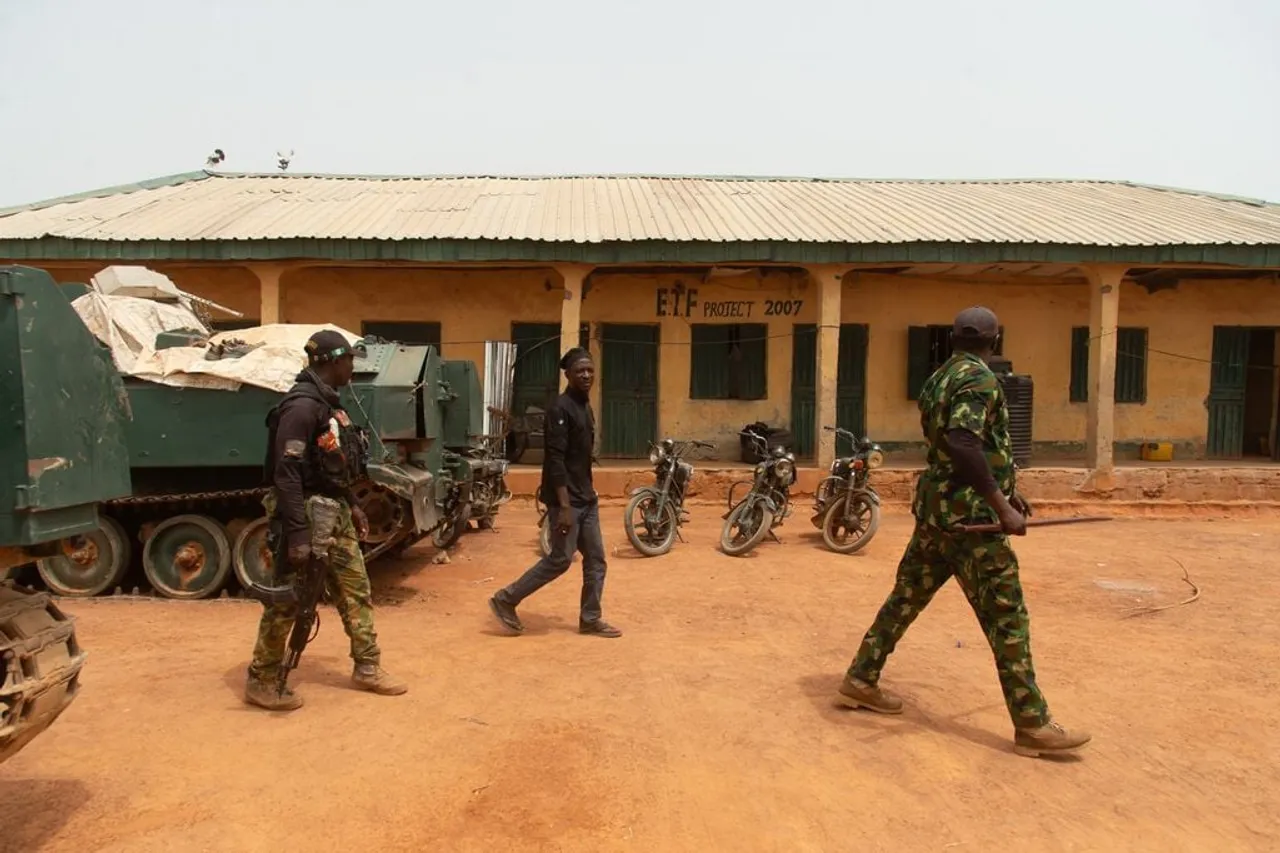
Security Forces in Sarkin Pawa/Photo by Philip Holsinger
That distinction matters too. There are reasons many villagers believe the state has failed them. In some places soldiers arrived too late. In some places communities believe troops were withdrawn before attacks. Those suspicions are part of the story. But suspicion is not proof, and the deeper I have gone into these hot zones the more I have been stunned not by evidence of official collusion, but by evidence that Nigeria’s current security leadership has launched a serious and historic effort to attack the violence afflicting Christians and society at large. (RELATED: Gunmen Execute Teacher Before Mass Abduction Of Nigerian Schoolgirls)
With operational support from President Trump and the United States military, Nigerian forces are targeting Boko Haram and ISWAP in the Northwest and Northeast (I head there next). In the North Central states where I reported, I spent nights riding in armored vehicles with units participating in President Tinubu’s security surge. From forward operating bases they patrolled rural roads and farm paths, moving between villages to intercept armed groups and prevent retaliatory attacks.
From the outside, this conflict looks like a religious war. From the ground, it looks very different.
Philip Holsinger is an award-winning freelance photojournalist represented by the REDUX agency.
The views and opinions expressed in this commentary are those of the author and do not reflect the official position of the Daily Caller.

![Donald Trump Slams Chicago Leaders After Train Attack Leaves Woman Critically Burned [WATCH]](https://www.right2024.com/wp-content/uploads/2025/11/Trump-Torches-Powell-at-Investment-Forum-Presses-Scott-Bessent-to-350x250.jpg)


![Kamala Comes Unglued, Makes Bogus Claim About Her Landslide Loss to Trump [WATCH]](https://www.right2024.com/wp-content/uploads/2025/10/Kamala-Comes-Unglued-Makes-Bogus-Claim-About-Her-Landslide-Loss-350x250.jpg)