There are days when the general tenor of British media coverage can be a little baffling, and today is one of them. At one end of the scale, there is lots of coverage of Donald Trump and adjacent foreign affairs; at the other the Times informs us that a single pensioner “died on Christmas day after a fall on an unrepaired pedestrian crossing”. If one didn’t know better, one might assume that a country where that made the website of the paper of record was a country which had run out of problems.
Even the coverage of the Greenland Crisis, as the history books will probably dub it, is a little strange. On the one hand, the President’s sudden u-turn away from tariffs and war has apparently left European leaders “flummoxed”; on the other, he has apparently secured a deal, modelled on our own arrangements in Cyprus, to the effect that American bases on the island will be considered its sovereign territory, and might extend far enough to possess worthwhile mining rights. Taken together, those stories don’t paint an especially puzzling picture.
But one story at least spares the need to dig too deeply into one fallen pensioner’s love of bingo and its implications for the Conservative Party, and it is this: ‘Government borrowing falls amid income tax windfall’. Our essay question: what exactly does the word ‘windfall’ mean here?
In normal British political parlance, a ‘windfall’ is money an easy target is alleged not to have earned, and which the government is thus entitled to tax at a punitive rate. Very often that refers simply to the operation of the price mechanism, as in the case of the ‘windfall tax’ on oil and gas after energy prices rose. The long-term impact of that is that high profits don’t stimulate investment and then politicians complain about industry not investing, but in the short term there’s cash to grab.
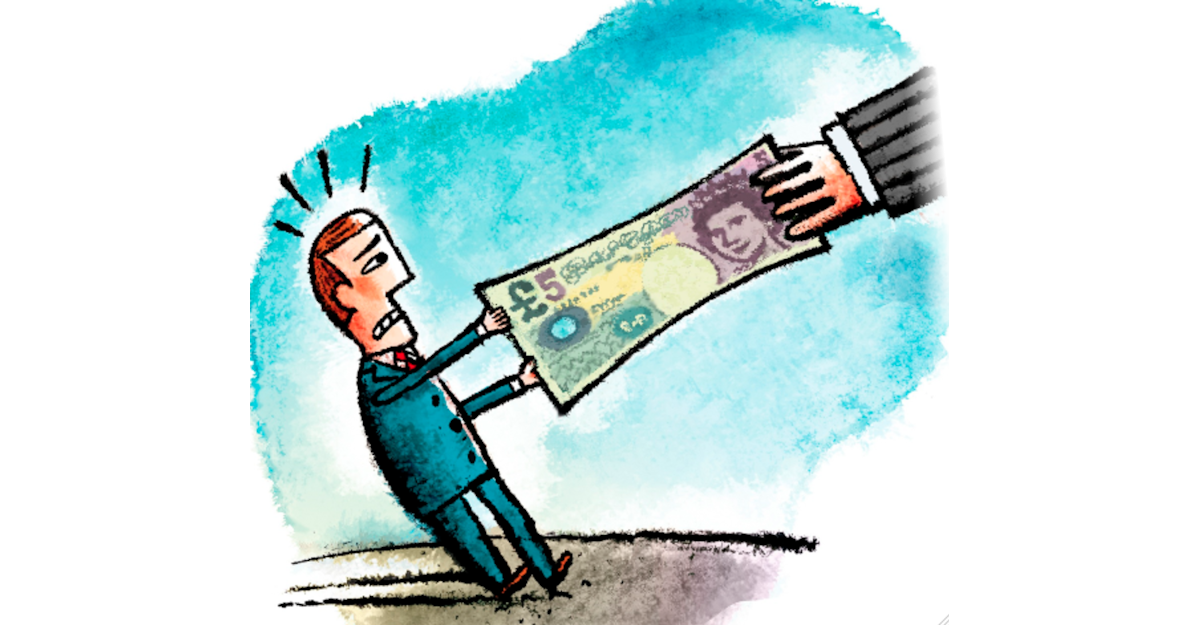
Yet the target in this case is us, the average taxpayer, because the government ‘windfall’ in question is down to “a rise in tax revenues, mainly from higher income tax and national insurance receipts”. But that isn’t my objection. Nor is it even to the fact of the story, per se; with our fiscal responsibility hats on, a smaller deficit is a good thing, and with public spending apparently impossible to cut the public does ultimately need to pay for it.
No, the issue is using the word ‘windfall’ to describe big increases in receipts from taxes ministers have hiked. There is nothing unexpected or unlooked for there, is there?
Perhaps this is just another example of the insidiousness of ‘fiscal drag’. Freezing tax thresholds rather than adjusting them for inflation allows the Government to raise the de facto tax rate year after year whilst leaving the de jure rate the same – or indeed, in the case of the previous government, posing as tax cutters by exempting favoured groups (pensioners, in Rishi Sunak’s case) from the general uplift. Might it also lead the press to lose sight of the cause and effect behind higher tax receipts?



![Donald Trump Slams Chicago Leaders After Train Attack Leaves Woman Critically Burned [WATCH]](https://www.right2024.com/wp-content/uploads/2025/11/Trump-Torches-Powell-at-Investment-Forum-Presses-Scott-Bessent-to-350x250.jpg)

![James Carville Admits Democrats Had No Shutdown Endgame, Mishandled Strategy [WATCH]](https://www.right2024.com/wp-content/uploads/2025/11/1763070634_James-Carville-Admits-Democrats-Had-No-Shutdown-Endgame-Mishandled-Strategy-350x250.jpg)