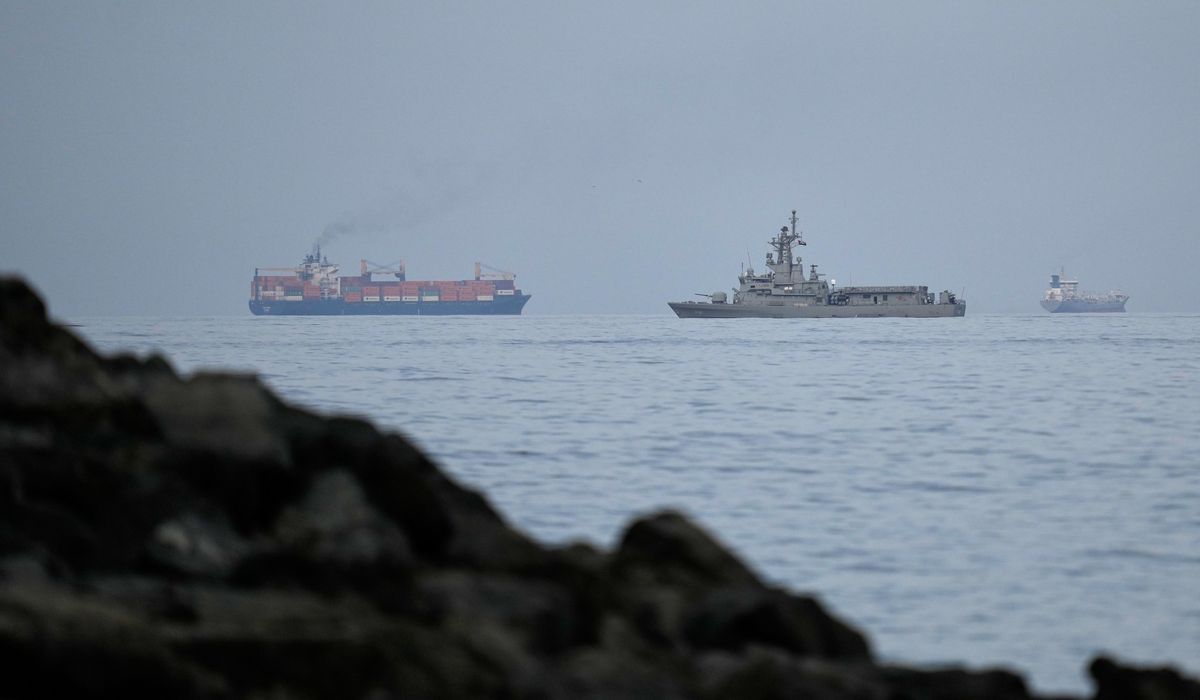
Tehran lashed out across the Middle East again Sunday, launching four ballistic missiles and six drone attacks against the United Arab Emirates and striking Israel, Iraq and other U.S. allies as the Trump administration reiterated the president’s call for global powers to join the fight to secure the critical Strait of Hormuz.
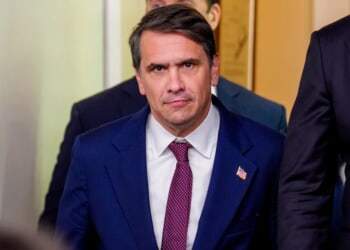
Energy Secretary Chris Wright said the strait, a geographical chokepoint that an estimated 20% of the world’s oil supply transits in peacetime, is still too dangerous for normal shipping operations.
Asked on NBC’s “Meet the Press” whether the waterway was safe, he said: “No. No, it is not.”
He confirmed that five tankers made it through the strait Saturday night after India, not the U.S., secured guarantees of safe passage from Iran and the Iranian proxies on and near the waterway attacking ships.
Iranian Foreign Minister Abbas Araghchi said Sunday that only “the U.S. and its allies” will be targeted in the strait.
“We are open to countries who want to talk to us about the safe passage of their vessels,” he told CBS News. “We have been approached by a number of countries who want to have safe passage for their vessels.”
In a social media post Saturday, President Trump said that “the countries of the world that receive oil through the Hormuz Strait must take care of that passage.” He added that a U.S. effort to coordinate safe passage through the strait was underway.
Last week, Mr. Wright said the U.S. Navy would not be ready until the end of the month to provide safe passage through the strait.
“It’s a tactically complex environment,” Gen. Dan Caine, chairman of the Joint Chiefs of Staff, said in a briefing Friday. “Before I think we want to take anything through there at scale, we want to make sure that we do the work pursuant to our current military objectives — to do that safely and smartly.”
The friction between economic pressures and military objectives extends beyond the Trump administration.
Last week, Mr. Trump publicly dismissed Britain’s offer of naval help. He said the U.S. did not need Britain to “join wars after we’ve already won.”
Allies have acted staunchly independent of U.S. coordination in the region. French President Emmanuel Macron announced that a French naval mission to secure the strait was underway in a “purely defensive” posture and not yet in coordination with the U.S.
France has reached out to ask Tehran to guarantee safe passage for its ships, according to a Financial Times report.
French Rear Adm. Thibault Haudos de Possesse told The National that his operations in the region are “completely separate, decoupled and currently uncoordinated,” with the U.S. He said his forces and the U.S. forces “don’t have the same objectives or even the same mission.”
Mr. Wright said the administration was “in dialogue” with some of the countries Mr. Trump named in his call for support.
The near-total closure of the strait has sent oil prices to $100 a barrel. The International Energy Agency has approved its largest oil reserve release ever: 400 million barrels “in response to the disruptions resulting from the Middle East conflict.”
“The war in the Middle East is creating the largest supply disruption in the history of the global oil market,” the organization said in a statement Sunday. “The most important factor in ensuring a return to stable flows is the resumption of regular transit of shipping through the Strait of Hormuz. Adequate insurance mechanisms and physical protection for shipping are key to the resumption of flows.”
The oil released by the international agency will enter U.S. and European markets by the end of the month.
Contributing to the oil shock are U.S. strikes Friday on key Iranian facilities on Kharg Island, off the coast of Iran in the northern Persian Gulf.
The island represents one of the major points of oil infrastructure for Iran and the region.
Mr. Trump said the U.S. military “totally obliterated every military target in Iran’s crown jewel, Kharg Island.” He emphasized in a social post Friday that his administration had “chosen not to wipe out the oil infrastructure on the island.”
Mr. Trump said he would consider targeting the oil infrastructure if Iran does not allow “free and safe passage of ships through the strait of Hormuz.”
The president told NBC News on Saturday that Iran has requested a ceasefire, but “the terms aren’t good enough yet.”
One day later, Mr. Araghchi told CBS’s “Face the Nation” that Iran has “no reason” to talk with the Trump administration. Iranian negotiators were in talks with U.S. envoys when Iran was attacked, he said.
“We don’t see any reason why we should talk with Americans” about ending the war.
He said Iran is “open to countries who want to talk to us about the safe passage of their vessels” through the Strait of Hormuz and has been approached by “a number” of nations about that. He didn’t identify them.
Iran targeted U.S. allies across the region Sunday. In Iraq, Baghdad International Airport and its surroundings were hit by rockets, injuring four airport security personnel and staff, as well as an engineer.
Two security officials said a former U.S. base adjacent to the airport, which provides logistical support to U.S. operations, was targeted with drones and Katyusha rockets.
Israel was hit with a barrage of at least 23 missile attacks Sunday amid concerns about a shortage of interceptors, but a military source told The Associated Press that the country has enough of the necessary munitions to defend against the ongoing attacks.
The UAE was attacked after Iran called for the evacuation of three major ports in the country: Jebel Ali, Khalifa and Fujairah, which Tehran claims U.S. forces are using.
There was no immediate word on damage or casualties.





![Donald Trump Slams Chicago Leaders After Train Attack Leaves Woman Critically Burned [WATCH]](https://www.right2024.com/wp-content/uploads/2025/11/Trump-Torches-Powell-at-Investment-Forum-Presses-Scott-Bessent-to-350x250.jpg)