
Iran on Monday rejected President Trump’s 15-point peace plan and reiterated that Tehran is not engaged in negotiations with the U.S. or regional governments.
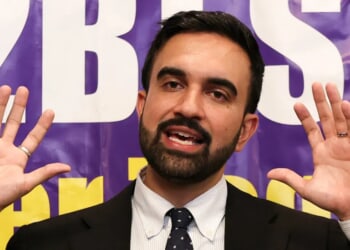
Iranian Foreign Ministry spokesman Esmail Baghaei told reporters that the demands in the U.S. 15-point proposal were “excessive, unrealistic and unreasonable.” His comments directly contradicted Mr. Trump, who said last week that Iran had agreed to most of the points.
The proposal reportedly includes demands that Iran hand over its highly enriched uranium, accept limits on its drone and ballistic missile programs, end support for regional proxy groups and reopen the Strait of Hormuz.
Mr. Baghaei said Iran did not participate in Sunday’s meetings between regional foreign ministers in Pakistan, but added that efforts to end the war are “commendable.”
“The meetings that Pakistan holds with neighboring countries are within a framework they have designed themselves, and we have not participated in this framework,” he said.
Pakistan said last week that it was prepared to host U.S. and Iranian talks “in the coming days” after productive meetings between the foreign ministers of Saudi Arabia, Turkey, Egypt and Pakistan.
SEE ALSO: Trump says U.S. could take Iran’s Kharg oil export hub, even as he says a deal could come quickly
All negotiations between Iran and the U.S. have been indirect, with proposals for direct talks still under consideration by Iran’s Supreme National Security Council, according to Mr. Baghaei. Pakistani officials have acted as mediators, relaying messages between Tehran and Washington.
Tehran’s rejection of the U.S. proposal comes as Mr. Trump increasingly threatens severe consequences for Iran if it does not reopen the Strait of Hormuz, which has been effectively closed since early March.
Mr. Trump reiterated Monday via Truth Social that if “for any reason a deal is not shortly reached,” U.S. forces will destroy Iran’s power plants, oil wells, Kharg Island and desalination plants.
He added that “great progress has been made” and that a deal will “probably” be made soon.
On Sunday, Mr. Trump said Iran had agreed to let 20 oil cargo ships pass through the strait as a “sign of respect.” It is unclear where the ships were headed or if Iran had received payment to allow the ships to pass safely. Iran last week allowed at least 10 ships to transit the strait, which Mr. Trump said was due to diplomatic negotiations.
China and India remain two of the world’s largest customers of Iranian oil, and Tehran has allowed some Chinese-linked tankers to pass through the strait. Publicly, Iran has insisted that the strait is closed only to vessels linked to the U.S. and Israel.
SEE ALSO: Houthi launch first strikes on Israel of war, Pakistan offers to host Iran, U.S. peace talks
Last week Mr. Trump set an April 6 deadline for Iran to reopen the strait, through which at least 20% of the world’s oil passes each year. The waterway’s closure had put pressure on the global economy, with the S&P 500 logging four consecutive weeks of decline. Brent crude prices also inched above $116 a barrel on Monday following Mr. Trump’s Truth Social post.
Mr. Baghaei expressed regret that countries are experiencing food and fuel shortages due to the strait’s closure and called on their leaders to pressure the U.S. and Israel to end the war.



![Two Dead, 14 Injured After Gunfire Erupts Following College Football Game in Alabama [WATCH]](https://www.right2024.com/wp-content/uploads/2025/10/Two-Dead-14-Injured-After-Gunfire-Erupts-Following-College-Football-350x250.jpg)