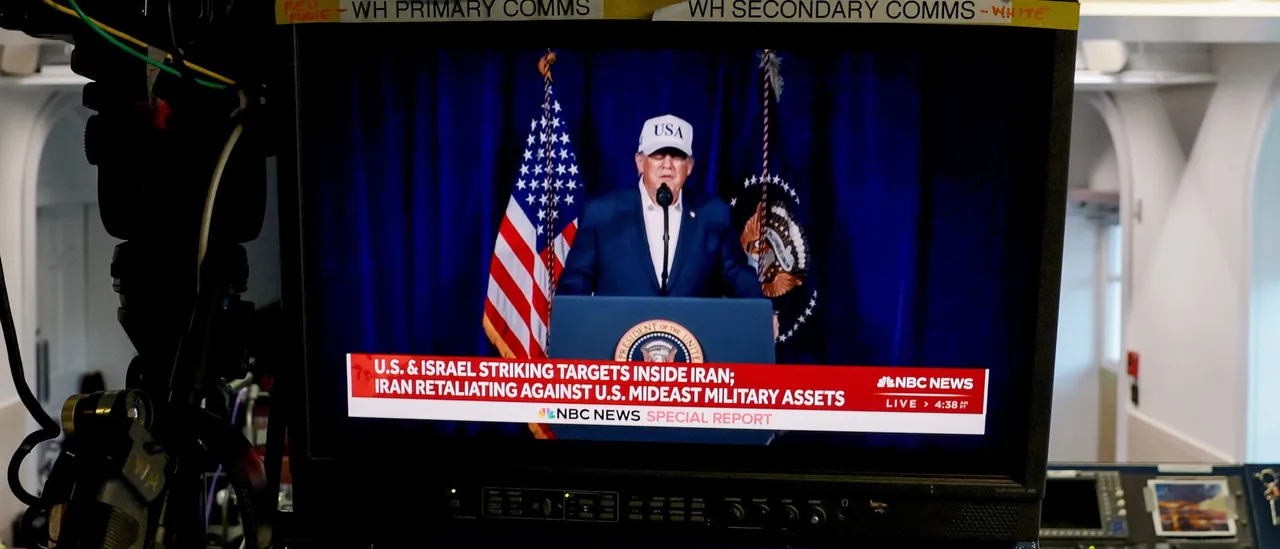
President Donald Trump’s war with Iran is revealing a massive rift among the American electorate that has not been seen in any other recent major conflict.
The United States launched a new air campaign — known as Operation Epic Fury — against the Islamic regime in Iran on Feb. 28, killing Supreme Leader Ayatollah Ali Khamenei. Thirteen American servicemen have been killed since the operation began.
Recent polling shows weak support for the war among Americans. According to a Reuters/Ipsos poll released March 1, only 27% support strikes against Iran. Support among Republicans is at 55%, while it is 19% among independents and just 7% among Democrats — making it one of the most unpopular wars in decades.
“It’s unusual to have such a negative response when American troops are still fighting, and I think that has everything to do with the polarization we’re facing,” pollster Scott Rasmussen, founder of Rasmussen Reports, told the Daily Caller News Foundation.
“Now, that the view about Iran is becoming more negative. Let’s be very clear about this. There is a lot of downside potential coming out of Iran that could really hurt the president, really hurt Republicans,” Rasmussen said.
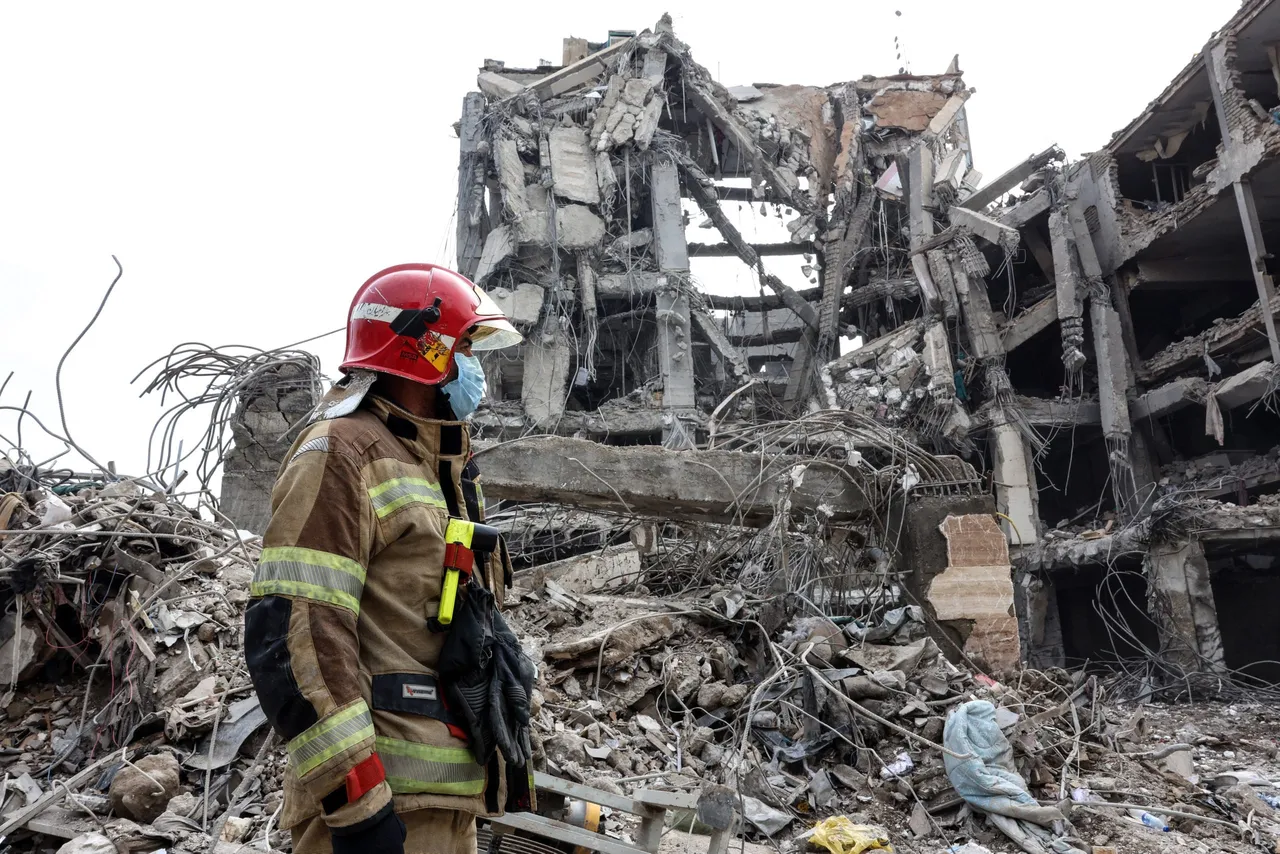
A firefighter stands in front of the ruins of a residential building in Tehran on March 12, 2026. The United States and Israel started striking Iran on February 28, killing the Iranian supreme leader and top military leaders, and prompting authorities to retaliate with strikes on Israel and across the Gulf. (Photo by AFP via Getty Images) /
The White House has defended the operation in Iran, arguing that Trump’s decision was necessary to stop Iran from obtaining a nuclear weapon.
“What matters most to the American people is having a Commander-in-Chief who takes decisive action to eliminate threats and keep them safe,” White House spokesman Davis Ingle told the DCNF, adding that the president does not make national security decisions “based on fluid opinion polls.”
‘All Over The Place’
The administration launched this war alongside Israel, puzzling many as the messaging and objectives have not been clear. After the quick success of Operation Absolute Resolve this past January, the administration seemed to think the Iranian operation would go the same way.
“The messaging is all over the place,” which makes it confusing, as “The President has not made his case” to the American people, Alex Vatanka, a senior fellow at The Middle East Institute, told the Daily Caller News Foundation. Vatanka further explained, “This is not one of the wars where it’s being fought 7,000 miles away, as gas prices were felt right away.”
In March 2003, 72% of Americans supported the war with Iraq, according to a Gallup poll released days after the conflict began. Just a month after the 9/11 terror attacks, Gallup found that 88% approved of military action inside Afghanistan. Operation Desert Storm also had significant approval in the month it began as a January 1991 Washington Post-ABC News poll showed roughly 80% backed the operation.
Napolitan News Service polling showed 55% of registered voters disapprove of Attacks on Iran. This marks a significant spike in disapproval from the previous 50% after an initial investigation found that the U.S. was responsible for the bombing of an Iranian school that resulted in the deaths of 165 civilians.(RELATED: REPORT: US Responsible For Strike On Iranian School That Killed Nearly 200)
— Senate Republicans (@SenateGOP) March 10, 2026
A Quinnipiac University Poll found that 74% of Americans are concerned about the impact the war could have on oil and gasoline prices. This comes as Americans are paying higher prices at the pump, with oil traffic at a standstill in the Strait of Hormuz.
Polling also shows that fewer than half of Americans believe Iran will form a new government that is favorable to the U.S., thereby calling into question the operation’s success.
Joel Rayburn, senior fellow with Hudson Institute’s Center for Peace and Security in the Middle East, warned the Daily Caller News Foundation that shipping traffic in the Strait of Hormuz – where roughly 20% of the world’s oil supply passes through, according to CBS News – could become “complicated.”
Rayburn said that Iran’s naval capabilities are now limited, but the threat now comes from speedboats and unmanned vessels, as they are “harder to eliminate.” Rayburn also addressed concerns about U.S. ground troops, saying he does not see a need for them “as necessary,” although the president is “keeping his options open,” also noting that Iran has a “limited ability” to cause further U.S. casualties.
Some Republicans are speaking out about the political implications the war could have on future elections.
On Tuesday, after meeting with Secretary of War Pete Hegseth and Chairman of Joint Chiefs of Staff Gen. Dan “Raizin” Caine, Republican Senator Rand Paul told Fox Business’ Maria Bartiromo, “If there is still connected action that causes oil to be over $100, I think you are going to see a disastrous election.”
The Reuters/Ipsos poll released March 1 surveyed 1,282 U.S. adults online with a margin of error of plus or minus 2.8 percentage points for all respondents.
DCNF managing editor Thomas Phippen contributed reporting.
All content created by the Daily Caller News Foundation, an independent and nonpartisan newswire service, is available without charge to any legitimate news publisher that can provide a large audience. All republished articles must include our logo, our reporter’s byline and their DCNF affiliation. For any questions about our guidelines or partnering with us, please contact licensing@dailycallernewsfoundation.org.





![Donald Trump Slams Chicago Leaders After Train Attack Leaves Woman Critically Burned [WATCH]](https://www.right2024.com/wp-content/uploads/2025/11/Trump-Torches-Powell-at-Investment-Forum-Presses-Scott-Bessent-to-350x250.jpg)