This content was produced via a partnership with Pacific Media Asia. The views and opinions expressed in this commentary are those of the authors and do not reflect the official position of the Daily Caller.
Competition for Rare Earth Metals
China is expanding the scope of export controls on rare earth metals and is increasingly using their supply as a diplomatic and security card. The Tokyo-based The Asahi Shimbun newspaper reported in an article dated Feb. 28 that the Japanese government is moving forward with plans to achieve zero dependence on China for some rare earths by the close of 2028. Sources said Japan expects to achieve this through developing mines in Africa and other measures. (RELATED: The U.S.-Japan Summit Signals Future Harmony)
Japan’s Intent
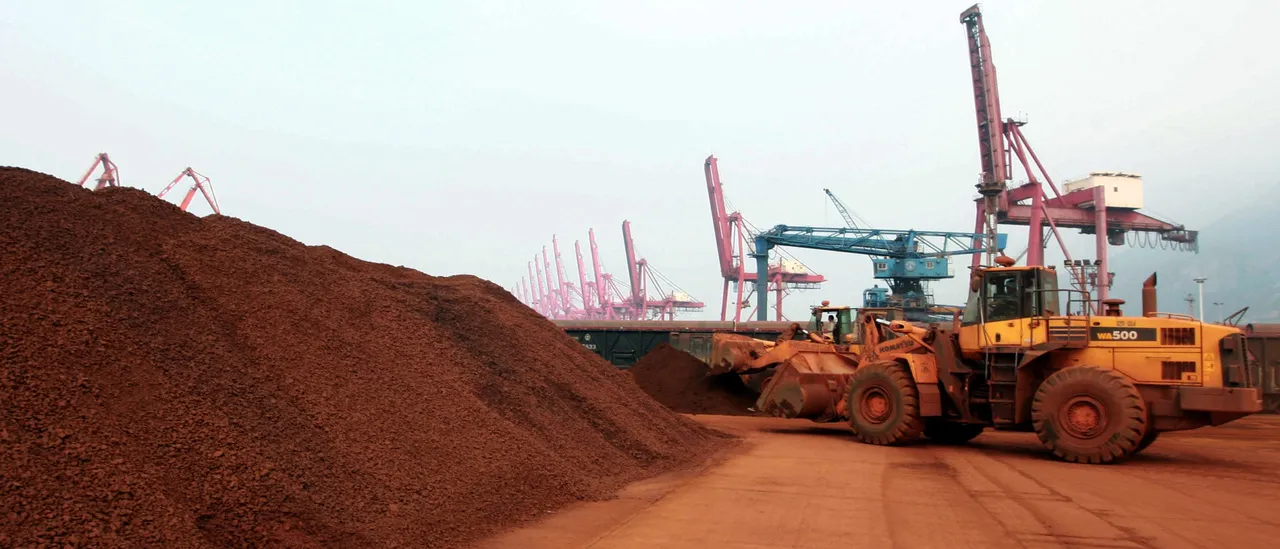
According to the article in The Asahi Shimbun, the Japan Energy and Metals National Corporation ( JOGMEC ) is playing a central role in this resource development. The agency explained that a mine survey in Namibia in southern Africa “confirmed sufficient reserves” of the resources dysprosium ( Dy ) and terbium ( Tb ). These are classified as heavy rare earths among the family of rare earths. Sources said they will be working to solicit development companies, and are also considering building refining (separation and smelting) facilities to remove impurities in addition to mining.
Japan’s strategic move is to mitigate the geopolitical risks associated with supply concentration. On Feb. 24, China announced export control measures against Japanese companies and organizations, and it was reported that the items subject to the measures included dysprosium. Such measures could control materials used for both civilian and military purposes as “dual use,” putting pressure on the industrial and defense bases of other countries.
United States is Planning Alternatives too
China’s export controls are not just an issue for Japan. The International Energy Agency (IEA) noted that China imposed export controls on rare earths from October 2025. This restriction has created a real risk of disrupting the supply chain.
As early as April 2025, the U.S. think tank CSIS (Center for Strategic and International Studies) summarized the impact of China’s tightening of export restrictions on multiple rare earths and magnets, pointing out that U.S. and U.S.-allied dependence on China could have ripple effects in the form of production shutdowns and other consequences. (RELATED: Defending The Republic Of Korea: Why The Spirit Of March First Demands Action Now)
For the United States, rare earths are strategic materials with a wide range of applications, from electric vehicles (EVs), wind power generation, semiconductors, communications and even defense equipment. The restructuring of the supply chain within the United States is centered around the Mountain Pass mine in California, and there have been reports of expanding partnerships between the U.S. government (Department of War) and private companies.
While Japan and the U.S. have common interests in reducing their reliance on China for rare earths, there could also an element of competition over how to share mines and mining capacity.
Japan’s Early Start
Japan’s involvement in Namibia was already underway even before the Asahi Shimbun report. Reuters reported in August 2023 that JOGMEC had signed an agreement with Namibia for joint rare earth exploration. Furthermore, progress in the development and evaluation of heavy rare earth projects to mine yttrium in Namibia had already been made with the private sector.
However, as the Asahi Shimbun article points out, the mining and refining practices can produce hazardous substances such as radioactive waste, so the cost of environmental measures will help determine profitability.
The separation process for heavy rare earths is particularly difficult. This means the success or failure of a stable supply depends not only on securing mines, but also on how to set up an integrated system from refining to the successful manufacturing process, such as making magnets. (RELATED: China Tries Both Ways: A Diplomatic Balancing Act)
A New Reality Dawns
As the reality that China could disrupt supply chains through export controls becomes more apparent, Japan’s construction of independent supply chains in Africa overlaps with other countries’ efforts to reduce the supply chain risks posed by China. For the U.S. manufacturing and security community, it is being closely watched. Will Japan ‘s diversification of procurement increase the resilience of East Asian supply chains, or will it accelerate competition or resources? It remains to be seen how the story of rare earth metals pans out, but the competition is growing for their use that is so essential in the modern world.
Minsoo Lee is a veteran journalist with 20 years of experience, currently serving as the Japan correspondent for Pacific Media Asia (PMA). As an expert in the geopolitics of Korea and Japan, he curates and analyzes critical local developments to provide incisive commentary on the shifting balance of power in East Asia.





![Kamala Comes Unglued, Makes Bogus Claim About Her Landslide Loss to Trump [WATCH]](https://www.right2024.com/wp-content/uploads/2025/10/Kamala-Comes-Unglued-Makes-Bogus-Claim-About-Her-Landslide-Loss-350x250.jpg)