John Oxley is a consultant, writer, and broadcaster. His SubStack is Joxley Writes.
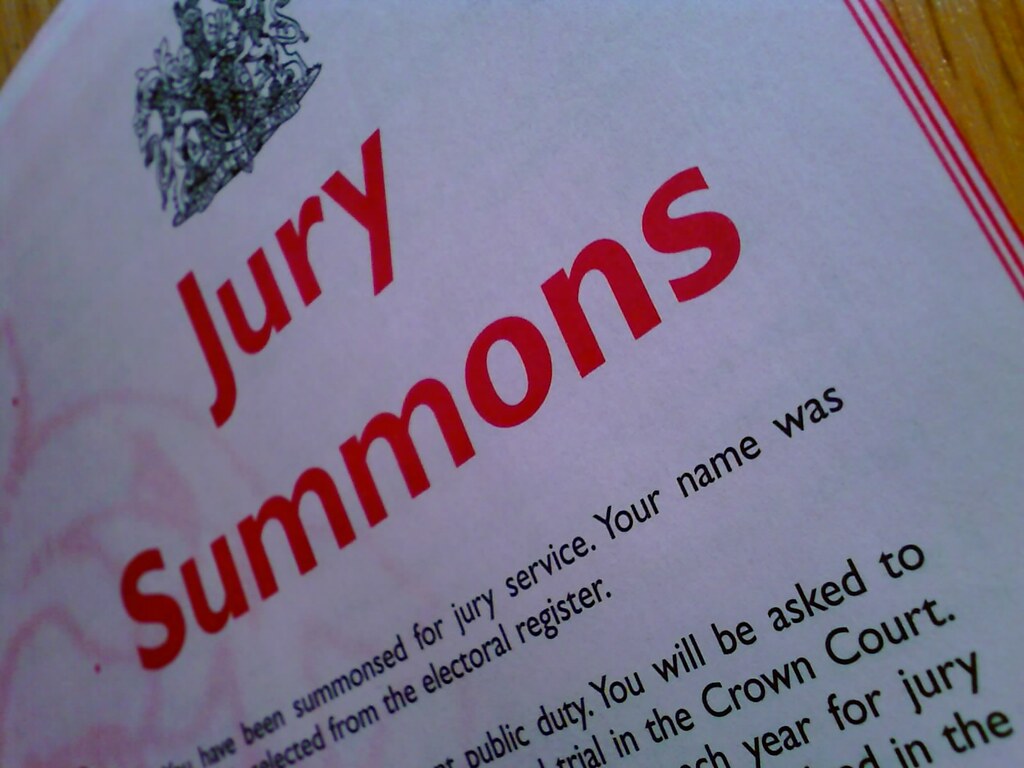
There are few institutions with a greater pedigree than trial by jury.
The concept of being judged by your peers has its roots in pre-Conquest England and was well established by the 13th century, when it was bolstered by Magna Carta. Now it faces its biggest threat in a millennium or so, with David Lammy proposing to restrict the right to trial by jury to the most serious of offences.
Outside of these, defendants would be tried by a judge alone.
The reduction of juries is a significant change that will dramatically alter how justice is administered in this country. The proposal goes beyond the recommendations from the government’s review of the practice. It risks a rushed abolition of one of our most fundamental and historic rights – and removing one of the key features that holds up public trust in the judicial system.
Jury trials are not a perfect system. There are, at times, concerning acquittals and wrongful convictions. Jurors and juries can be swayed by their own prejudices. They sometimes struggle with cases with highly technical elements. On aggregate, however, they work. Almost every juror engages with the system with seriousness and a level head. Defendants and victims receive a procedure that, on the whole, feels fair.
For the rest of us, there is a further benefit. The existence of juries draws ordinary people into the court system, a dozen at a time. This demystifies it and makes it accessible to the average person. Even if you are never called to serve, you will know someone who has been. While the rest of our institutions can feel remote and exclusive, the jury never does. It is your friends and neighbours who sit in judgment, and who get a feel for how the criminal justice system actually works.
Moving to judge-only trials threatens all of this. Institutions always develop their own cultures and biases. In juries, these are balanced out by the number of jurors and the fact that they are drawn at random. People who are sceptical of The Establishment, or reluctant to convict, are mixed with those who might think “there’s no smoke without fire”. Jurors can deploy their own expertise and experience in interpreting evidence. The jury room debates hammer out these differences.
For a single judge, the dynamic is different. There is no one to push against them in the same way. While the judiciary strives to be neutral, true neutrality is hard – especially when organisational selection and pressures can skew things one way or another. It won’t be long before single judges get a reputation for being soft or hard (as they already do for sentencing) or come under political pressure when conviction rates are seen as too high or too low. Despite everyone’s best intentions, such pressures are hard to escape.
More than that, ending public participation in most criminal trials will undermine the public’s understanding of the system. This, in turn, will undermine trust. Already, the rest of our system seems to operate with little public input, and as a result, it appears mysterious and elitist to many. This is obvious in our politics, and true of our courts too. Immigration tribunals, human rights cases, and criminal sentencing are often subject to public criticism, in part because they appear opaque and exclusive. The involvement of juries is a safeguard against this. Remove it, and faith in our justice system is likely to fall further.
The worst thing about Labour’s plans, however, is their attempt to circumscribe the debate. There are genuine arguments about the shortcomings of the jury system. Most of our European nations do not use juries to the same extent as England and Wales does. “Diplock” trials have worked in Northern Ireland for offences where it was hard to convene a fair jury safely. The same is true in England and Wales, where jury tampering is an issue. Yet the government is not looking to engage in these debates.
The restriction of jury trials is being pushed not as a measure of fairness, but as a measure of fiscal efficiency. The radical changes are presented as a tool for clearing the backlog in the criminal courts. It is a very real issue – a system that was already struggling before 2020 had every issue compounded by COVID closures. There are now nearly 80,000 cases awaiting trial, with current cases scheduled for court dates in 2030. Such delays bring further problems, as memories fade and witnesses lose interest, undermining our ability to prosecute effectively.
These delays are not, however, the fault of juries. It is primarily driven by a productivity slump across the criminal justice system. The administration of justice has fallen into crisis, primarily due to spending cuts under the last Conservative government. As a result, cases move more slowly through the system, courts often sit empty, and trials are frequently aborted because preparation is not completed in time. Hearings can be further disrupted by the failings of the prison system, including delays in delivering defendants to court. It is unclear how reducing jury use will address any of this, when the system needs more funding and a targeted strategy for widespread improvement.
The process of shifting to a single-judge system could potentially worsen this system. It would mean a massive change of systems and processes within organisations that are already struggling. For years, there would likely be too many parallel routes, depending on the cutoff for the new approach. The early iterations of jury-less trials are also likely to throw up more appeals, as lawyers and judges work through the complexities of a new way of hearing cases.
The government’s approach feels like it is missing the point. Reducing the use of juries and clearing the backlog are two separate issues. On the former, there is an opportunity to debate which system delivers the best, most trusted outcomes. There are many good reasons for preserving our historic system – but also arguments about its shortcomings. Driving through a significant change predicated on the latter issue, however, is misguided. It is unclear whether it would work, and it does not seem to weigh up the costs appropriately.
Our right to a jury trial is one of the longstanding parts of the English constitution. It is arguably older than parliament itself, stretching back so far that documentary evidence is barely extant. As a system, it has generally served us well and commands public trust. Yet even if it is not fit for the modern day, or could be improved upon, the debate shouldn’t be circumscribed.
If judge-only trials are a better option, it should be a debate framed by justice and trust – not a hurried attempt at backlog cutting that is unlikely to work.





![Donald Trump Slams Chicago Leaders After Train Attack Leaves Woman Critically Burned [WATCH]](https://www.right2024.com/wp-content/uploads/2025/11/Trump-Torches-Powell-at-Investment-Forum-Presses-Scott-Bessent-to-350x250.jpg)

![Kamala Comes Unglued, Makes Bogus Claim About Her Landslide Loss to Trump [WATCH]](https://www.right2024.com/wp-content/uploads/2025/10/Kamala-Comes-Unglued-Makes-Bogus-Claim-About-Her-Landslide-Loss-350x250.jpg)