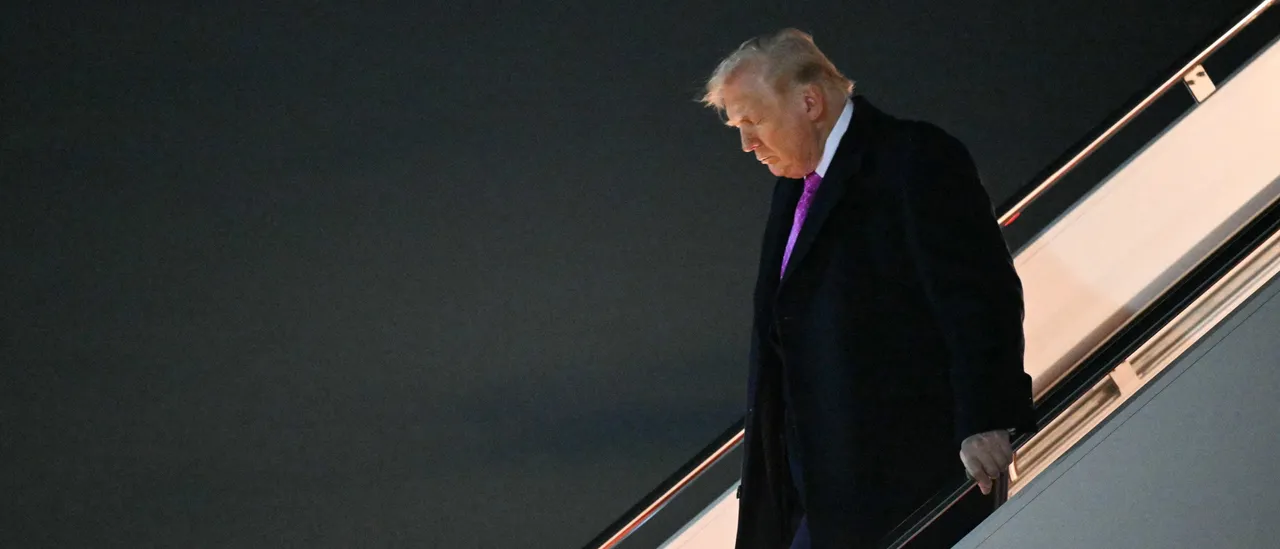
For decades, Washington tolerated fraud, waste, and abuse as an unfortunate side effect of government. Under President Donald J. Trump, that era is ending, and nowhere is that more evident than in what’s unfolding across Minnesota, California, and other Democrat-led states.
The Treasury Department’s latest anti-fraud advisory is not happening in a vacuum. It is part of a broader, coordinated crackdown – one that is already exposing systemic failures in blue states and forcing long-overdue accountability.
Start with Minnesota, now ground zero in America’s fraud crisis. Federal investigators and watchdogs have uncovered a sprawling web of abuse across public programs, including Medicaid and child nutrition. In one infamous case, a nonprofit scheme siphoned off $250 million intended to feed low-income children. But that may only scratch the surface. Some estimates suggest fraud across Minnesota’s public programs could reach into the billions of dollars, with one federal prosecutor warning that as much as half of certain program funds may have been stolen. This didn’t happen overnight, and it didn’t happen without warning. (RELATED: Gregg Jarrett Says Law Allows Feds To Cut Off Funding To Minnesota Due To Fraud)
Audits, whistleblowers, and investigators repeatedly flagged vulnerabilities in Minnesota’s system. Yet under Democratic Gov. Tim Walz, oversight failures persisted. In fact, the state was ultimately forced to pause payments across 14 Medicaid programs due to fraud concerns, a stunning admission of systemic breakdown.
The Trump-Vance Administration responded decisively. Federal officials have already withheld hundreds of millions in Medicaid funding from Minnesota and signaled that billions more could be at risk unless the state implements serious reforms. Minnesota has effectively become the first battlefield in what Vice President J.D. Vance has called a nationwide “war on fraud” – and it won’t be the last.
California is now under similar scrutiny. Federal officials, including Centers for Medicare & Medicaid Services Administrator Dr. Mehmet Oz, have warned of widespread abuse in the state’s massive Medicaid system. Concerns have been raised about explosive growth in questionable hospice providers and billing practices, especially in the Los Angeles area – patterns that investigators say are consistent with organized fraud. This is a pattern, not an anomaly.
Across multiple blue states, federal authorities are identifying the same vulnerabilities: Weak verification systems, lack of real-time oversight, and bureaucratic resistance to reform. In some cases, these failures have allowed criminal networks to exploit programs at scale, using shell companies, stolen identities, and fraudulent billing schemes to drain taxpayer funds.
In Minnesota, federal and state authorities have already conducted enforcement actions, including raids on businesses accused of fraudulent billing tied to Medicaid and other programs. These are not isolated incidents; they are symptoms of a deeper governance problem. And the cost to taxpayers is staggering.
Health care fraud alone is estimated to cost the United States tens of billions annually, with some projections climbing far higher. That is money taken directly from working Americans – diverted from seniors, vulnerable families, and patients who rely on these programs.
Trump’s response has been to go on offense.
His administration has launched a government-wide Task Force to Eliminate Fraud, strengthened coordination between Treasury, the U.S. Department of Justice, and federal inspectors general, and empowered financial institutions to identify and report suspicious transactions in real time. At the same time, new whistleblower incentives are designed to expose fraud networks from the inside out.
The Treasury Department’s recent advisory underscores this strategy by focusing on the financial pipelines that make large-scale fraud possible. By targeting suspicious transactions and enhancing reporting requirements, the Trump-Vance Administration is not just reacting to fraud; it is working to prevent it. That’s the difference between rhetoric and results.
Critics like California Democratic Gov. Gavin Newsom, and many others in the radical Left, argue that these actions are politically motivated or risk disrupting services. But that argument ignores a fundamental truth: allowing fraud to flourish is itself a threat to vulnerable Americans.
Every dollar stolen is a dollar denied.
And for too long, states like Minnesota and California failed to take that reality seriously enough.
To be clear, fraud is not a partisan issue. It exists in red states and blue states alike. But the scale and persistence of failures in certain states—combined with resistance to federal oversight—have made them focal points in this national crackdown.
The lesson is simple. Accountability matters. Oversight matters. Leadership matters.
Trump’s war on fraud is exposing what happens when those principles are ignored, and what can be achieved when they are restored.
For the forgotten Americans who play by the rules, pay their taxes, and expect their government to do the same, that shift is not just welcome. It’s necessary.
Jorge Martinez is Executive Vice President and Chief of Staff at Defend Forgotten America. He previously served as press secretary for the U.S. Department of Justice.
The views and opinions expressed in this commentary are those of the author and do not reflect the official position of the Daily Caller News Foundation.
All content created by the Daily Caller News Foundation, an independent and nonpartisan newswire service, is available without charge to any legitimate news publisher that can provide a large audience. All republished articles must include our logo, our reporter’s byline and their DCNF affiliation. For any questions about our guidelines or partnering with us, please contact licensing@dailycallernewsfoundation.org.





![CNN's Kaitlan Collins Fact-Checks Rep. Jasmine Crockett Over False Trump Ballroom Claim [WATCH]](https://www.right2024.com/wp-content/uploads/2025/10/1761954330_CNNs-Kaitlan-Collins-Fact-Checks-Rep-Jasmine-Crockett-Over-False-Trump-350x250.jpg)
![Two Dead, 14 Injured After Gunfire Erupts Following College Football Game in Alabama [WATCH]](https://www.right2024.com/wp-content/uploads/2025/10/Two-Dead-14-Injured-After-Gunfire-Erupts-Following-College-Football-350x250.jpg)
![James Carville Admits Democrats Had No Shutdown Endgame, Mishandled Strategy [WATCH]](https://www.right2024.com/wp-content/uploads/2025/11/1763070634_James-Carville-Admits-Democrats-Had-No-Shutdown-Endgame-Mishandled-Strategy-350x250.jpg)