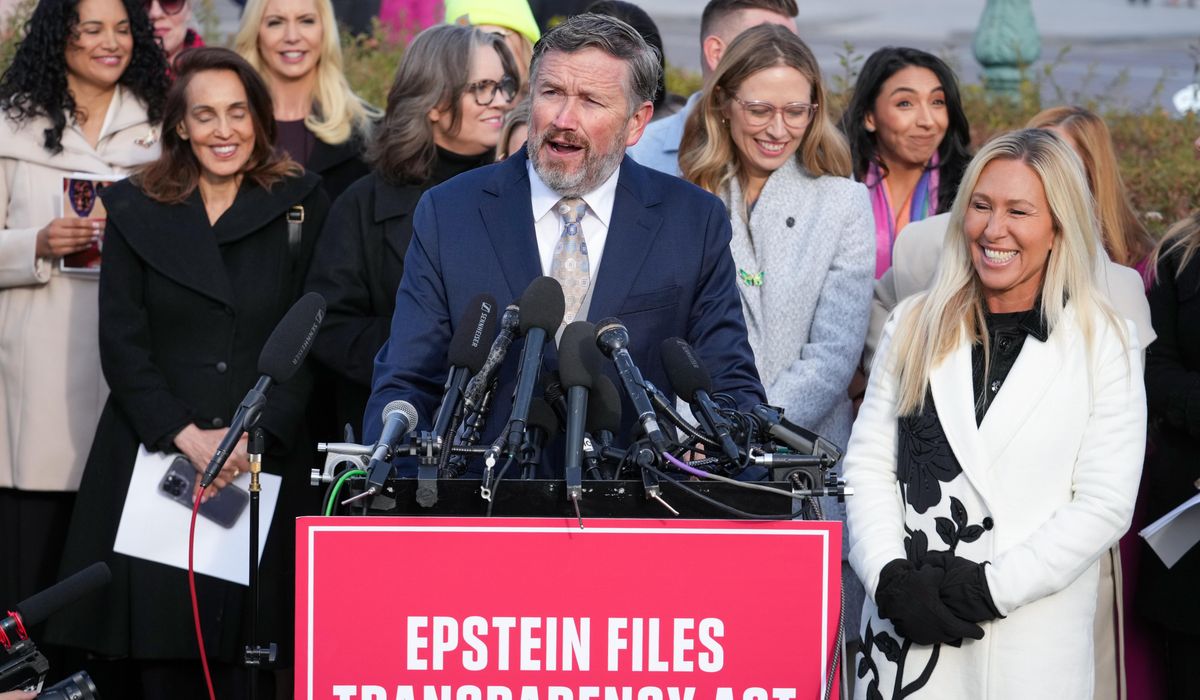
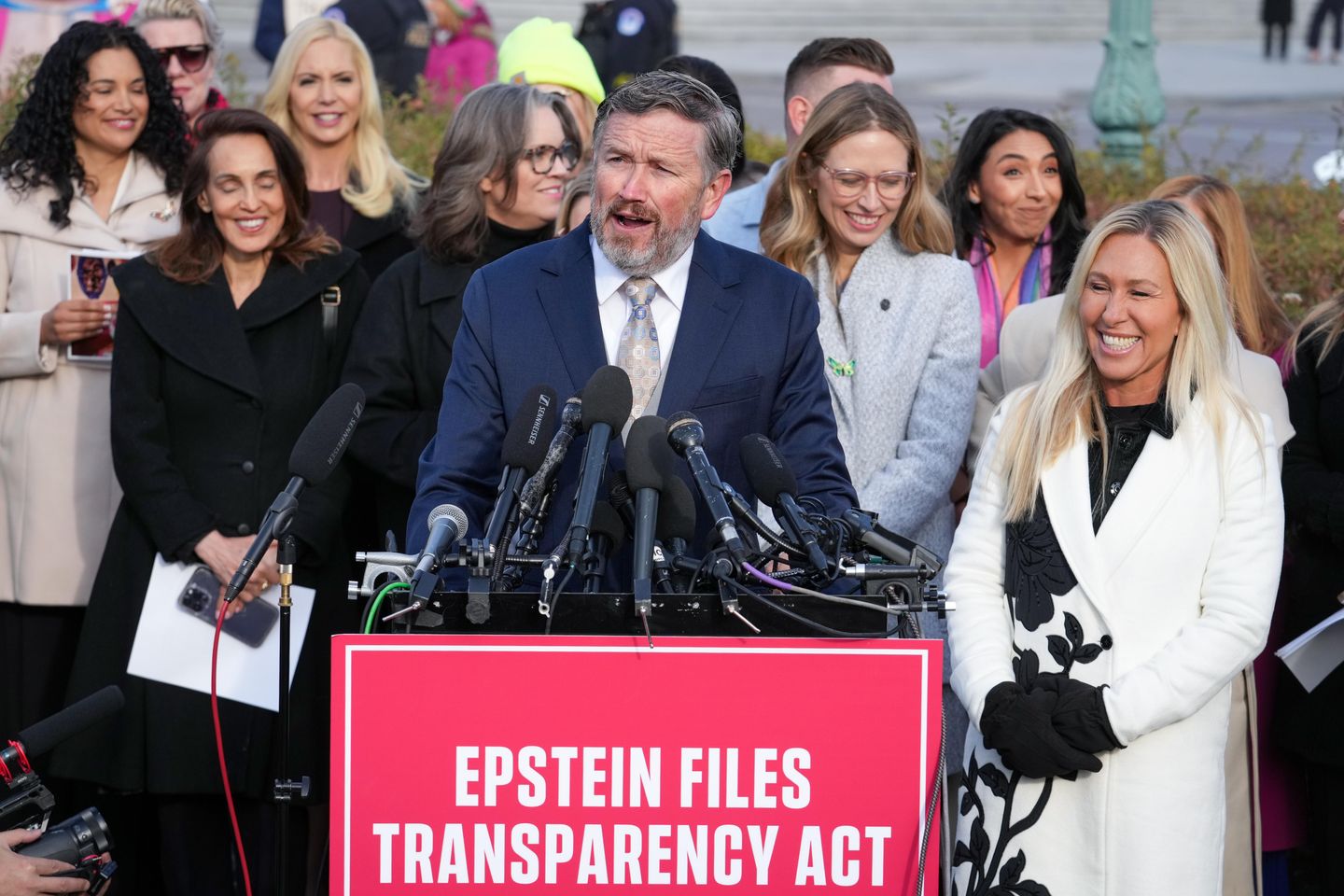
A federal judge on Friday said the Justice Department can unseal and release transcripts from the original criminal investigation into Jeffrey Epstein, citing a new law that overcomes the usual secrecy surrounding grand juries.
The Florida grand jury probed Epstein two decades ago. That ended with the late financier’s initial secret deal letting him duck federal charges but plead guilty to a state charge of soliciting underage girls for sex. He was sentenced to a year of work release.
Judge Rodney Smith previously blocked release of those grand jury transcripts but said Friday the Epstein Files Transparency Act, approved by Congress and signed by President Trump last month, has changed the circumstances.
“The act applies to unclassified records, documents, communications, and investigative materials that relate to Jeffrey Epstein and Ghislaine Maxwell. Consequently, the later-enacted and specific language of the Act trumps Rule 6’s prohibition on disclosure,” the judge wrote.
The law requires release of documents as long as they don’t invade “personal privacy.” It also prohibits release of sexual or physical abuse material.
It specifically orders the department not to consider political sensitivity or embarrassment of public figures as a reason to withhold files.
Some Florida state grand jury records have already been released.
The real treasure trove of documents is believed to be from another case — the federal prosecution of Epstein in New York in 2019 on sex trafficking charges. His suicide that summer short-circuited the case, but another prosecution of Maxwell, his associate, ended with her conviction on sex trafficking charges.
The Justice Department has sought to unseal those grand jury records, and Judge Paul Engelmayer, who is overseeing the matter, asked victims and witnesses to offer their opinions on what should be done.
There were competing views.
A lawyer for Annie Farmer, a survivor of Epstein’s abuse, said she supports release of grand jury transcripts and anything else that can be publicized from the Justice Department’s files.
But lawyers for other victims said they worried about improper disclosure of their identities.
Still, other lawyers challenged the Justice Department’s interpretation of the new law, saying it doesn’t cover grand jury transcripts and evidence.
“If Congress intended grand jury and discovery materials to be disclosed pursuant to the Act, why didn’t they include those terms in the language of the act?” wrote Avrom Robin, a lawyer for a man identified only as John Doe, who was a potential witness in the case.
Neil S. Binder, another lawyer arguing for other victims or witnesses — their identities are redacted in his letter — also argued for continued secrecy.
“The government has not — and cannot — meet its high burden to show why unsealing grand jury materials is merited, particularly grand jury materials that mention innocent third parties who are still living and who were not the subject of any charges in relation to this case,” he wrote.


![Donald Trump Slams Chicago Leaders After Train Attack Leaves Woman Critically Burned [WATCH]](https://www.right2024.com/wp-content/uploads/2025/11/Trump-Torches-Powell-at-Investment-Forum-Presses-Scott-Bessent-to-350x250.jpg)
![Two Dead, 14 Injured After Gunfire Erupts Following College Football Game in Alabama [WATCH]](https://www.right2024.com/wp-content/uploads/2025/10/Two-Dead-14-Injured-After-Gunfire-Erupts-Following-College-Football-350x250.jpg)