A federal judge has granted a preliminary injunction allowing clergy to minister to people held at an Illinois immigration facility during Holy Week, citing Pope Leo XIV in his ruling.
U.S. District Judge Robert Gettleman ordered the Trump administration to allow clergy to enter the Broadview immigration facility from April 2–5 to offer religious services for those who wish to attend.
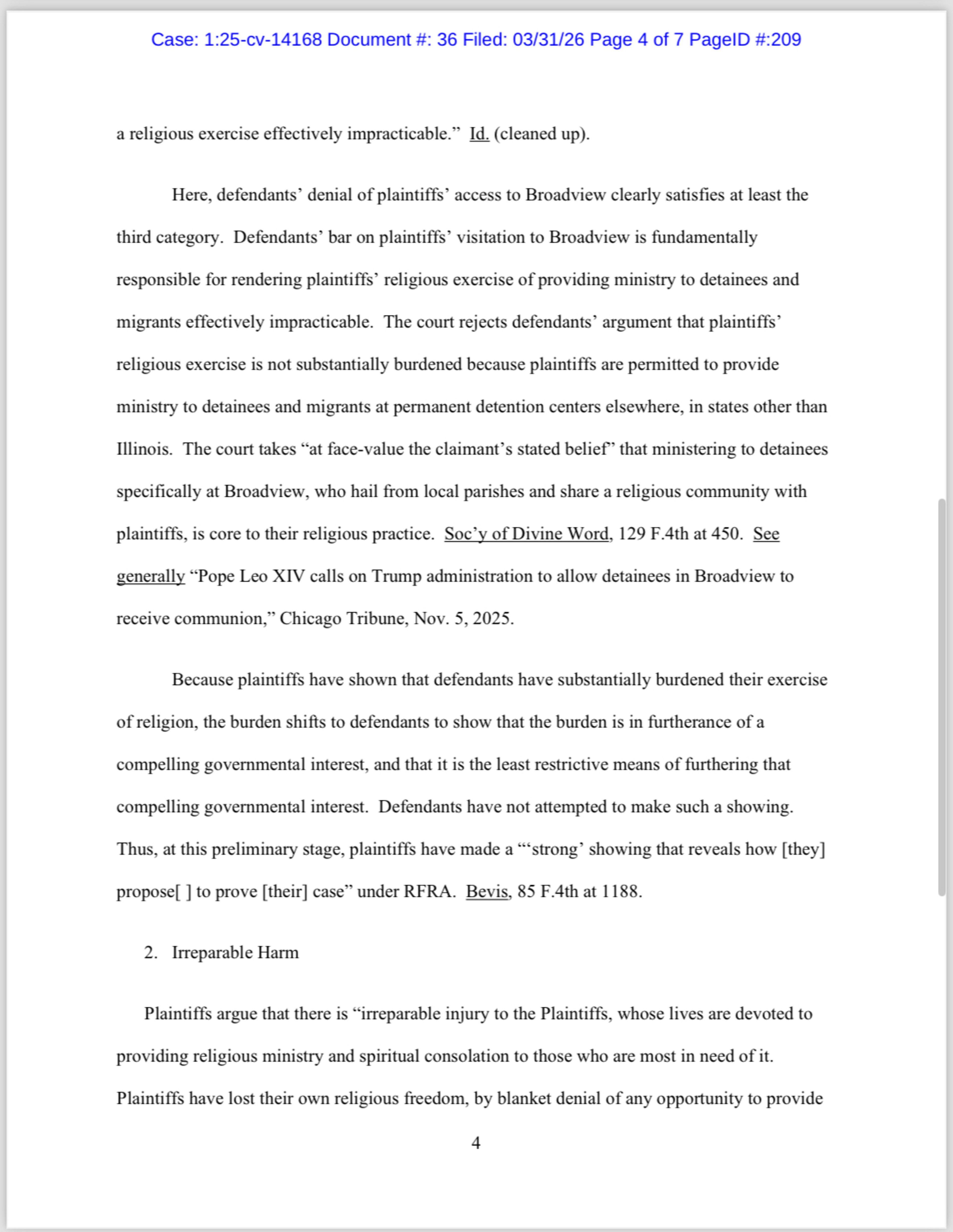
“The court takes ‘at face value the claimant’s stated belief’ that ministering to detainees specifically at Broadview, who hail from local parishes and share a religious community with plaintiffs, is core to their religious practice,” Gettleman’s March 31 order said, citing November 2025 comments from Pope Leo XIV calling for detained migrants to have access to spiritual care.
Gettleman wrote: “With reasonable notice and communication, addressing legitimate security and safety concerns, allowing plaintiffs to provide pastoral care to migrants and detainees does not pose any undue hardship on the government.”
The order, which also allows people to pray outside the facility, followed a March 31 hearing.
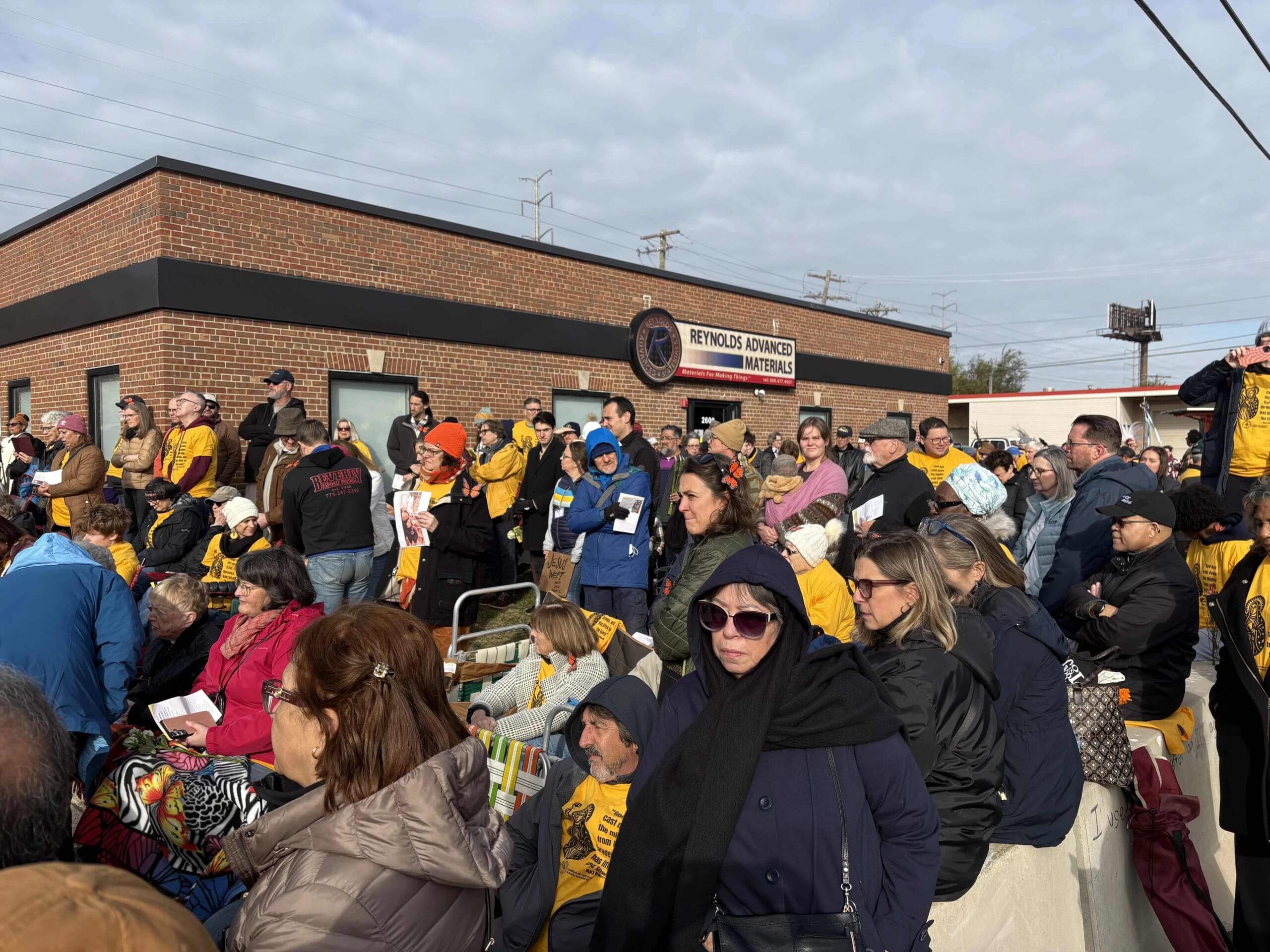
The judge granted the injunction saying the plaintiffs — the Coalition for Spiritual and Public Leadership with several priests and religious — had shown the government had “substantially burdened” their exercise of religion by blocking access to the facility and prohibiting prayer on its grounds.
The judge rejected the Trump administration’s argument that it was not violating the plaintiff’s religious exercise because it had provided clergy access to permanent migrant detention facilities elsewhere.
The Broadview facility is an Immigration and Customs Enforcement (ICE) field office used to process detainees before being transferred to detention centers. Although detainees are only meant to be held there for a few hours, with the maximum being 72 hours, some alleged last year that they were held there for several days and even up to one week during ICE’s Operation Midway Blitz, which detained about 3,000 immigrants illegally residing in the state.
DHS response
“ICE follows ALL court orders,” according to a statement from the Department of Homeland Security. “The facility in Broadview, IL, is a field office, it is not a detention facility. Illegal aliens are only briefly held there for processing before being transferred to a detention facility. Religious organizations are more than welcome to provide services to detainees in ICE detention facilities. Even before the attacks on the Broadview facility, it was not within standard operating procedure for religious services to be provided in a field office, as detainees are continuously brought in, processed, and transferred out.”
While DHS’ statement referred to a standard operating procedure, the judge’s order noted that “Broadview allowed plaintiffs’ religious visitation to Broadview for years before reversing course relatively recently” and that a previous preliminary injunction to allow clergy in the facility on Ash Wednesday had been “implemented without incident.”
U.S. District Judge Robert Gettleman issues a March 31, 2026, order requiring the Trump administration to allow clergy to enter the Broadview immigration facility during the Triduum to offer religious services for people held at the facility who wish to attend. | Credit: EWTN News/Screenshot
Clergy provided Communion and ashes to four detainees on Ash Wednesday, Feb. 18, when two priests and a religious sister were permitted to enter the facility at 3 p.m. Each of them — three men and one woman — received the ashes and took Communion. Three guards also received ashes.
Gettleman — appointed to the bench in 1994 by President Bill Clinton — issued a temporary restraining order in November 2025 directing DHS and ICE to improve living conditions at Broadview. Detainees alleged they were being held for several days in squalid conditions, with clogged, overflowing toilets, poor-quality food, inadequate sleeping arrangements, and a lack of access to basic hygiene supplies. The judge required detainees be provided with soap, towels, toilet paper, oral hygiene products (including toothbrushes and toothpaste), and menstrual products.
The plaintiffs did not immediately reply to requests for comment.