Dr Martin Parsons is the author of a book on Conservativism and is a former overseas aid worker in Pakistan and Afghanistan.
There’s a definite irony in the fact the government have finally announced its official definition of Islamophobia, or as they now term it, ‘Anti-Muslim hostility’ when UK armed forces are engaged in defence against hostile actions from Iran.
I say that, because if you want to understand why there has been such a longstanding campaign for an official definition of Islamophobia, you need to go back to the Islamic revolution in Iran. The creation of the world’s first modern Islamist state in 1979 inspired Islamists around the world to emulate it in their own countries.
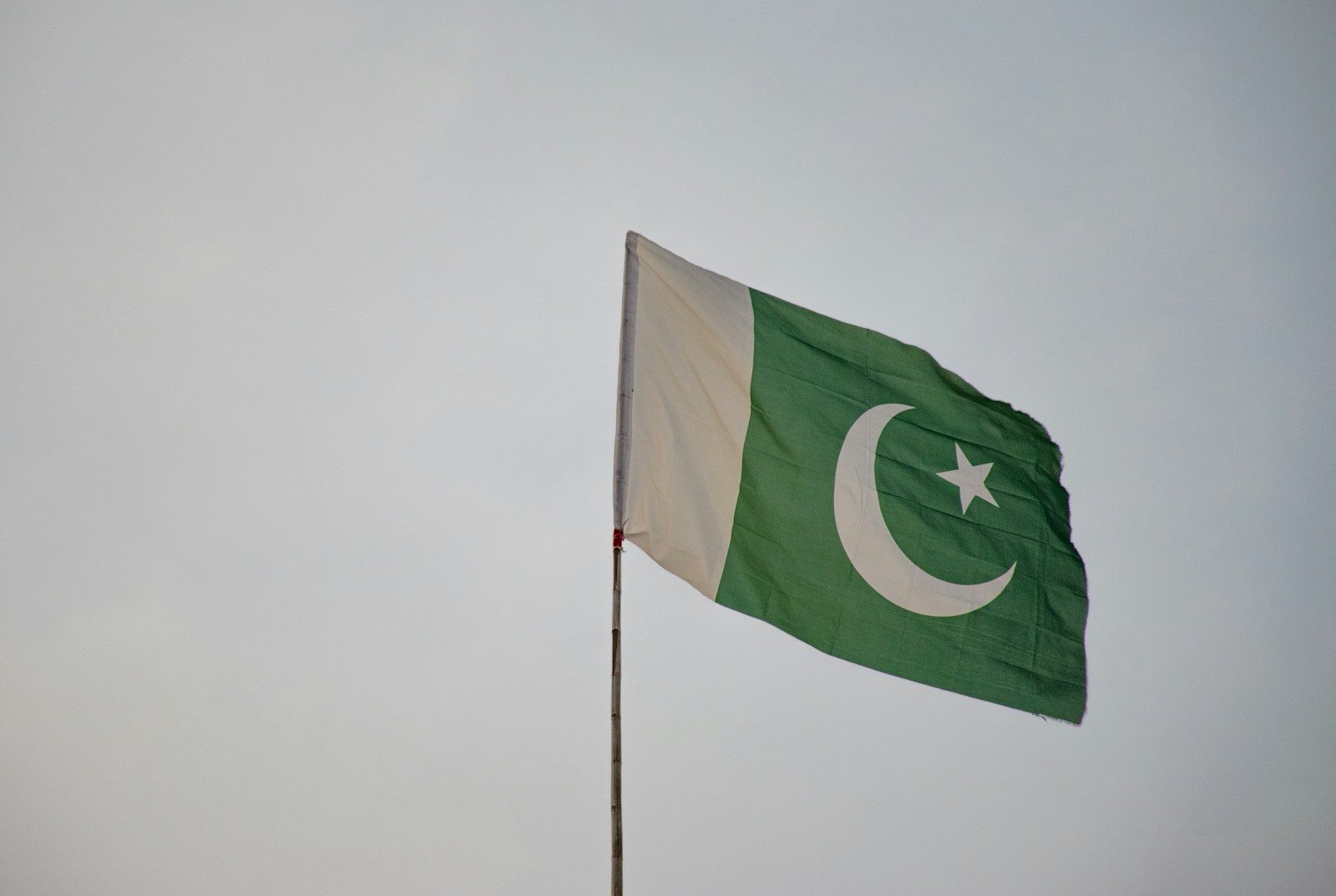
However, the first country to actually do so, was Pakistan, then a military dictatorship led by General Zia ul-Haq. Zia wasn’t actually an Islamist, but he saw the political advantage of shoring up his position by appealing to those inspired by events in Iran.
In 1982 he amended Pakistan’s Penal Code by introducing a law against desecrating the Qur’an. Then in 1986, a far more wide-ranging clause was added criminalising even implied or indirect criticism of Muhammad, effectively meaning that any criticism of Islam itself was potentially punishable by death. In fact, if you wanted a definition of Anti-Islamic ‘hostility’ s.295C of Pakistan’s Penal Code is pretty all embracing
“Whoever by words, either spoken or written, or by visible representation, or by any imputation, innuendo, or insinuation, directly or indirectly, defiles the sacred name of the Holy Prophet Muhammad (peace be upon him) shall be punished with death.”
Pakistan already had incitement to religious hatred laws since British rule, but for the first time it now introduced laws which applied solely to Islam.
The demand for an Islamic blasphemy law quickly spread to the UK where a significant part of the Muslim community had family ties with Pakistan. However, it only really gained traction three years later with the Rushdie affair in 1989.
Most British Muslim organisations had wisely decided to quietly ignore Salman Rushdie’s The Satanic Verses so as not to give it the oxygen of publicity. However, the Islamic Foundation, which was heavily influenced by the work of Mawdudi, the founding father of modern Islamism in the Indian subcontinent, saw it as an opportunity to galvanise support. Its high-profile campaign for the book to be banned was linked to calls for an Islamic blasphemy law. If there was one key point in the radicalisation of a significant minority of British Muslims, it was this.
Then in 1997, while the Rushdie affair was still sore in the minds of many British Muslims, the Runneymede Trust produced a report Islamophobia: a challenge for us all thereby introducing that term to public debate. Whilst widely lauded today that report actually sowed the seeds of later problems by defining Islamophobia as “dread or hatred of Islam and of Muslims” – effectively conflating protecting a belief system with protecting people.
The word ‘Islamophobia’ was then jumped on by Islamists around the world. In 2005 the OIC produced a ten-year strategy whose section on ‘combatting Islamophobia’ made no reference whatsoever to protecting Muslims from hate. Instead, it solely referred to protecting the religion of Islam from “defamation” and called for deterrent punishments to be introduced to counter it in western countries. Effectively, it was calling for an Islamic blasphemy law to be created across the west, under the guise of tackling ‘Islamophobia’.
At the same time, Tony Blair’s 2003 decision to go to war in Iraq proved the catalyst to actually achieve this as Labour’s previously rock-solid hold on the Muslim vote began to haemorrhage significantly to the Lib-Dems who opposed the war. Blair responded with a pledge in Labour’s 2005 manifesto to introduce a law against incitement to religious hatred. This was understood by many Muslim organisations as being the Islamic blasphemy law they had been campaigning for since the Rushdie affair sixteen years earlier.
However, the legislation largely failed to achieve its aim when the government lost a crucial vote on a Lord’s amendment to only make ‘threatening’ comments about religion illegal, not ‘abusive’ or ‘insulting’ ones. Ironically, Blair himself failed to attend the vote resulting in the government losing by a single vote.
However, the campaign against ‘Islamophobia’ continued largely focused on ‘educating’ the public sector. In doing so, it repeatedly conflated the legitimate aspiration of protecting Muslims as people, with attempts to proscribe any criticism of Islam.
In 2018 an All Party Parliamentary Group produced what it called a working definition of Islamophobia, which defined it as a type of racism that targets “expressions of Muslimness or perceived Muslimness.” It was a definition which seemed innocuous enough until one realised that “expressions of Muslimness” included anything related to the religion of Islam.
The importance of making that distinction was laid bare in a report published only a year later by the Commission for Countering Extremism, which noted that
“One of the biggest successes of mainstream Islamists in Britain is, in fact, the campaign to normalise Islamophobia in public discourse as a concept that blurs the distinction between genuine anti-Muslim bigotry and the legitimate criticism of Islamism, outdated shari’a precepts and the illiberal practices justified by them.”
However, by this time the Labour Party had already committed itself to the APPG Islamophobia definition.
The shock loss of five supposedly safe Labour seats to Gaza independents in the 2024 general election sent shockwaves through the party and heightened demands for the government to formally adopt an official definition of Islamophobia.
But Keir Starmer also faced with a chorus of protest that the APPG definition of Islamophobia risked becoming a backdoor Islamic blasphemy law. He therefore appointed former Conservative attorney general Dominic Grieve to lead a working group to come up with a better definition. The result now finally published, is a vague definition of ‘Anti-Muslim hostility’ that as Sir John Jenkins recently observed in a paper for Policy Exchange is potentially even broader than the APPG definition of Islamophobia.
In the same way that Pakistan’s 1982 and 1986 blasphemy laws broke new ground with laws which solely protected Islam, so this definition provides special protections to Muslims not extended to Christians or other minorities. What Keir Starmer may also not appreciate, is that his actions in pushing this policy to shore up his own political support, do not simply mirror those of Tony Blair after the Iraq war, but also those of General Zia, Pakistan’s military dictator who introduced the country’s Islamic blasphemy laws in the 1980s.
Three months before the general election the Commission for Countering Extremism published another report, which noted that ‘blasphemy extremism’ which has exploded in Pakistan in recent years and particularly targets Christians, Ahmadiyya Muslims and other minorities, is now gaining momentum in the UK.
Far from tackling extremism, this official definition of Anti-Muslim hostility may actually fuel it.





![Donald Trump Slams Chicago Leaders After Train Attack Leaves Woman Critically Burned [WATCH]](https://www.right2024.com/wp-content/uploads/2025/11/Trump-Torches-Powell-at-Investment-Forum-Presses-Scott-Bessent-to-350x250.jpg)

![Two Dead, 14 Injured After Gunfire Erupts Following College Football Game in Alabama [WATCH]](https://www.right2024.com/wp-content/uploads/2025/10/Two-Dead-14-Injured-After-Gunfire-Erupts-Following-College-Football-350x250.jpg)