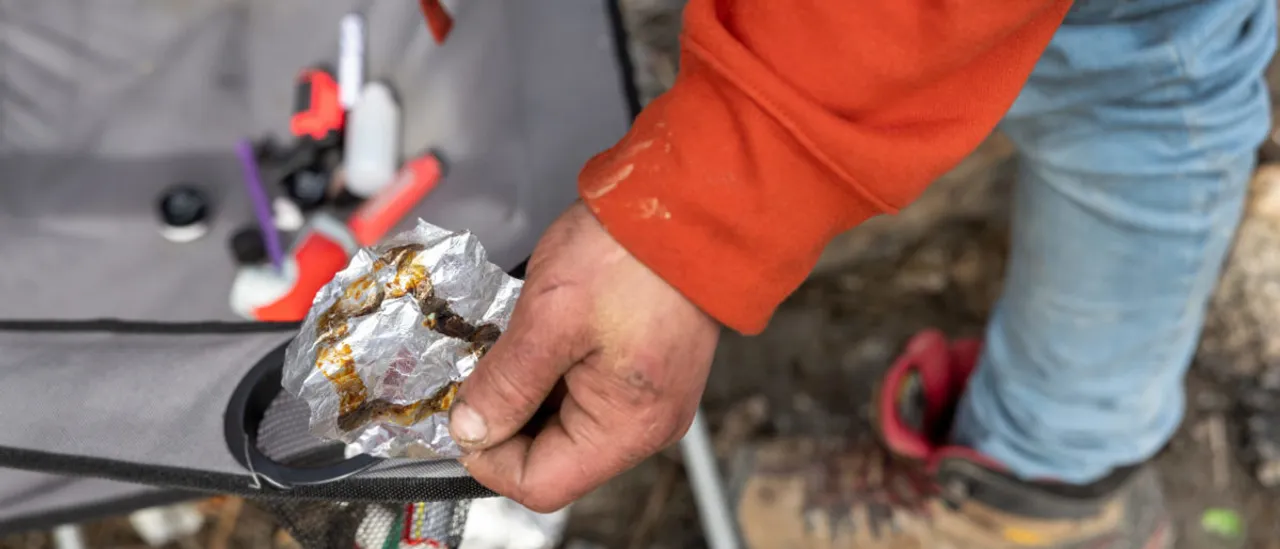
More than 48 million Americans are battling substance use disorder.
Many are deteriorating in plain sight — on sidewalks, in encampments, and in emergency rooms. Others decline behind closed doors.
Overdoses are shattering families, especially within the homelessness population where the death rate among people living on the streets has surged by 77 percent.
Yet in a media landscape quick to amplify controversy but slow to recognize consequential reform, President Donald Trump’s executive order to overhaul America’s addiction response passed with remarkably little national attention.
It shouldn’t have.
At its core, the order affirms a truth long understood by those who have worked on the front lines: no man or woman living with addiction ever dreamed of this life. (RELATED: Mamdani Finds Way To Downplay Homeless Deaths After Deadly Blizzard)
When these individuals were six years old — sitting cross-legged on a classroom rug, answering their first-grade teacher’s question about what they wanted to be when they grew up — no child said they hoped to grow up addicted, psychotic, isolated, or dying on a sidewalk. No one aspired to be forgotten.
They may have fallen. But a fall is an event, not an identity. Any serious national response must begin with that distinction, as this President does.
Co-chaired by HHS Secretary Robert F. Kennedy Jr. and Senior Advisor Kathryn Burgum — two individuals with meaningful “lived” experience — the Great American Recovery Initiative affirms a medical reality too often dismissed in modern progressive policy: addiction and mental illness are not moral failures, nor merely lifestyle expressions. They are diseases of the brain.
And like any disease, addiction worsens when it is neglected.
Often compounding it is another neurological condition — anosognosia — that impairs a person’s ability to recognize their own illness. Thus, the expectation that they must first “choose” treatment is medically unrealistic.
It is why policies built on the assumption that insight and voluntary compliance must precede care have catastrophically failed, as is evidenced on our streets.
We must intervene early, intelligently, and decisively before illness becomes an irreversible loss.
The initiative outlines a comprehensive strategy spanning prevention, early intervention, treatment, recovery, and reentry. It aligns government, healthcare systems, faith-based organizations, and the private sector around outcomes that restore health, responsibility, and self-sufficiency.
It builds on Trump’s first-term initiative — the Patients and Communities Act — which earned full bipartisan support to expand treatment access, disrupt illicit opioid trafficking, and accelerate addiction research nationwide.
But experience has shown that even bipartisan reforms can be derailed by entrenched interests invested in preserving the status quo.
Consider homelessness policy. For more than a decade, the federal government’s Housing First approach has poured billions of taxpayer dollars into permanent housing without requiring sobriety, treatment engagement, or measurable recovery outcomes.
In practice, it often meant placing individuals battling severe addiction and mental illness into isolated units where treatment was scarce, drug use was normalized, and dealers followed the flow of public money.
President Barack Obama pledged this approach would end homelessness in a decade. Instead, homelessness rose by nearly 35 percent, despite a 300 percent surge in funding.
When the Trump Administration moved to realign policy with medical reality — prioritizing recovery, accountability, and integrated care — the well-funded Homeless Industrial Complex rushed to the courts to block reform, even as the Administration proposed a 10 percent funding increase.
If “the advocates” efforts succeed, the human toll will continue to climb. Because stability follows health, not the other way around.
These proposed policy reforms are grounded in this truth. They affirm that addiction is a disease, that disease requires treatment, and that those who suffer from it are capable of far more than mere survival.
They are a fundamental pivot. Away from resignation and toward restoration. Away from passive management of decline and toward recovery. Away from low expectations and toward reclaiming futures.
The stakes are not ideological. They are human.
The question before us is, “Will we continue supporting policymakers and policies that simply manage decline — in our streets, in our neighborhoods, and inside people’s own homes — or will we fight to help Americans heal and prosper?”
Michele Steeb is the founder of Free Up Foundation and author of “Answers Behind the RED DOOR: Battling the Homeless Epidemic,” based on her 13 years as CEO of Northern California’s largest program for homeless women and children. She is a Visiting Fellow with the Discovery Institute’s Fix Homelessness Initiative. Follow them on Twitter: @SteebMichele and @ DiscoveryCWP.
The views and opinions expressed in this commentary are those of the author and do not reflect the official position of the Daily Caller News Foundation.
All content created by the Daily Caller News Foundation, an independent and nonpartisan newswire service, is available without charge to any legitimate news publisher that can provide a large audience. All republished articles must include our logo, our reporter’s byline and their DCNF affiliation. For any questions about our guidelines or partnering with us, please contact licensing@dailycallernewsfoundation.org.






![Donald Trump Slams Chicago Leaders After Train Attack Leaves Woman Critically Burned [WATCH]](https://www.right2024.com/wp-content/uploads/2025/11/Trump-Torches-Powell-at-Investment-Forum-Presses-Scott-Bessent-to-350x250.jpg)

![Kamala Comes Unglued, Makes Bogus Claim About Her Landslide Loss to Trump [WATCH]](https://www.right2024.com/wp-content/uploads/2025/10/Kamala-Comes-Unglued-Makes-Bogus-Claim-About-Her-Landslide-Loss-350x250.jpg)