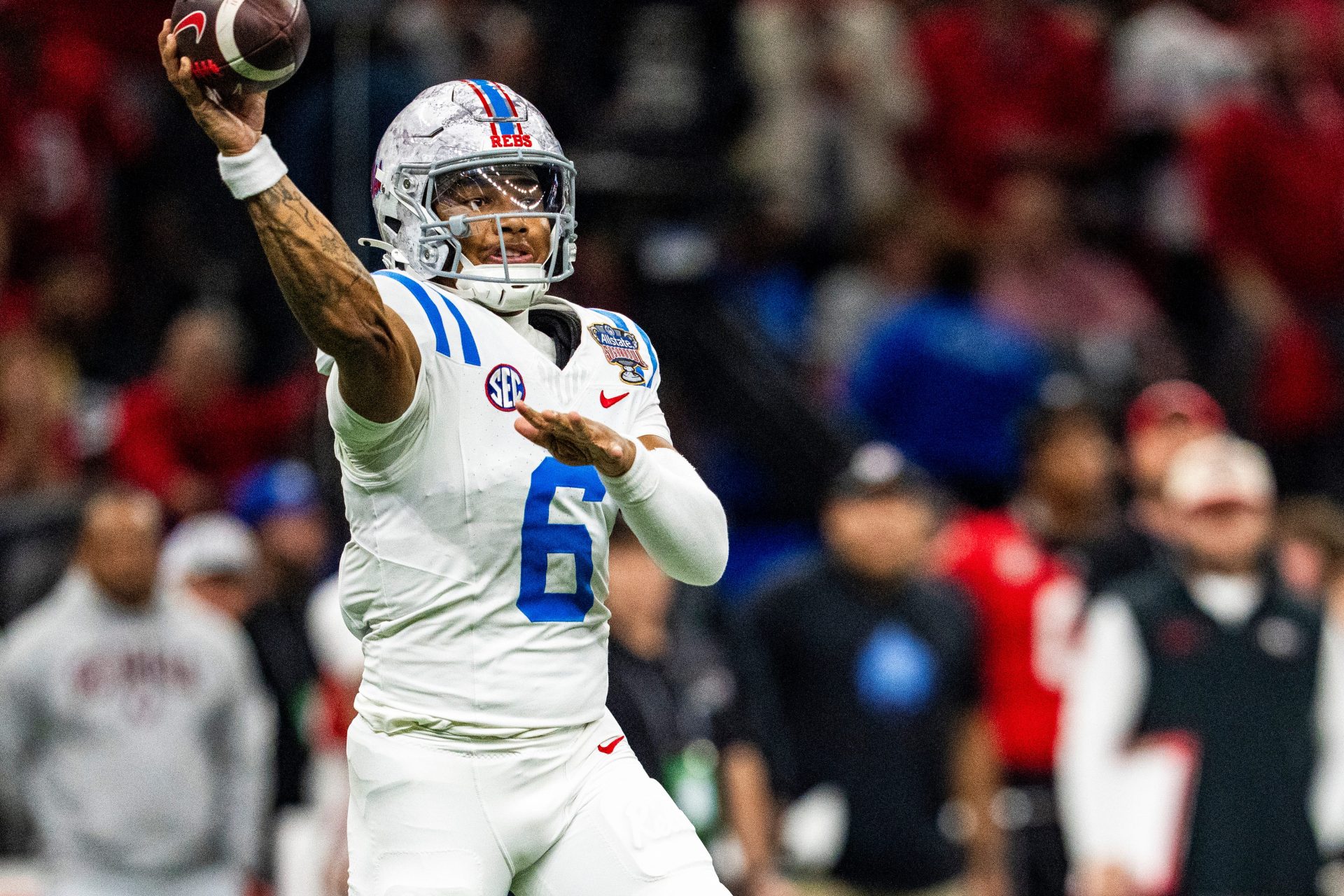
Trinidad Chambliss’ bid to play one more season at Ole Miss just got a major boost from the Mississippi Supreme Court, and the practical result is the one Rebels fans have been waiting on: the quarterback is now expected to be available for the 2026 season while the broader case keeps grinding through the courts.
On Friday, the Mississippi Supreme Court denied the NCAA’s petition seeking permission to appeal a February state court ruling that granted Chambliss an extra year of eligibility. The court’s order did not include an explanation. The underlying legal fight is still technically alive, but the timeline is working in Chambliss’ favor. The case is not expected to be fully resolved before the end of next season, which means he is expected to suit up for Ole Miss in 2026.
The decision is the latest turn in a months-long eligibility dispute that has put the NCAA’s waiver process under a microscope and placed one of the SEC’s breakout players at the center of it.
Here’s What They’re Not Telling You About Your Retirement
How the case started
Chambliss sought a sixth year of eligibility after arguing he effectively lost the 2022 season at Division II Ferris State because of respiratory issues. In February, state court judge Robert Whitwell issued an injunction that paved the way for Chambliss to be eligible in 2026, concluding that Chambliss met the criteria for a medical redshirt and that the NCAA had ignored medical evidence in denying his waiver request. Whitwell also wrote that Chambliss would face irreparable harm if he was kept off the field and concluded the NCAA did not act in good faith in denying the waiver.
At that February hearing, the NCAA’s position was that Chambliss’ medical records indicated he chose to forgo surgery in 2022 so he could participate in the season and instead managed his condition with medication. Whitwell rejected the NCAA’s handling of the waiver and sided with Chambliss.
The NCAA publicly criticized the state-court route at the time, arguing that conflicting decisions create instability. “This decision in a state court illustrates the impossible situation created by differing court decisions that serve to undermine rules agreed to by the same NCAA members who later challenge them in court,” the NCAA said in its statement.
Ole Miss, in its own statement during the case, backed its quarterback: “We believe this outcome affirms what we have maintained throughout this process that Trinidad deserves the opportunity to compete and complete his collegiate career on the field.”
This Could Be the Most Important Video Gun Owners Watch All Year
What Friday’s ruling changes
After the injunction, the NCAA sought to appeal. Friday’s denial by the Mississippi Supreme Court removes that immediate path and leaves the February injunction standing. The court did not provide details in the denial, but the operational takeaway is clear: Chambliss’ eligibility for 2026 is expected to remain intact while the case continues.
A separate legal detail in the case also matters for why the fight is likely to outlast the season. The February ruling and subsequent filings set up a longer litigation track that is unlikely to be concluded before the end of the 2026 season, which is why the eligibility issue is now widely viewed as settled enough for football purposes, even if the courtroom portion is not over.
Why it matters for Ole Miss and the SEC
Chambliss’ 2025 season is the reason the stakes are so high. He became one of the sport’s breakout players after transferring from Ferris State and ended the year with 3,937 passing yards, 22 touchdown passes, and three interceptions. He was named SEC newcomer of the year.
He also led Ole Miss through a memorable postseason run, and his return immediately impacts the SEC’s 2026 landscape, not as a hypothetical, but as a roster reality now that the biggest procedural threat to his eligibility has been turned away.
For now, Ole Miss has what it wanted: a clearer runway to plan around its starting quarterback for 2026. The NCAA still has its broader arguments about eligibility authority, but after Friday’s ruling, the most immediate question, whether Chambliss will be allowed to play, has a far more concrete answer than it did a few weeks ago.
The opinions expressed by contributors and/or content partners are their own and do not necessarily reflect the views of LifeZette. Contact us for guidelines on submitting your own commentary.