Oscar Gill-Lewis is a political commentator with Young Voices and Correspondent Program Manager at Speak Freely Magazine. He writes for Speak Freely and on Substack, and his articles have appeared in Conservative Home, The Daily Express, and Comment Central.
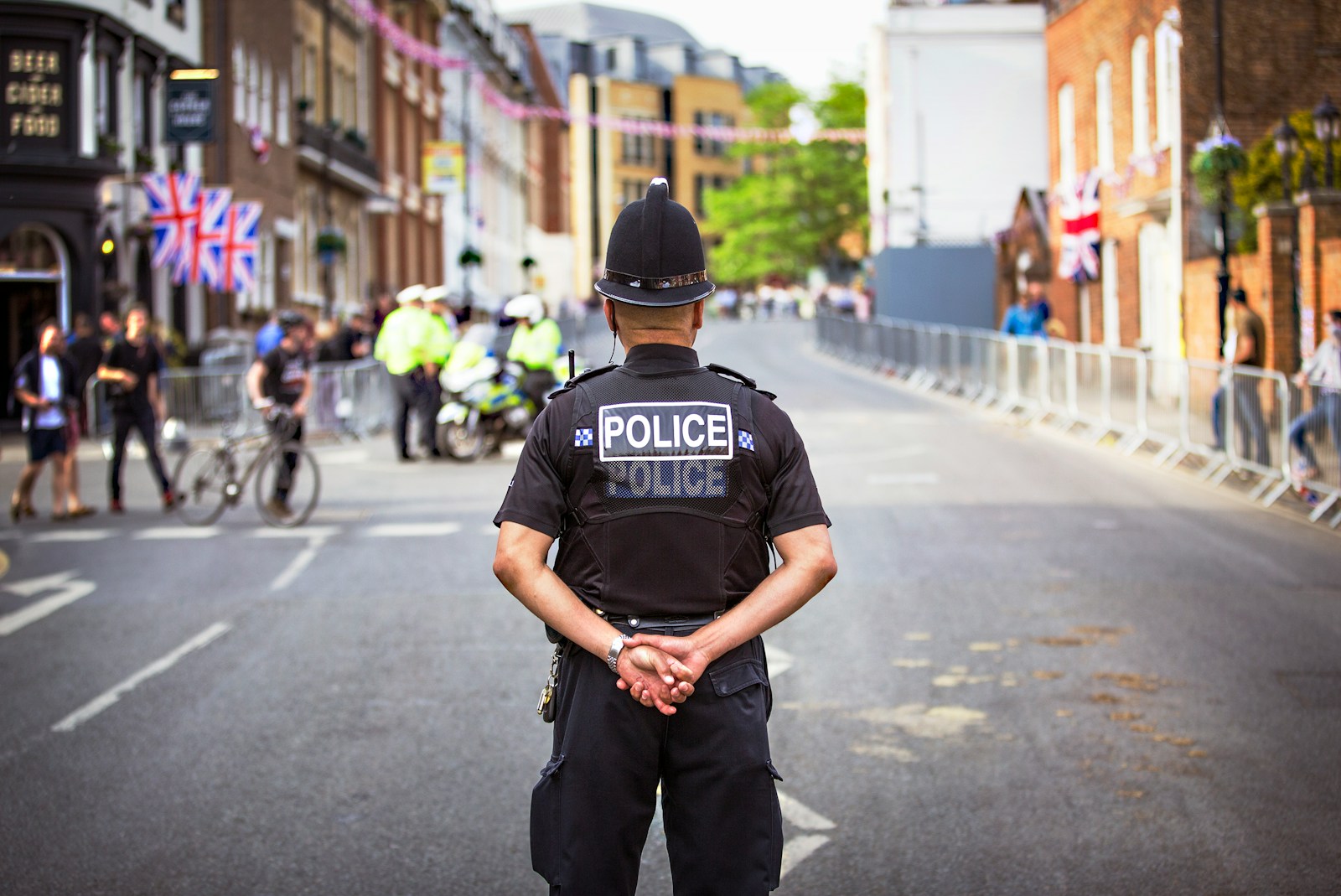
Shabana Mahmood recently unveiled her plan to reform “broken” policing in England and Wales. She is absolutely right that it needs reforming. Unfortunately, many of the reforms leave much to be desired.
Many will turn to the Conservative Party, which proudly maintains its desire to be the party of law and order. Interestingly, both the Conservatives and Labour seem to align on two key policies: hire more police officers and reduce bureaucracy.
Readers will remember Diane Abbott’s infamous gaffe, where she simply could not remember or produce the amount of money they planned to pay the 10,000 new police officers Labour wanted to recruit. Boris Johnson made this a reality by hiring 20,000 more police officers, after a 15 per cent decrease in officers between 2009 and 2018.
Having more police and officers in the force sounds like a great idea and is very intuitive. If we can give the police a numerical advantage and strength in numbers, then criminals will be deterred and law and order restored. Obviously, numbers matter up to a point. But the persistence in keeping hiring more officers misses the actual point. There are so many reforms that you could and probably should do before increasing the number of police hires, because it makes it easier to know when you have a sufficient number of police.
It also makes sense from an election standpoint, why the policy is so favoured. Voters make clear links between the number of police officers and a reduction in crime, and therefore their safety. The Conservatives want to hire 10,000 police officers over 3 years, while Labour want to put 13,000 neighbourhood police “back” on the streets.
This is both dull and predictable from both parties, however the Home Secretary’s recently announced plans offer a golden opportunity for the Conservatives. Mahmood’s plan ranges from the conceitful to the outright dangerous. She wants to reduce “excessive” bureaucracy but plans to centralise many of the local forces, absorbing around two-thirds. Trying to reduce excessive bureaucracy while centralising an organisation is like trying to slow down while pressing the accelerator. It is unwise and ‘fatally’ conceited. Mahmood also plans to have 40 more facial recognition vans. Regardless of its efficacy, it is a form of soft authoritarianism and has no place in a free society. The plans will allow Kemi Badenoch to offer policing reforms that go beyond ‘more bobbies’ and will have a greater but cheaper impact.
The Conservatives need not press the privatisation button for the police as some have suggested. Privatisation is perceived to be an ugly word with uglier consequences by many across the country. People who have been scarred by their experience with privatised railways and water. I am no enemy of privatisation, but I don’t believe the police are the right choice for it. There are plenty of reforms that can be made to make policing more effective and less burdensome on the public purse without drawing accusations of dodgy contracts to ‘mates’.
Increasing the police presence felt by the public is one of the most important changes. It doesn’t require you to increase the number of police, only how you utilise them. Police should be building relationships and trust within the community. They should also be given the chance to remain in the same place for a longer period of time, to help build rapport and connections within the community.
They will also build rapport much quicker with solo on foot or bicycle patrols. The police are much more noticeable and more likely to speak to citizens. Often, police officers gather in small groups and can be heard discussing football or their pensions. They are much less likely to speak to members of the community, let alone build rapport.
The police should also practice zero-tolerance policing, something shadow Home Secretary Chris Philp has outlined in his 8 point plan.
In many major cities, especially London, energy and resources are only given to serious offences. But that is counterproductive, especially in the capital. Violent crimes have been falling, while ‘smaller’ crimes like theft, of phones and bicycles, for example, are on the rise. In other words, the police face a perception problem. Londoners as well as other metropolitan areas, are having more frequent interactions with criminals, while those experiences are less violent, the perceived safety is heavily eroded.
Taking all types of crime seriously is a must; the small crimes like graffiti and phone theft can’t be expected to sort themselves out. We would be better off, if the police took the view that tackling crime was a collaborative project with the community they served. Citizens usually do much of their own investigative work, tracking locations of stolen goods or noticing strange behaviour. Even if they wanted to help officers complain of too much paperwork. The Tories’ current proposal is to stop recording non-crime hate incidents. It is a step in the right direction but doesn’t go far enough. Police spend a tiny amount of the time on the beat. One solution that has worked well in the U.S. is civilianisation. This frees up officers time, gives them greater job satisfaction and saves money, because they won’t earn as much as police officers.
Ultimately, policing needs much deeper, institutional reform in the UK. Focusing on the policies suggested are an excellent start and will provide the required foundation and evidence to prove to the British public that policing can be changed, and improved. They will also improve law and order as well as the perception of law and order, which can often be more important.


![Donald Trump Slams Chicago Leaders After Train Attack Leaves Woman Critically Burned [WATCH]](https://www.right2024.com/wp-content/uploads/2025/11/Trump-Torches-Powell-at-Investment-Forum-Presses-Scott-Bessent-to-350x250.jpg)


![James Carville Admits Democrats Had No Shutdown Endgame, Mishandled Strategy [WATCH]](https://www.right2024.com/wp-content/uploads/2025/11/1763070634_James-Carville-Admits-Democrats-Had-No-Shutdown-Endgame-Mishandled-Strategy-350x250.jpg)