Pia Comer is a Policy Fellow at the Pinkster Centre.
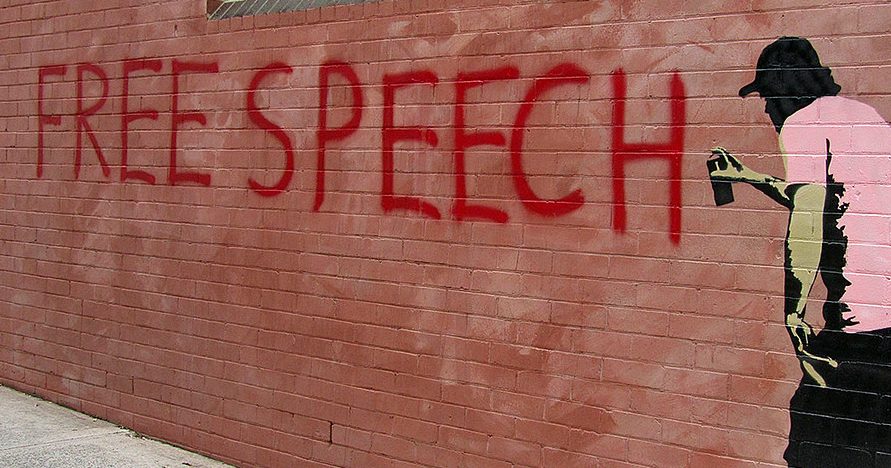
When JD Vance made headlines warning the UK against following the same “dark path” of censorship as America supposedly did under the Biden administration, he wasn’t exaggerating. On average, over thirty people a day are being arrested in Britain for what they say. This isn’t just Britain’s problem: worldwide, infringements on free speech are becoming more and more common.
Critics often object that free speech advocates are selective in their campaigning, or that we must have stringent limits on speech to prevent harm. These concerns all sound reasonable in theory, but in practice overlook the fact that democracy itself demands disagreement.
When the views of those we disagree with are silenced, it’s not only liberty that’s at stake. We also surrender ourselves to the irreversible harm of false conventions, and worse: we remove the only system that could reveal our error.
Tavistock’s Gender Identity Development scheme prescribed puberty blockers to more than one thousand children often under the age of sixteen. Yet, the children continued to suffer from intensifying mental health issues and eating disorders. Had the Cass Review not finally – after over a decade of false consensus silencing those deemed ‘gender critical’ or ‘TERFs’, with multiple publication rejections for journalist Hannah Barnes’ – had the opportunity to voice concerns about empirical bases for irreversibly altering children’s bodies through surgery, many more children would have undergone permanent damage. The truth matters because policies based on falsities cause harm.
On selectivity, President Trump has recently been subjected to the wrath of the BBC’s increasingly partial brand of ‘impartiality’, with the BBC merging two statements (said fifty-four minutes apart) to imply the President was inciting a “fight” against the Capitol. President Trump’s criticism was justified. But, he is also often accused of being a selective supporter of free speech – and it’s true.
Rather than free speech, Trump prefers “me speech”: defending free speech for his supporters alone. Trump’s White House demanded X remove posts mocking him. He threatened broadcasters with license revocation for critical commentary. And he’s suing media outlets for billions. But, Trump’s selectivity doesn’t invalidate free speech, it just proves that he doesn’t represent it.
Then there is the endless debate about speech that causes ‘harm’. The instinct to restrict speech that causes harm is human inevitability – a survival instinct that I feel too. Ideally, free speech, in the context of harm, would operate as a reciprocal right: I won’t express harm toward you if you don’t express harm towards me. But, who decides what arbitrary boundary constitutes harm? Definitions of ‘harm’ are always defined in terms of straying from a personal orthodoxy. The line is political, not principled.
Some, from the luxury of hindsight, claim we could’ve prevented the Holocaust’s atrocities had harmful speech been restricted. But, this misrepresents German history. Whilst the National Socialist Party did come to power through democratic support in 1933, dissenting voices – communists, socialists, liberals – were quickly silenced and abused. The question isn’t whether speech can cause harm, but whether empowering governments to both define and restrict ‘damaging’ speech causes greater harm when left unchecked. I believe it does. Uncomfortable speech may wound egos and emotions, but leaving common consensus to reign free harms actual people.
Our culture has classified words as weapons, fostered victim mentalities, and accordingly expanded what constitutes harm to the point that speech itself is equated with violence. When uncomfortable words are associated with physical harm, disagreements are transformed into existential threats that demand counterattacks. We assume a perfect detachment from bias, and an infallible alliance with truth that warrants dogmatic refusal to hear the other side. But, this assumption is false. We must tolerate speech, and save retaliation for actual violence.
Ultimately, there will always be someone who holds an antithetical opinion to yours, and, more often than not, their belief will contain at least some truth. If it doesn’t, it will, if nothing else, strengthen your own assertion. After all, the fact that we hold the beliefs we do is really a very unlikely thing: “the same causes which make him a Churchman in London, would have made him a Buddhist or a Confucian in Pekin”, said J.S.Mill. We have a responsibility to ourselves to receive supposedly ‘immoral’, ‘evil’, or ‘crazy’ opinions with the same presumption of rationality as those we condone, and to apply pressure to those beliefs that require challenging.
The test of a genuine belief is whether you’re able to defend it against challenges. So, I remain open to the fact that I could be mistaken – about this, and every other belief I hold. Those that disagree with me aren’t wicked, but, quite righteously, attempting to further the pursuit of truth. This principle has kept our democracies functioning for hundreds of years; Britain’s current trajectory shows precisely what will be lost if we fail to defend it.


![Donald Trump Slams Chicago Leaders After Train Attack Leaves Woman Critically Burned [WATCH]](https://www.right2024.com/wp-content/uploads/2025/11/Trump-Torches-Powell-at-Investment-Forum-Presses-Scott-Bessent-to-350x250.jpg)

![Two Dead, 14 Injured After Gunfire Erupts Following College Football Game in Alabama [WATCH]](https://www.right2024.com/wp-content/uploads/2025/10/Two-Dead-14-Injured-After-Gunfire-Erupts-Following-College-Football-350x250.jpg)