
By Elias Turk
Rome, Italy, Dec 2, 2025 /
11:30 am
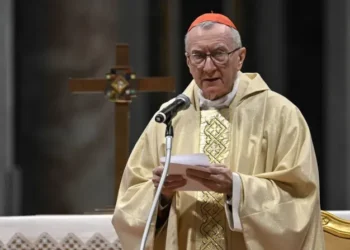
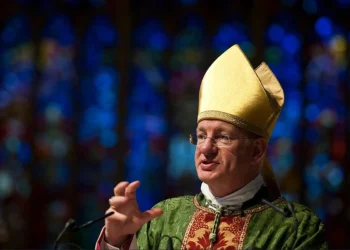
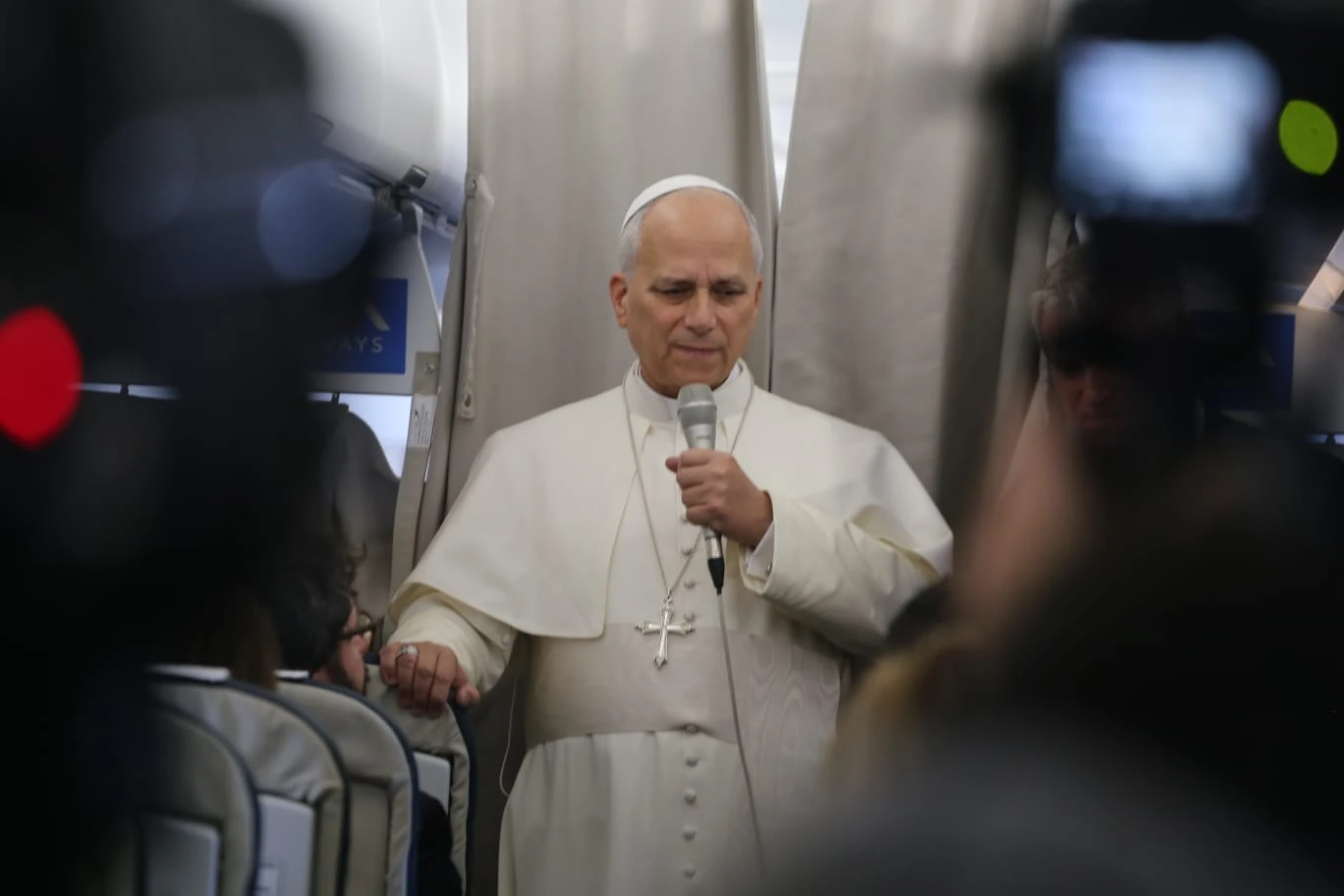
Pope Leo XIV has begun conversations with U.S. President Donald Trump and Israel’s Prime Minister Benjamin Netanyahu about the need to halt violence and seek solutions in the Middle East, the pope told journalists on his Tuesday flight from Beirut to Rome.
The wide-ranging news conference also touched on Ukraine, the Catholic Church in Germany, and Leo’s own election as pope, among other topics.
In response to a question referring to Hezbollah, an Iran-backed political party and militia that holds significant influence in Lebanon, the pope said that during the trip he also held personal meetings with representatives of unnamed political groups involved in regional conflicts. “Our work is not something we announce publicly,” he said. “We try to convince the parties to put down the arms and violence and come together to the table of dialogue.”
Leo also addressed concerns about Islam in Europe, saying fear is often “generated by people who are against immigration.” He said the Middle East offers an alternative model. “One of the great lessons that Lebanon can teach to the world,” he said, “is showing a land where Islam and Christianity are both present and respected, and where there is a possibility to live together.”
On Ukraine, Leo repeated his appeal for a ceasefire. He acknowledged that the United States is seeking to promote a peace plan, but “the presence of Europe is important,” noting that the administration in Washington modified its first proposal after European concerns. He suggested that Italy could play “a very important role” as an intermediary.
Asked about his own election, he said he had once imagined retiring. He affirmed his commitment to conclave secrecy but recalled telling a reporter the day before his election that “everything is in the hands of God.” When the reality of the vote became clear, he said, “I took a deep breath. I said, here we go, Lord, you are in charge.” Leo added that he is often amused by journalists’ interpretations of his expressions. “You think you can read my mind or my face,” he joked, “and you are not always correct.”
Leo said he hopes his next trip will be to somewhere in Africa and said he wants eventually to go to Algeria to visit sites associated with St. Augustine and continue building bridges with Muslims. He said he would also like to visit Argentina and Uruguay, which have been waiting for a papal visit. He added that other Latin American countries, including Peru, are being considered, but “nothing is confirmed.”
On Venezuela, Leo said the Holy See is working with the national bishops’ conference and the nuncio to calm tensions after recent threats from the United States. “We are looking for ways to calm the situation,” he said, “seeking above all the good of the people, because so often those who suffer are the people, not the authorities.”
Responding to a question about the German Church’s Synodal Way, a controversial series of meetings of bishops and laity that have proposed major changes to Catholic doctrine and governance, Leo noted concerns among many German Catholics that “certain aspects of the Synodal Way … do not represent their own hope for the Church.” He stressed the need for “dialogue and listening … so that the voice of those who are more powerful does not silence or stifle” others.
“I suspect there will be some adjustments made on both sides in Germany, but I’m certainly hopeful that things will work out positively,” Leo said. He added that the ongoing meetings between German bishops and the Roman Curia aim “to try and make sure that the German Synodal Way does not, if you will, break away from what needs to be considered as the pathway of the universal Church.”
Asked what the Middle Eastern Church can offer the West, Leo reflected on the value of unity in an individualistic age. “Young people ask, why should I want to be one?” he said. “But unity, friendship, human relationships, communion are extremely important and extremely valuable.” Recalling the testimony of Christians and Muslims who helped one another after their villages were destroyed, he said such gestures show how “authentic peace and justice” can take root when people overcome distrust.
In response to a question about how he is learning to be pope, Leo recommended a book that he said has shaped his own life by the 17th-century Carmelite friar known as Brother Lawrence. “If you want to know something about me,” he said, “read ‘The Practice of the Presence of God.’ It describes a way of prayer where one simply gives his life to the Lord and allows the Lord to lead. That has been my spirituality for many years.”

Elias Turk is the Vatican/Rome editor for ACI MENA.