Senate Republicans sought to add heft Tuesday to President Trump’s argument that the Constitution doesn’t — and shouldn’t — require birthright citizenship, saying the great grant of American status shouldn’t be reduced to a legal “loophole” of birth.
Republicans argued that the idea of automatic citizenship is relatively new and represents a departure from the country’s understanding for at least the first 100 years of its existence.
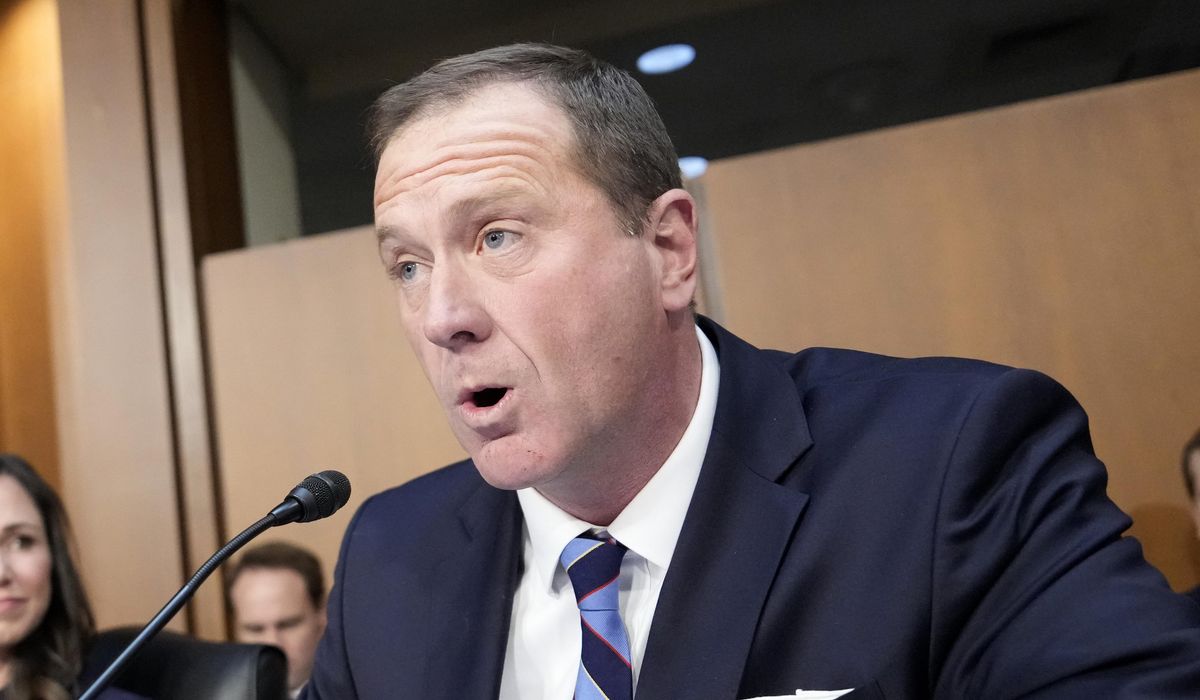
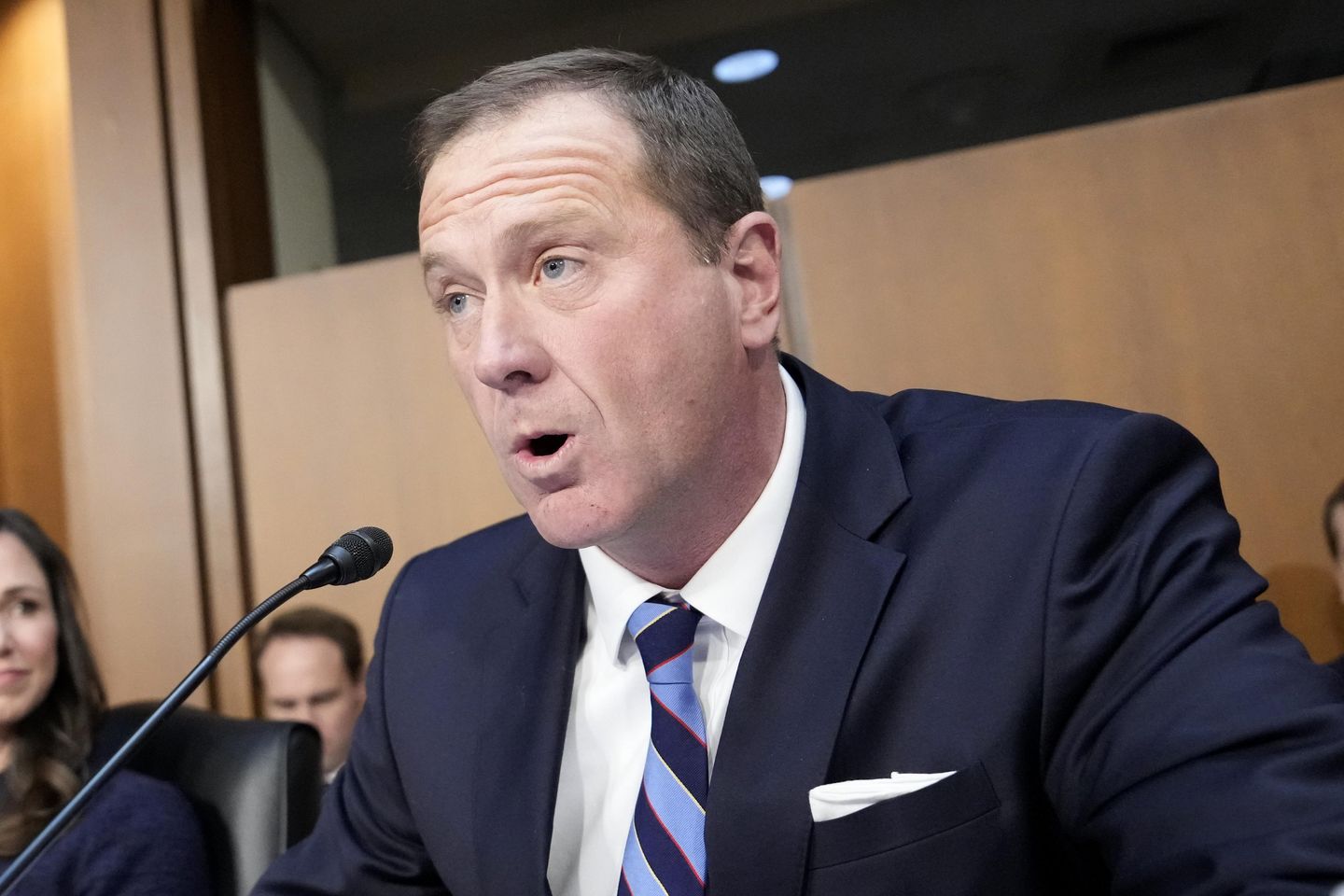
“The question before us today is a simple one: Is American citizenship the inheritance of a nation and a people? Or is American citizenship simply a hollow, vacuous legal definition without protections against fraud, abuse and bad actors?” said Sen. Eric Schmitt, the Missouri Republican who led the Judiciary Committee in exploring the topic.
In less than a month, the Supreme Court is slated to hear Mr. Trump’s appeal of lower court rulings blocking his executive order attempting to limit automatic citizenship.
For decades, the legal consensus was that the issue was settled, and with only limited exceptions, such as for children of diplomats, anyone born on U.S. soil was a citizen from that moment.
They cite the 14th Amendment, ratified in the wake of the Civil War, to guarantee formerly enslaved people full civic rights. That amendment says citizenship is guaranteed for “all persons born or naturalized in the United States, and subject to the jurisdiction thereof.”
That “jurisdiction” language has become the legal battleground.
The Supreme Court has never ruled directly on a case involving illegal immigrants, but in an 1898 case, known as Wong Kim Ark, it did find that a man born in the U.S. to Chinese parents who did not have citizenship was, himself, a citizen at birth.
Amanda Frost, a law professor at the University of Virginia, said the ruling, confirmed by subsequent decisions in 1957, 1966 and 1985, is insurmountable for Mr. Trump.
She pointed out that every court that has considered Mr. Trump’s order has ruled against him.
Sen. Alex Padilla, California Democrat, said the issue is settled in his mind.
“Doesn’t matter if your ancestry goes back to the Mayflower, or if you’re first-gen like myself, or somewhere in between. If you were born on American soil, you’re an American citizen. Full stop, end of story,” he said.
Conservatives have mounted a feverish counterattack.
Charles J. Cooper, who ran the Justice Department’s Office of Legal Counsel in the Reagan administration, said the debates in the 1860s, first on a civil rights law and later the 14th Amendment, make clear they never intended birthright citizenship to be as broad as it’s interpreted today.
“No one suggested that a child born to such foreigners while visiting here should be entitled to citizenship at birth,” he said.
Mr. Cooper acknowledged that part of the Wong Kim Ark ruling includes language that appears to apply to illegal immigrants, but the lawyer said that was what’s known as “dicta” — part of the court’s legal reasoning but not a statement of the actual legal “holding” of the case.
Sen. Richard J. Durbin, Illinois Democrat, said even beyond the court’s past ruling, a 1950s-era law enshrines birthright citizenship, and Mr. Trump cannot surmount that with his executive order.
Mr. Trump’s executive order applies to babies born to illegal immigrants and temporary visitors. It directs government offices to decline to recognize their citizenship.
Ms. Frost said that if the president is successful, it could strip 250,000 children born here every year of citizenship, potentially leaving some of them stateless and subject to deportation at birth.
Ms. Frost also said the Trump administration’s plans would force everyone to prove citizenship at birth, potentially going back generations.
Mr. Schmitt said the current American interpretation stands out from its peers.
“This is a dramatic departure from how most nations understand citizenship,” Mr. Schmitt said.
A 2018 survey by the Library of Congress found that while it was the practice in most of the Western Hemisphere, including Brazil, Mexico and Canada, birthright citizenship was rare in Europe and Asia. Spain, Britain and Germany based citizenship on a parent’s status, while France based it on the child’s age and residency. Australia used a combination.
Ireland had unconditional birthright citizenship until 2005, when it imposed restrictions based on a parent’s status.
Peter Schweizer, a conservative researcher who has studied the issue, said Chinese parents in particular take advantage of birthright citizenship to have children born here. In some cases, they even turn to surrogate mothers for the births.
He said authoritative studies have put the number at anywhere between 50,000 and 185,000 a year. Although they have U.S. citizenship from birth, their upbringing lacks the inculcation of American civics and values.
Mr. Schweizer said it has indications of being an intentionally subversive practice backed by a foreign government. He said members of the Chinese elite are among those who take advantage of it.
“These children are born here. As soon as they are capable of flying, they are flown back to China, that is where they are going to be raised,” he said.
Democrats questioned his numbers, but said if it is an issue, there are other ways to deal with it, including a law already on the books that discourages “birth tourism.”






![Donald Trump Slams Chicago Leaders After Train Attack Leaves Woman Critically Burned [WATCH]](https://www.right2024.com/wp-content/uploads/2025/11/Trump-Torches-Powell-at-Investment-Forum-Presses-Scott-Bessent-to-350x250.jpg)