Dr Sandesh Gulhane is one of the Scottish Conservative and Unionist MSPs for Glasgow, and Shadow Cabinet Secretary for Health and Social Care.
As a doctor, I don’t need statistics to tell me that Scotland’s health system is under immense strain — I see it every single day.
It’s evident in the overcrowded A&E waiting rooms, the increasing number of cancelled operations and the growing number of patients who simply cannot move through the system in the way they should.
One of the clearest and most damaging examples of this is delayed discharge.
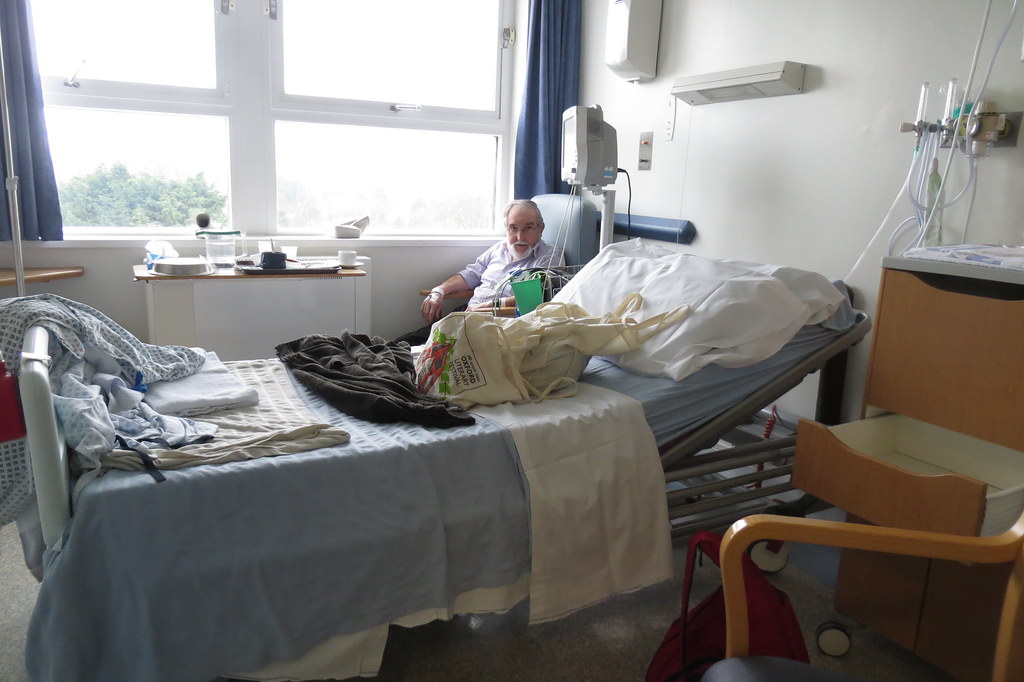
Often referred to as bed-blocking, delayed discharge is when a patient is medically ready to leave hospital but cannot do so because the necessary care, support, or a place in a care home is not available.On paper, it sounds like a logistical problem. In reality, it is a deeply human crisis with serious consequences for patients, staff, and the wider NHS.
From my perspective in general practice, delayed discharge has a knock-on effect that reaches far beyond hospital walls.
When patients are stuck in hospital beds unnecessarily, it has a ripple effect on the entire system. Ambulances queue outside A&E departments. Patients wait longer for operations. GP practices pick up the pieces from those who don’t want to add to the pressure on emergency wards or who deteriorate while they wait for treatments delayed by bed-blocking.
For those patients trapped needlessly in hospitals because there’s no care package in place for them, the impact can be devastating.
They experience a decline in both their physical and mental health. Mobility is lost. Confidence drains away. Independence, once taken for granted, slips out of reach. The longer someone stays unnecessarily in hospital, the higher their risk of developing hospital-acquired infections — a risk no patient should be exposed to without good reason.
Delayed discharge strips people of their dignity. Being stuck in a hospital ward, often sharing space with strangers, with little privacy and limited autonomy, is not where anyone should spend weeks or even months of their life if it can be avoided.
The scale of the problem in Scotland is now impossible to ignore. Last year alone, delayed discharges accounted for over 720,000 bed-days — the highest figure on record since national guidelines were introduced.
A recent report from the country’s spending watchdog, Audit Scotland, put the financial cost of delayed discharge at £440 million per year. That money could, and ideally would, be spent on reducing the shocking year-plus waiting times for treatment which the SNP are presiding over, despite these lengthy delays having been virtually eliminated south of the border by the last UK Conservative government.
What makes this situation all the more frustrating is that it is not new. SNP ministers promised to eradicate delayed discharge more than a decade ago.
Since then, we have seen successive First Ministers — from Nicola Sturgeon to John Swinney — acknowledge the problem, make warm statements, and then allow it to worsen on their watch.
For years, clinicians have warned that this was becoming unsustainable. But the SNP have preferred to talk about independence while our public services fall into disrepair.
If John Swinney was serious about addressing this crisis, he would be throwing the kitchen sink at it. Instead, just last week, he spent close to an hour speaking to SNP supporters about independence.
At a time when patients are stuck in hospital beds unnecessarily and staff are stretched to breaking point, that tells you everything about where his priorities lie.
The truth is, there is no point waiting for the SNP to finally get to grips with delayed discharge. Patients cannot afford more excuses. That is why we have put forward a bold, practical plan to tackle this problem head-on.
Our Fast Track to Care proposal is designed to cut delayed discharge and free up desperately needed hospital capacity — quickly and safely.
We would introduce a pilot scheme allowing patients who are medically ready to leave hospital to move temporarily into local care homes, while local authorities complete the planning for their long-term package of care. This would give patients a more appropriate setting for recovery or ongoing support, rather than leaving them stranded in an acute hospital ward.
Importantly, this scheme would only operate in council areas where there is existing capacity in care homes. The NHS and local authorities would work in partnership to identify suitable short-term placements, ensuring patients receive safe, high-quality care throughout this transition period.
The benefits would be immediate and tangible.
Hospital beds would be freed up for those who urgently need acute care. Waiting times would come down and pressure on A&E departments would ease. And patients would be cared for in a calmer, more dignified environment closer to the community.
That’s why our proposals have been welcomed by healthcare professionals and patients alike.
To make them work, we would secure up to 600 short-term care home beds across pilot areas by providing targeted funding to Health and Social Care Partnerships in local authorities that opt into the scheme.
This funding would allow councils to pay 25 per cent above the National Care Home rate to procure these beds — a necessary incentive to ensure participation and availability.
Delayed discharge is not an unsolvable problem. It is the product of misplaced priorities and a lack of political will.
As a GP, I see every day what happens when systems fail to work together and patients are left stuck in limbo. Scotland’s patients deserve better than warm words and broken promises.
They deserve action — and they deserve it now.





![Donald Trump Slams Chicago Leaders After Train Attack Leaves Woman Critically Burned [WATCH]](https://www.right2024.com/wp-content/uploads/2025/11/Trump-Torches-Powell-at-Investment-Forum-Presses-Scott-Bessent-to-350x250.jpg)