Dr Sarah Ingham is the author of The Military Covenant: its impact on civil-military relations in Britain.
Churches across the country were visited by donkeys last weekend. Chorister Martha Owen led Teddy into Ripon Cathedral for the Palm Sunday service. They appeared on the front of The Times, encouraging some feelgood amid Monday morning’s otherwise grim news of war and possible recession.
The Palm Sunday procession across Trafalgar Square to St Martin-in-the-Fields also featured a donkey, Clover, and choristers. The London Mayor posted images of the commemoration marking the start of Holy Week on X.
Alas, the thoughts of some immediately locked onto to Sir Sadiq’s possible agenda, not least because expressions of religious faith in public spaces have recently become politically contentious.
Many might welcome exhibitions of piety, particularly today, Good Friday. The holiest day in Christian calendar, it coincides with the week that Passover begins and comes a fortnight or so after Eid al-Fitr, concluding the holy month of Ramadan.
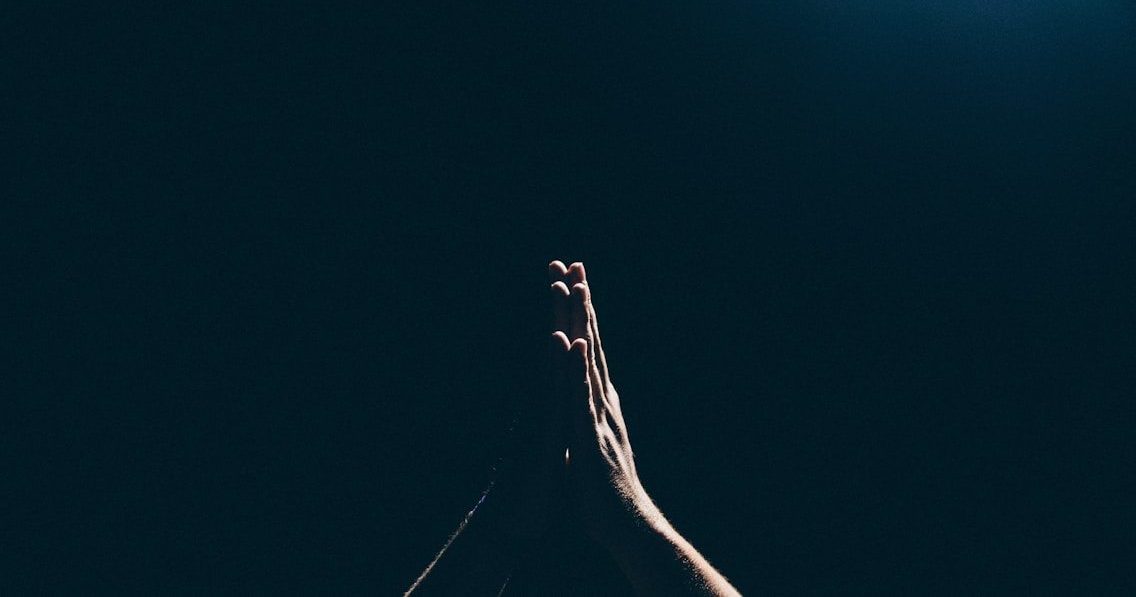
The Oxford dictionary definition of prayer is “A solemn request to God, a god, or other object of worship; a supplication or thanksgiving addressed to God or a god.”
Recently, prayer seems to have wandered away – perhaps like lost sheep? – from St Thomas More’s entreaty for minds that are “humble, quiet, peaceable, patient and charitable”. The act of praying, and its prevention, are becoming weaponised.
A tweet from Nick Timothy MP ignited the most recent controversy surrounding prayer in the public square – or, rather, Square. “An act of domination and therefore division” was the verdict of the Shadow Justice Secretary to an adhan – the Muslim call to prayer. It was part of an open Iftar (fast breaking) event on 16 March in Trafalgar Square.
Prime Minister Starmer demanded Kemi Badenoch sack Timothy and Housing Secretary Steve Reed denounced his views as “Islamophobic and therefore racist”.
Timothy stuck to his guns – apt given that Trafalgar Square celebrates Nelson’s decisive victory in 1805 and is “a national memorial to our independence and our salvation.” Expanding his argument, he observed that the adhan specifically repudiates other beliefs, “making the theological claim there is no God but Allah and Mohammed is his messenger.” Conversely, the Nicene Creed is “a personal statement of faith that begins, ‘I believe.’”
Theology can go over the heads of many who rarely enter a church, mosque, synagogue or temple to worship. The 2021 census found that almost half of those who answered described themselves as Christian (27.5 million), but “No religion” was the second most common response (22.2 million).
Actions in public invite the public to react. Images of the adhan implied an all-male gathering. It transpired that women – generally covered for modesty’s sake by abayas and hijabs – were present but segregated. This implication of second-class female status contrasts with the installation of Sarah Mullally as the 106th Archbishop of Canterbury a week later.
Women’s equality is not only, pun intended, an article of secular faith in Britain, but protected by more than 50 years of anti-discrimination law. The constrained female lives in too many predominantly Islamic nations, as well as in many Muslim households in Britain, do not sit well with too many women in this country. Their unease should at least be engaged with. In less than 25 years, Muslims could account for almost one in five of Britain’s population, says Pew Centre research.
An anti-Israel march was held in a week between 7th October attack and Remembrance Sunday in central London in 2023. On Whitehall’s tarmac, between the Cenotaph and Downing Street, a male Muslim crowd prayed en masse. This appeared to have little to do with benign piety: it was performative, making clear who controlled this small but symbolic section of Britain.
Silent prayer by Christians within buffer zones around abortion facilities remains controversial. Recent legislation concerning the zones will be tested in a court case later in the year after December’s arrest of a pro-life campaigner.
The US Vice President is one of the critics of Britain’s anti-prayer precincts. His speech at last year’s Munich Security Conference cited the case of army veteran Adam Smith-Connor. The law “criminalises silent prayer” said J.D. Vance, who asserted that the Scottish government sent letters to householders within the zones “warning them that even silent prayer within their own homes may amount to breaking the law”. He added: “Naturally, the government urged readers to report any fellow citizens suspected guilty of thought crime.”
Like Newspeak, thought crime originated in Orwell’s novel of a dystopian future,1984. The hero, Winston Smith knew that “Nothing was your own except the few cubic centimetres inside your skull.” Intolerant of dissent, the state attempted to control even that.
As Orwell’s Newspeak might have put it, adhan plusgood, Christian prayer plusungood?
Another woman who advanced today’s Church of England was Elizabeth I. In the 16th century she understood the wisdom of the state not creating “windows into men’s souls.” Prayer should indeed remain a private matter; enough of the performative piety.
![James Carville Admits Democrats Had No Shutdown Endgame, Mishandled Strategy [WATCH]](https://www.right2024.com/wp-content/uploads/2025/11/1763070634_James-Carville-Admits-Democrats-Had-No-Shutdown-Endgame-Mishandled-Strategy-350x250.jpg)

![Kamala Comes Unglued, Makes Bogus Claim About Her Landslide Loss to Trump [WATCH]](https://www.right2024.com/wp-content/uploads/2025/10/Kamala-Comes-Unglued-Makes-Bogus-Claim-About-Her-Landslide-Loss-350x250.jpg)