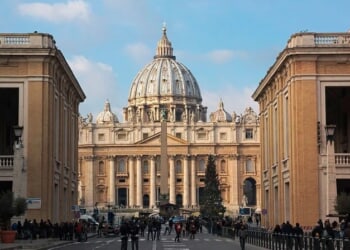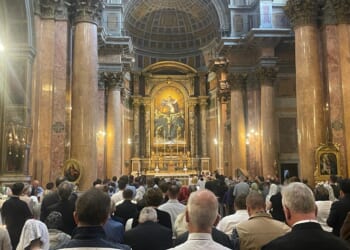
St. Peter’s Basilica has inaugurated new Stations of the Cross — 14 large oil paintings by Swiss painter Manuel Dürr — for Lent as part of celebrations marking the 400th anniversary of the church’s 1626 consecration.
The basilica first built at Emperor Constantine’s order in 326 over the tomb of the Apostle Peter stood for 12 centuries. In 1506, Pope Julius II ordered its demolition to raise a new church from the ground up.
The St. Peter’s Basilica known today was consecrated on Nov. 18, 1626, by Pope Urban VIII, capping a long project that drew on the genius of artists and architects including Michelangelo Buonarroti, Gian Lorenzo Bernini, and Carlo Maderno.
Four centuries later, the largest church in Christendom is commemorating the anniversary with a new artistic Stations of the Cross, inaugurated Feb. 20, featuring 14 paintings installed for Lent.
The proposal by Dürr, 36, was selected from more than 1,000 submissions representing 80 countries after an international competition launched in December 2023. A Vatican commission of art historians and liturgists chose the project, awarding it a 120,000-euro ($141,390) prize.
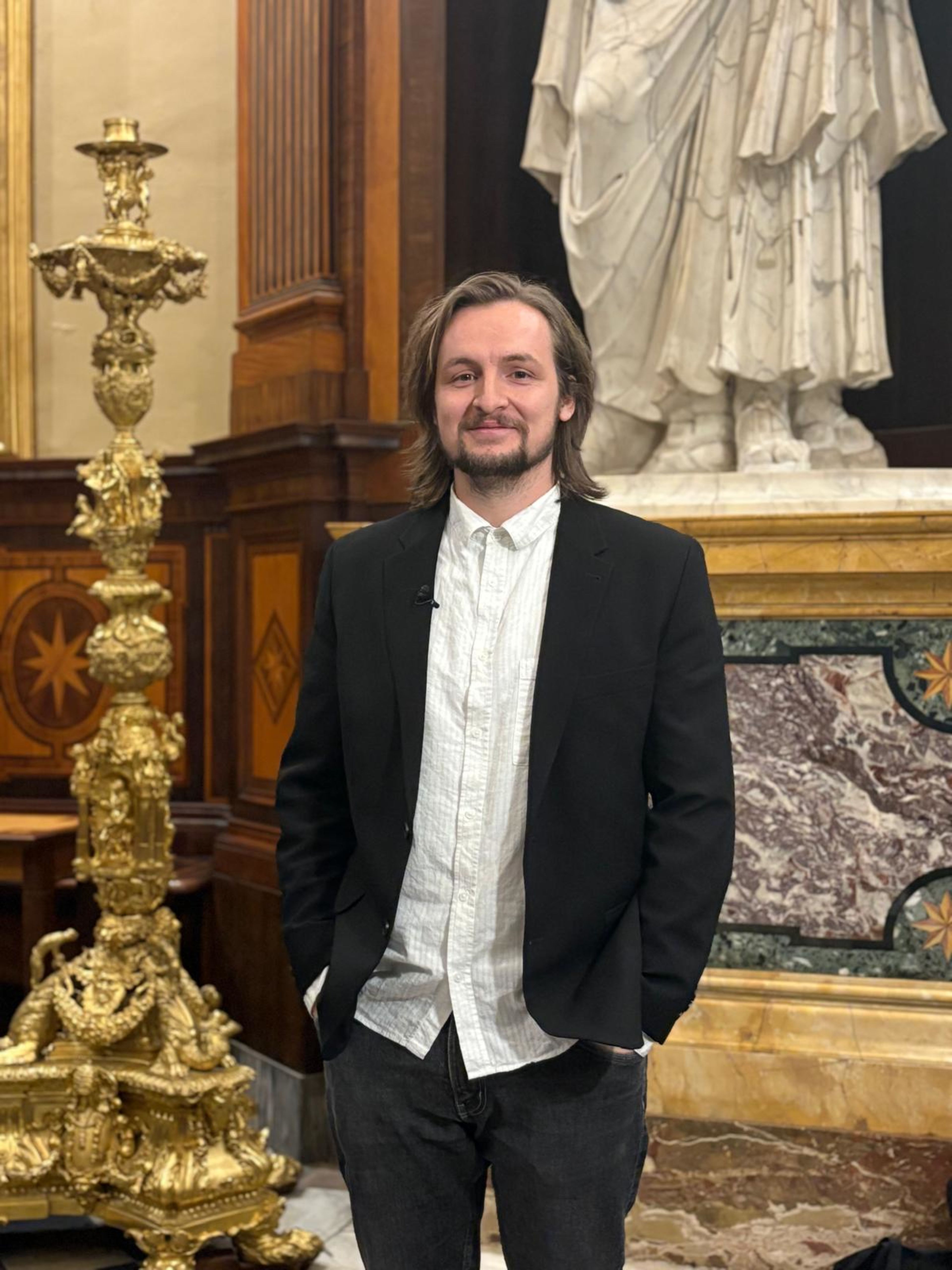
The Stations of the Cross is the work of Swiss painter Manuel Dürr, 36. | Credit: Victoria Cardiel/EWTN News
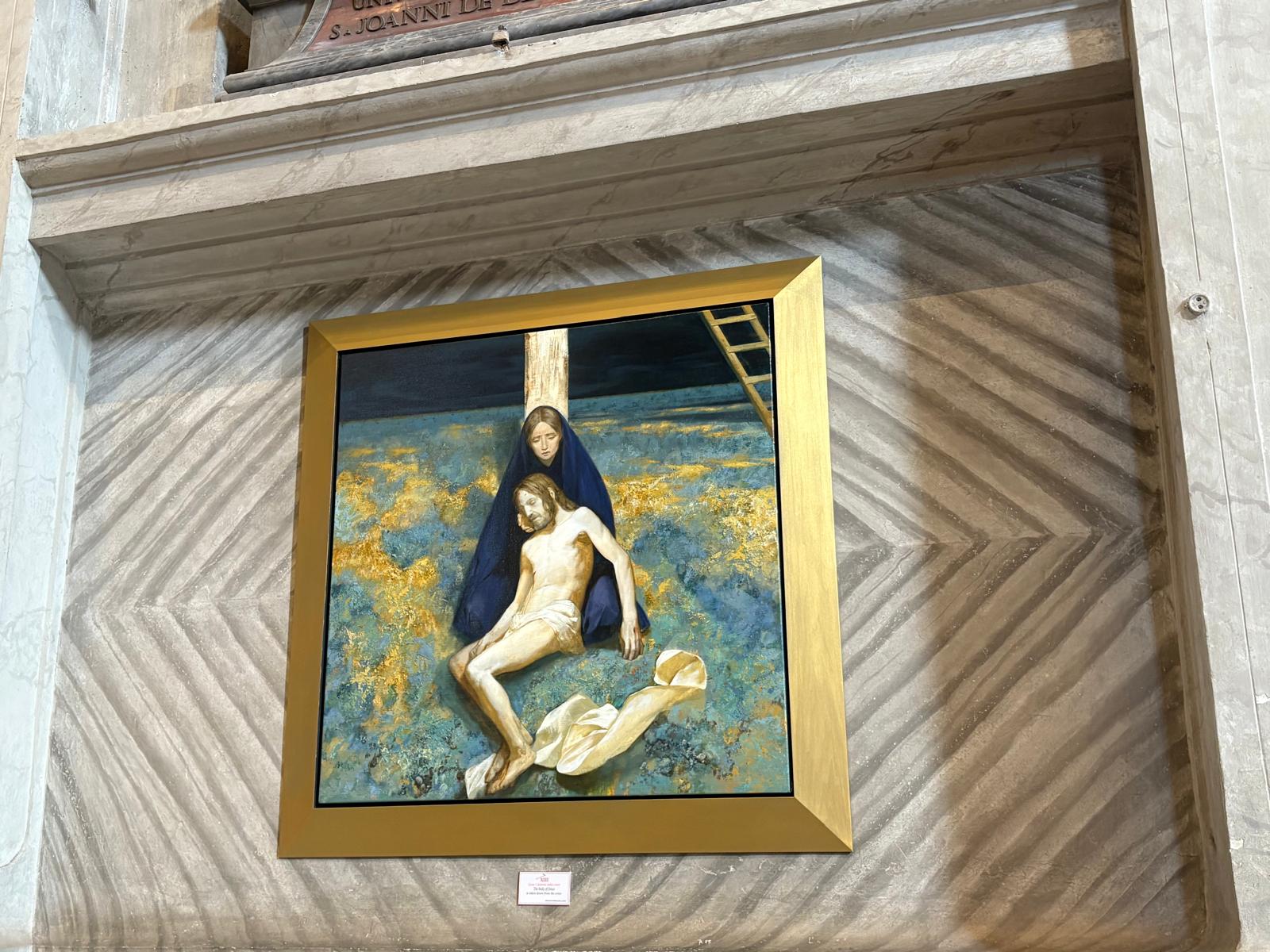
The result is a fresh spiritual perspective on the passion of Christ, depicting Jesus’ final moments from condemnation to burial in 14 oil paintings, each measuring about 51 by 51 inches.
The jury cited the proposal’s “balance and expressive power” and praised its “powerful and immediate” pictorial language, which the Vatican said evokes both the Renaissance and certain elements of the avant-garde.
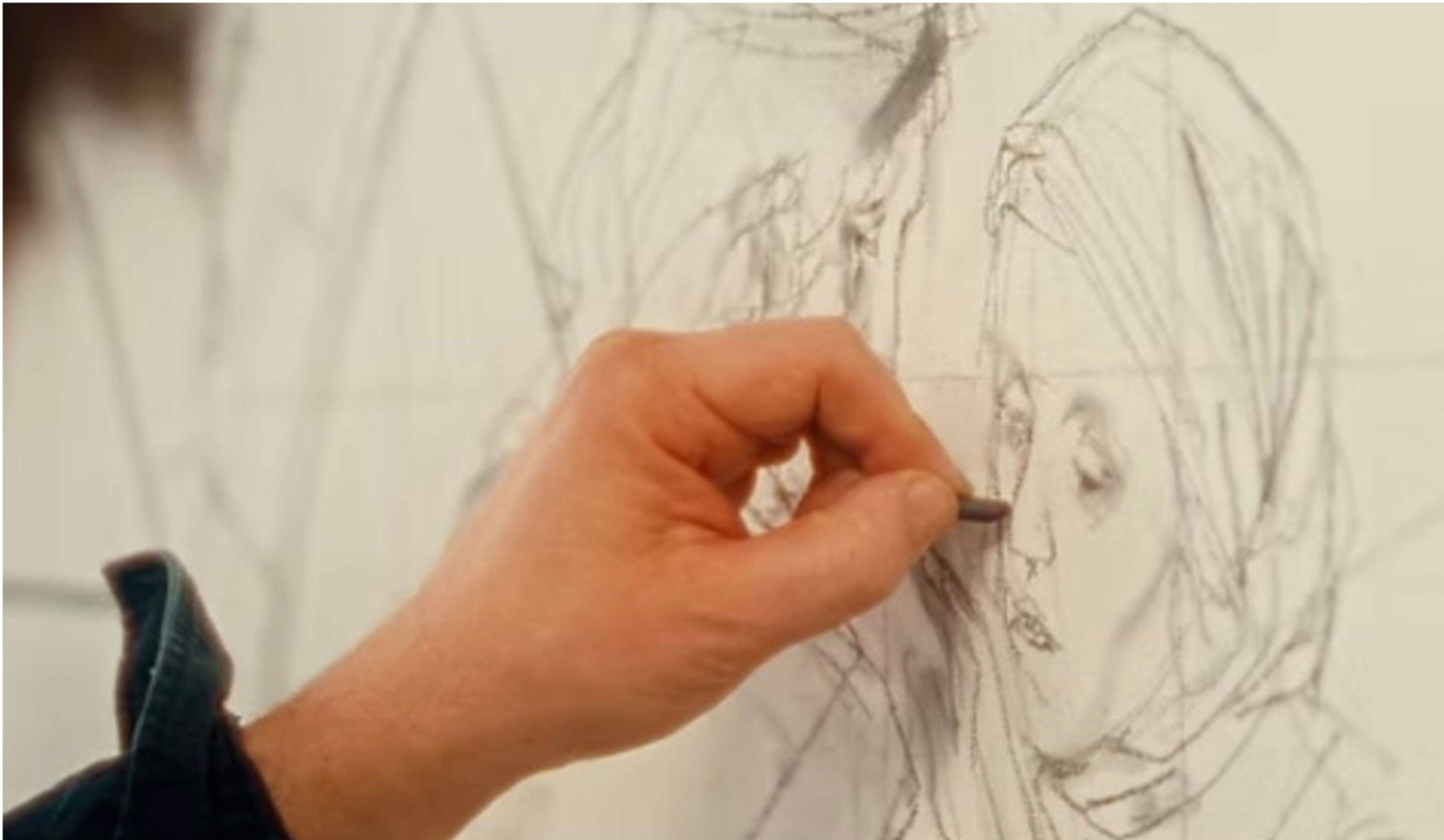
Manuel Dürr sketches the figures for the Stations of the Cross in his studio. | Credit: manuelandreasduerr.ch
A monumental commission completed in 8 months
In an interview during the inauguration, Dürr said that, given the magnitude of the commission, he had to “draw a bit of confidence” from within himself.
“Painting Jesus is very, very difficult,” the artist said, “because he’s not someone I’m presenting for the first time; he’s someone about whom billions of people already have an image and a relationship.”
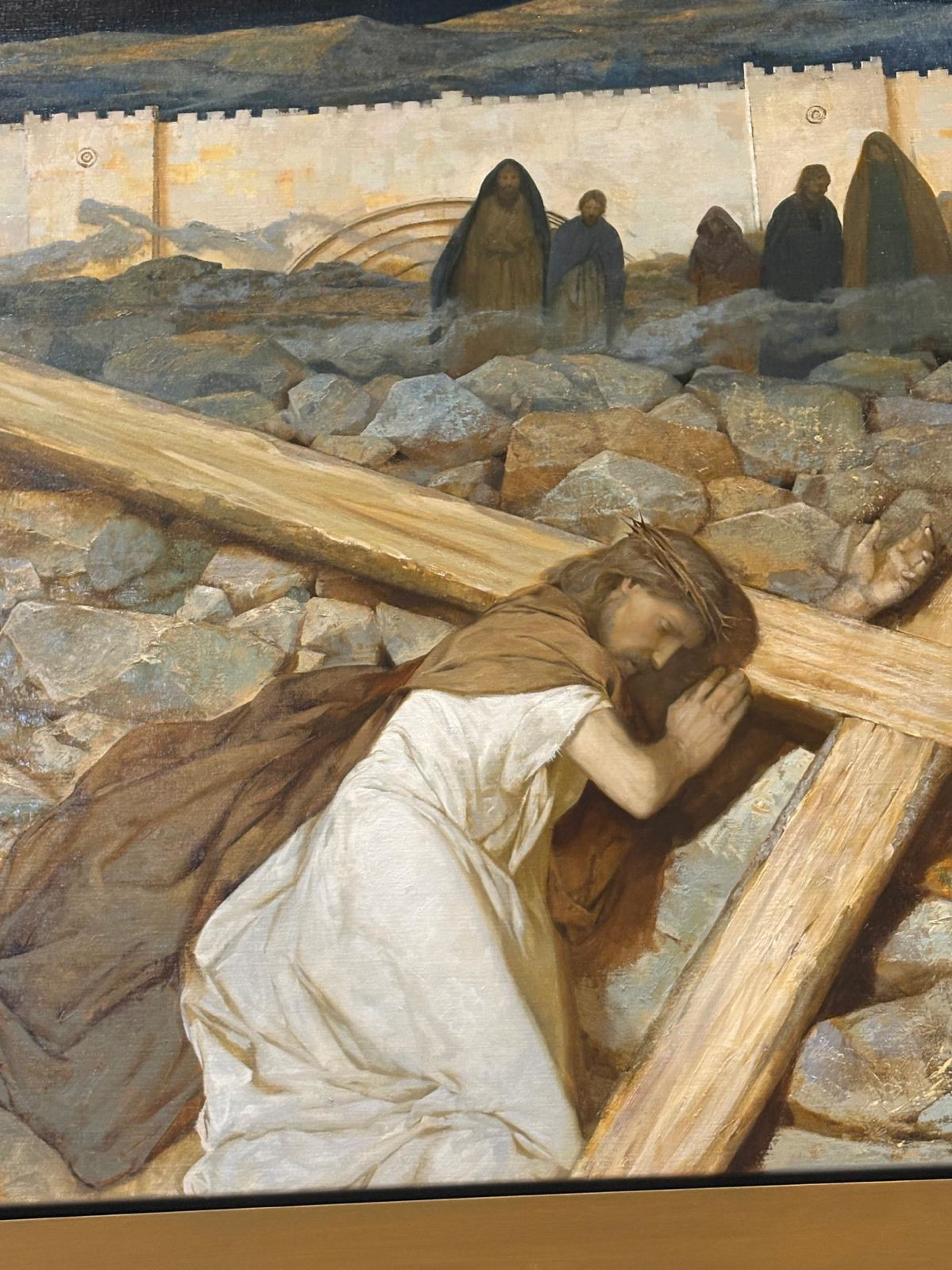
The result is a fresh spiritual perspective on the Passion of Christ. | Credit: Victoria Cardiel/EWTN News
Now that the works are installed around Bernini’s baldachin, Dürr said he feels serene: “I’m very happy to see that the context for which these paintings were conceived … I think they work well.”
Over eight months, Dürr produced the 14 canvases that are now incorporated into the basilica’s central nave during Lent.
From the start, he said he understood he was not working for a contemporary gallery but for a liturgical space with a living tradition. The works were meant “to dialogue with a specific context, with an already existing symbolic universe,” he explained.
Technically, he drew inspiration from “the colors that already exist in the floor mosaics” of St. Peter’s; spiritually, he wanted to insert himself humbly into “a very long and very rich tradition of images that have approached this mystery of the Incarnation and the Passion.”
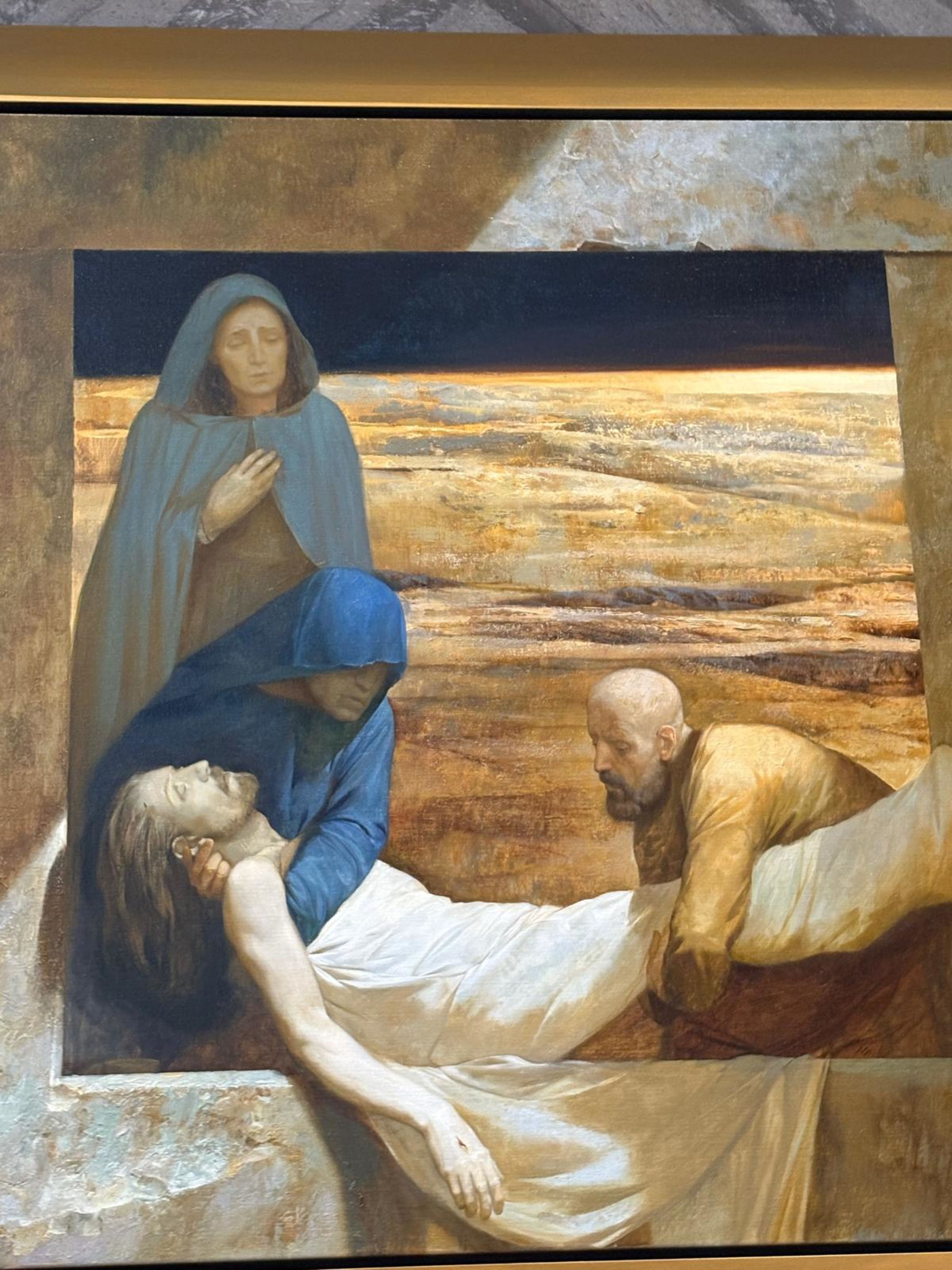
The Vatican held an international competition in December 2023, from which this young painter was selected. | Credit: Victoria Cardiel/EWTN News
‘Theologically quite close to the Catholic faith’
Although Dürr is not Catholic, he described himself as “theologically quite close to the Catholic faith.” He belongs to the Jahu community — about 600 people worldwide — linked to the Swiss Reformed Church and marked by a strongly ecumenical character.
Two of his brothers hold doctorates in theology from Catholic universities, which, he joked, helped him get to know the tradition “from the kitchen table.”
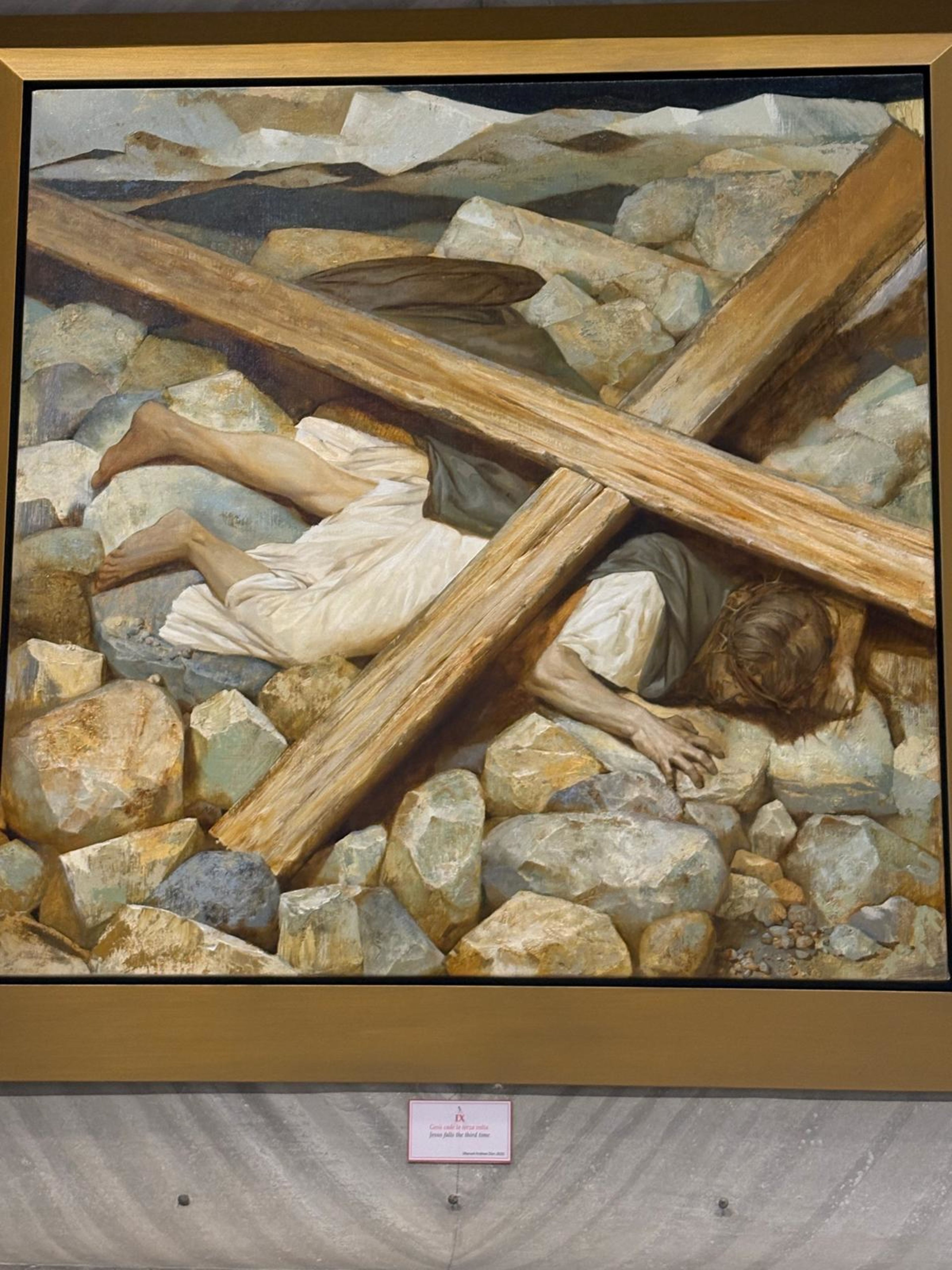
The artist said he hopes this Stations of the Cross can help people find a useful way to delve into this mystery. | Credit: Victoria Cardiel/EWTN News
Dürr said he hopes the Stations of the Cross can help people find a helpful way to enter more deeply into the mystery they contemplate.
He also recalled how his first visit to St. Peter’s Basilica expanded his horizons and left a mark on his creative process: “My church back home feels very provincial when I see here people of all ages, from all continents and all social classes, gathered around shared expressions of faith.”
He acknowledged the decisive influence of Fra Angelico, especially the frescoes at the Convent of San Marco in Florence where, he said, there is an exemplary synthesis of artistic innovation and spiritual depth.
The Crucifixion as the centerpiece
For Dürr, the Crucifixion became the axis of the entire series: It was the first canvas he began and the last he finished.
“This story has shaped Christian art and European culture — perhaps world culture — like no other,” he reflected.
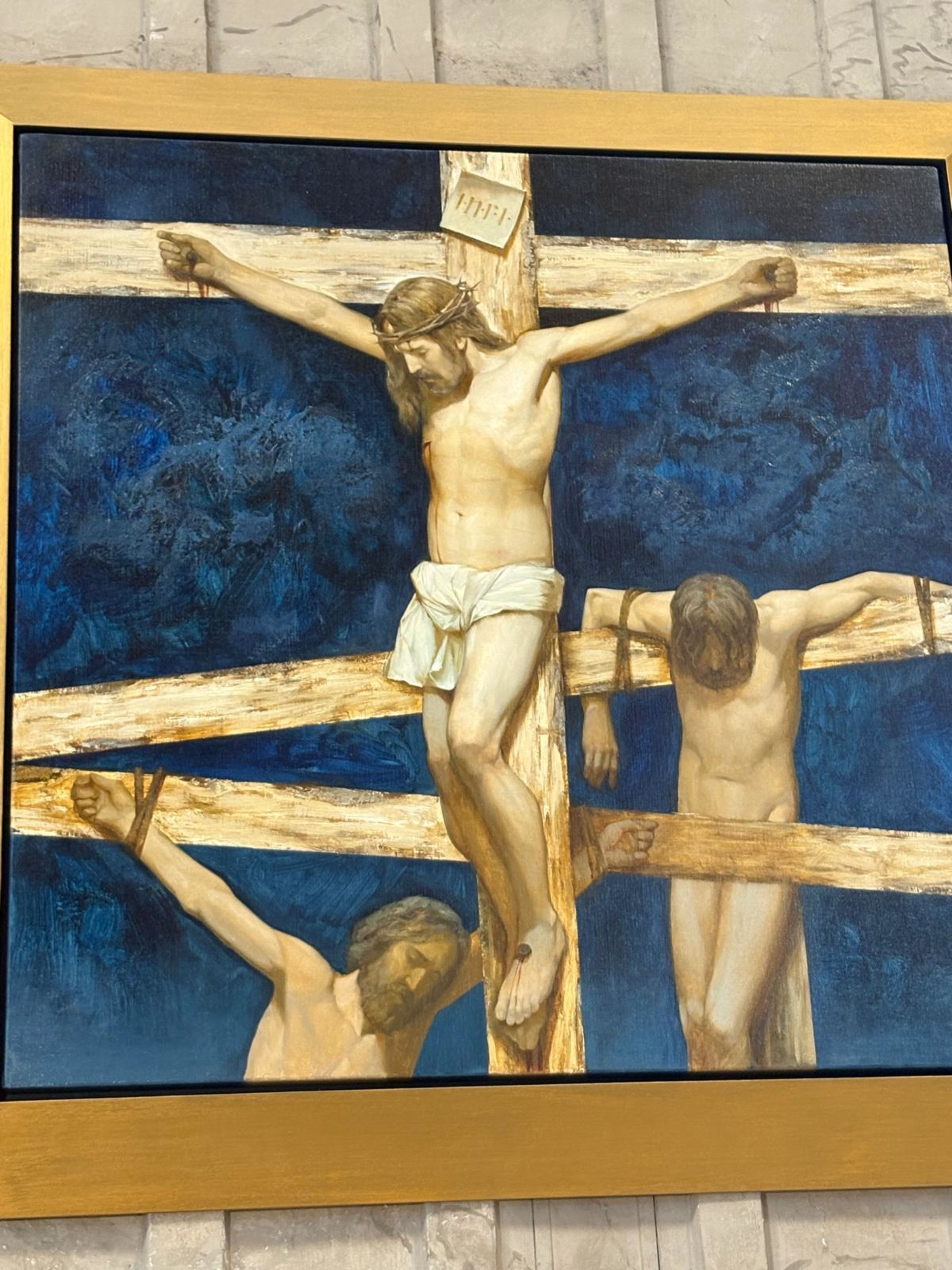
The station depicting the crucifixion of Jesus was the first and last painting the artist created. | Credit: Victoria Cardiel/EWTN News
“The cross, conceived as an instrument of terror to instill fear in the Roman Empire, has been transformed into a symbol of hope that we wear around our neck,” he said.
He expressed hope that the series might offer “a small doorway” into this central mystery of the Christian faith for those who contemplate the new Via Crucis during Lent.
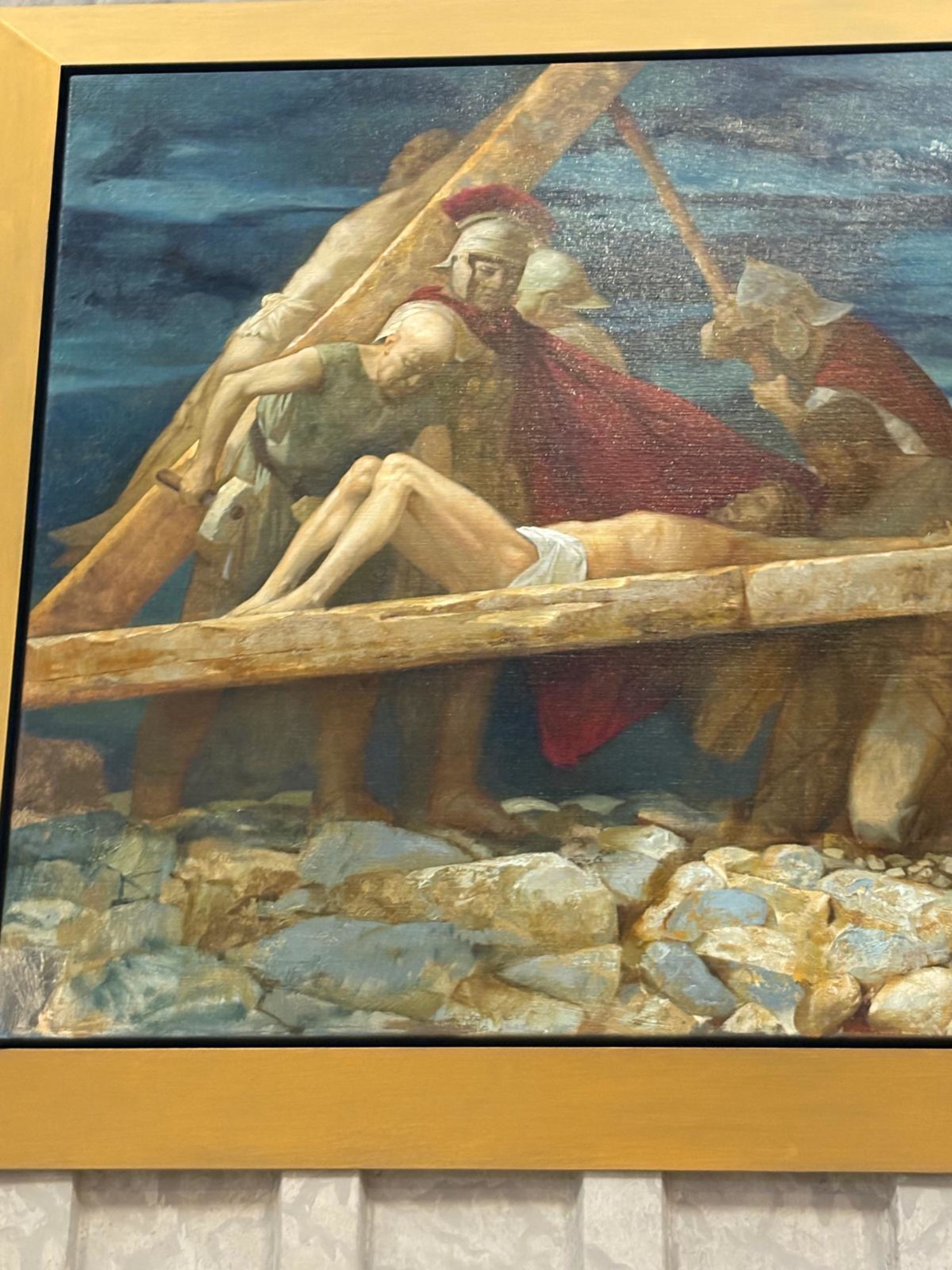
This station depicts the moment when Jesus is being crucified by Roman soldiers. | Credit: Victoria Cardiel/EWTN News
Even so, the most special station for him, he said, was Veronica.
“She holds a cloth with the image of Christ, and in a way that’s what I’m trying to do: paint on a canvas and offer a trace, a mark that allows something deeper to be experienced,” Dürr said.
He added: “That is the great mystery of the Incarnation. Why would God leave a trace on a cloth?”
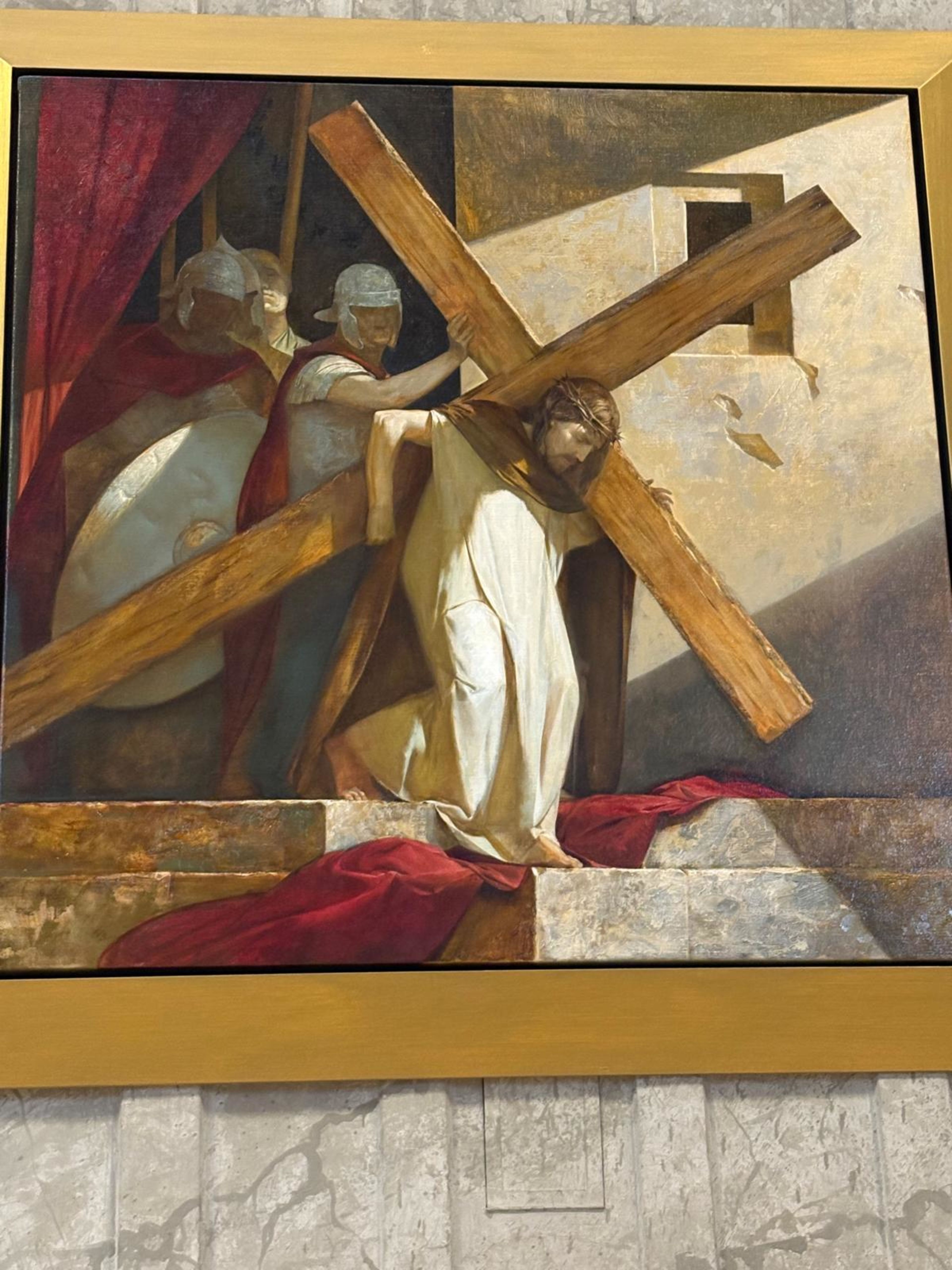
The station depicting the moment when Veronica wipes the face of Jesus and his image is imprinted on the cloth is the artist’s favorite. | Credit: Vatican Media
Four centuries after its consecration, St. Peter’s Basilica is thus preparing to commemorate its history not only through architectural memory but with a renewed invitation to contemplate the Passion of Christ.
This story was first published by ACI Prensa, the Spanish-language sister service of EWTN News, and has been translated and adapted by EWTN News English.