The President’s new $12 billion bridge payment plan offers welcome short-term help for domestic farmers, but it also underscores how fragile the American agricultural economy has become – and how urgently we need reforms that outlast any single administration.
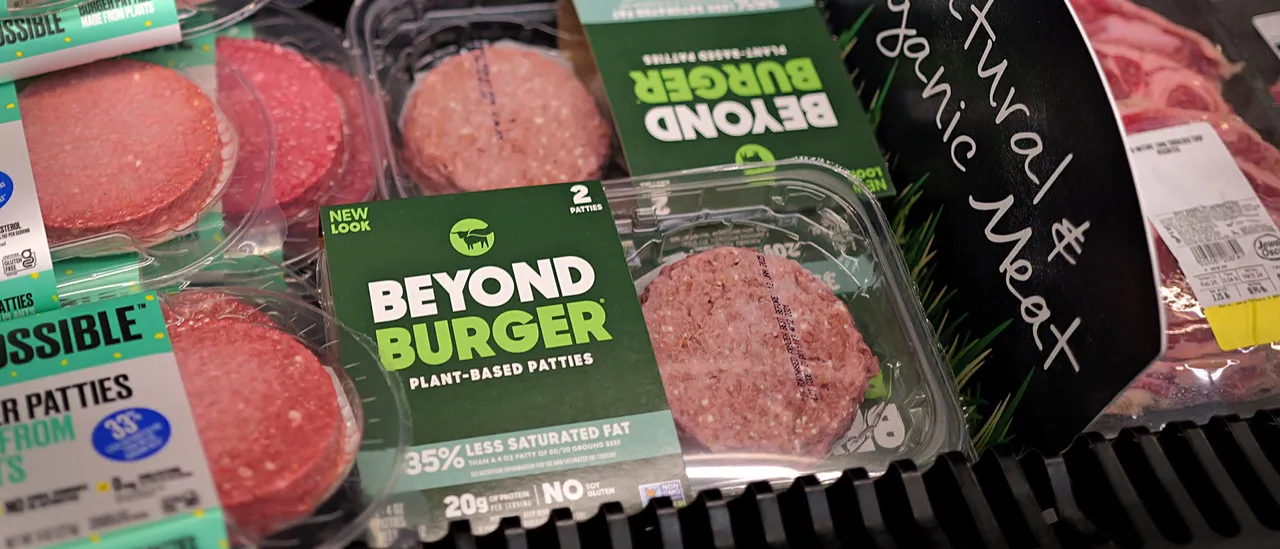
For ranchers across America, President Donald Trump’s decision to launch an investigation into the “big four” meatpackers was a welcome first step; monopolization in the industry responsible for processing livestock has meant both lower prices for the business owners who raise these animals and paradoxically higher costs for end consumers at the grocery stores. It’s high time to hold these companies to account.
Yet, potential price fixing is just one example of the obstacles that small and independent producers face in a meat industry increasingly dominated by massive, sometimes foreign-owned conglomerates. If our aim is to restore transparency and fairness in agricultural markets, a variety of new federal approaches are required – including implementing mandatory country of origin labeling, reforming checkoff programs and permitting states to promulgate their own animal husbandry standards reflecting evolving consumer demand.
Much has been made of the Trump administration’s decision to increase beef imports from countries like Argentina – a move designed to lower consumer costs by increasing supply. One might be surprised to learn that many independent ranchers have no problem with doing so.
What we do have a problem with is not telling consumers where their beef products originate. Meatpackers certainly don’t want to do it; for them, keeping country of origin opaque means they can package beef products generically and customers won’t know the difference.
But there are big differences. America has the best beef in the world. We’re ready to compete, but we need to let consumers know which product is which by implementing mandatory country of origin labeling, as required by bills like the American Beef Labeling Act sponsored by Republican South Dakota Sen. John Thune and Democratic South Dakota Sen. Cory Booker. It’s what we already do for fruits and vegetables, and it’s the real free market at work.
Checkoff reform, meanwhile, would go a long way towards neutralizing one of the biggest weapons in the arsenal of anticompetitive corporate agriculture.
Established as generic marketing and research initiatives funded by producers of agricultural commodities (like beef, pork, milk, eggs and soybeans), checkoff programs are responsible for memorable marketing slogans like “Beef. It’s What’s for Dinner” and “Pork. The Other White Meat.” Yet, they have been revealed over the years as troughs of corruption and corporate influence.
Purportedly overseen by the USDA, checkoff programs actually operate with very limited oversight, often failing to comprehensively demonstrate how their funds are used. That may be for good reason; evidence suggests checkoff dollars have been used for lobbying efforts that actively harm small-scale and independent producers.
The Opportunities for Fairness in Farming Act would prohibit checkoff organizations from working with outside lobbying groups, while requiring regular audits and budget transparency. It’s a sensible reform aimed at good governance. And, true to its name, it will get Big Ag off the backs of small farmers.
Nowhere are small farmers under assault more than in California, a state where we have managed to carve out a life-sustaining market niche thanks to consumer demand for humanely raised animal products and laws reflecting those values.
Proposition 12 prohibits the sale of animal products sourced from animals raised in extreme confinement. For small producers, that’s not as much of a problem – many of us raise our animals in ways that conform, while others have retrofitted their operations to comply.
But some large players continue to be more concerned with their own bottom lines than state sovereignty – let alone animal welfare. Following repeated failed court challenges – including one at the Supreme Court – companies like Smithfield Foods (owned by China) are still at it, now pushing bills like the so-called “Save Our Bacon Act,” H.R. 4673, and its Senate counterpart, S. 1326, which would prohibit states from enacting “any condition or standard of production on products derived from covered livestock not physically raised in such State or subdivision.”
In other words, by legislating a win for big producers who don’t want to play by California’s rules, Congress would ensure that the rest of us lose. Such efforts must cease.
The United States lost more than 140,000 small farms between 2017 and 2022 – and even more cattle farms and ranches since checkoff hit the ground in 1987. We are struggling. Thanks to Trump, we now have a glimmer of hope. But it’s just the first step in a long road to keeping small farmers competitive, and towards keeping the American farming ideal alive.
Taylor Haynes is the founder of the Wyoming Independent Cattlemen’s Association and president of the Organization for Competitive Markets in Lincoln, Neb.
The views and opinions expressed in this commentary are those of the author and do not reflect the official position of the Daily Caller News Foundation.
All content created by the Daily Caller News Foundation, an independent and nonpartisan newswire service, is available without charge to any legitimate news publisher that can provide a large audience. All republished articles must include our logo, our reporter’s byline and their DCNF affiliation. For any questions about our guidelines or partnering with us, please contact licensing@dailycallernewsfoundation.org.
![Scott Bessent Explains The Big Picture Everyone is Missing During the Shutdown [WATCH]](https://www.right2024.com/wp-content/uploads/2025/11/Scott-Bessent-Explains-The-Big-Picture-Everyone-is-Missing-During-350x250.jpg)