Ted Newson is a Political Commentator with Young Voices UK
Rachel Reeves has so far faced a difficult economic outlook due to little to no growth, a rising cost of living, and high taxes. The size of the state, however, sends taxes ever higher, hurting businesses and their employees – as we have seen in the last two Labour budgets. For too long, sections of society have had their hand held through parts of life: an inefficient and overly large NHS replaces individuals paying for health insurance, just as free breakfast clubs replace the responsibilities of parents to feed their children.
Sooner or later, we must acknowledge that Britain has too many complex schemes designed to coddle the population. In many countries, by contrast, welfare is for those who physically cannot work, rather than those who treat it as a lifestyle choice.
In Singapore, for instance, welfare is deliberately limited to those who are genuinely unable to work. Benefits are tightly means-tested, time-limited, and largely conditional on family support having been exhausted first. Switzerland offers a similar model: long-term welfare support is reserved for those medically certified as unable to work, with the fit and healthy expected to join the labour market quickly. These are safety nets properly understood. Britain’s labyrinthine alternative, by contrast, too often rewards those who know how to game it while trapping legitimate claimants in administrative purgatory.
Since 1997, the government has announced more legislation, more quangos, and more bureaucracy in Whitehall as living standards have gone down. This has pushed taxes to their highest since WWII, even as public services fail and ministers hand accountability to quasi-non-governmental organisations. When the best graduate employer is the civil service’s Fast Stream, something is clearly wrong with the British state.
In generations past, Brits would be expected to look after themselves and their families, with the community stepping in to pick up any slack. The state barely interfered in daily life, and people, as a result, got on with things unobstructed. Today, if you’re clever, you can claim a number of different benefits through our complex welfare system, generating an attractive income in the process. Under the right conditions, one can make well above minimum wage by using and abusing generous government schemes. Notorious examples of this include the Motability Scheme (which props up the British car industry by giving away new cars) and Personal Independence Payment (PIP), which can often subsidise dubious conditions usually diagnosed over the phone rather than in person, and remove the cap on benefits.
Welfare excess is only one symptom of a state swollen beyond recognition. Few politicians have had the stomach to confront it. Instead, taxpayers are subjected to ever more creative levies – Rachel Reeves’ “milkshake tax” being a particularly desperate attempt to wring revenue from thin air.
By slowly growing the percentage of our economy we devote to the NHS, pensions, and benefits, the hardworking British employee faces ever more taxation. Estimates suggest a majority of the population now take more out of the system than they put in. The British welfare system was set up to assist those down on their luck, not those who never intend to contribute.
It is no surprise so many of the self-sufficient are flocking to Dubai, the United States, and lower-tax parts of Europe. After all, these are places where the state gets out of your life and lets you live unhindered by high envy taxes, lifestyle levies, and community charges. If Britain wants a prosperous society, we should look to reward the risk-taking business owner over the wilfully idle. A truly compassionate welfare state makes a distinction between the deserving (those who physically cannot work) and those who attempt to game the system for self-enrichment. The state should stop appeasing those who will say anything to get government money and look to support the needy 1 per cent instead. In current circumstances, those who know how to cheat the system are rewarded while the unknowing are disadvantaged.
The same pathology afflicts law and order. The police are now so entangled in bureaucratic mandates that they struggle to address serious crime. The invention of “non-crime hate incidents” has officers chasing after online hurt feelings, while knife crime, grooming gangs, and county lines operations proliferate with impunity.
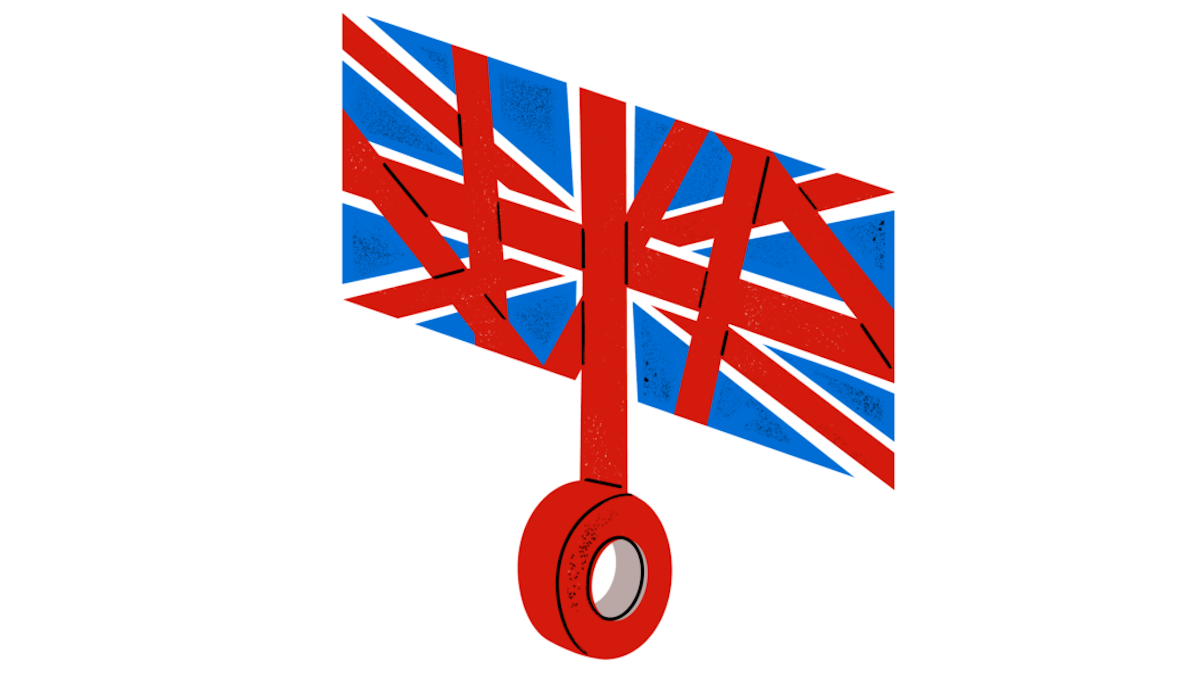
A simpler Britain would be a richer Britain. A flatter tax system, a streamlined legal code, and a single welfare scheme for those genuinely unable to work would reduce costs and restore clarity. At present, our system makes it as hard as possible to live a prosperous life and allocates tax at the most inefficient rate. Together, the electorate must advocate for the simplicity of a small state over the overcomplication of massive government departments doing too much.




![Donald Trump Slams Chicago Leaders After Train Attack Leaves Woman Critically Burned [WATCH]](https://www.right2024.com/wp-content/uploads/2025/11/Trump-Torches-Powell-at-Investment-Forum-Presses-Scott-Bessent-to-350x250.jpg)