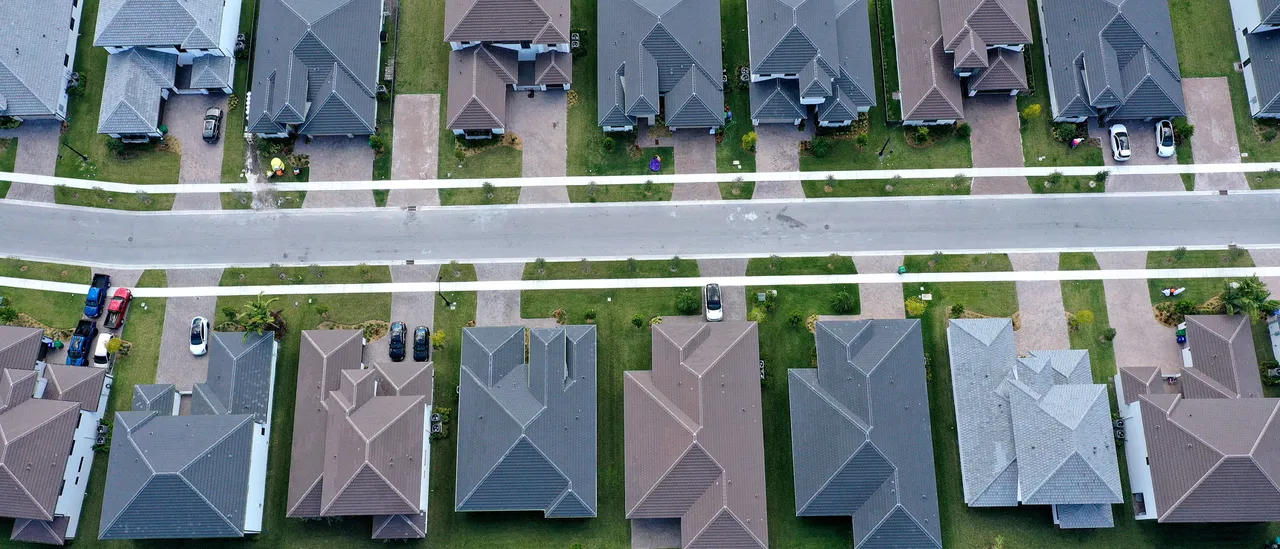
Across the country, a quiet but consequential shift is underway.
From California to Florida to Georgia — and with major policy pushes in Texas and North Dakota — policymakers and citizen groups are advancing sweeping property tax reforms and constitutional amendments aimed at lowering housing costs and protecting homeowners. Ballot initiatives already being circulated for 2026 could dramatically reshape how Americans pay for—and keep—their homes.
This is not happening in a vacuum. It is a direct response to a growing crisis: home ownership in America is becoming unaffordable for too many families.
With mortgage rates still elevated and home prices stubbornly high, first-time buyers are increasingly locked out of the market. Meanwhile, broader housing pressures — from rising insurance costs to escalating property taxes— are driving up the true cost of ownership well beyond monthly mortgage payments. At the same time, existing homeowners, especially those on fixed incomes, are facing rising property tax bills that threaten their ability to stay in their homes. For generations, home ownership has been the cornerstone of upward mobility. It is how families build wealth, establish stability, and invest in their communities. But today, that pathway is being eroded by inflation, excessive government spending, and policies that drive up the cost of housing at every level. (RELATED: GOP Rep. Beth Van Duyne Weighs In On Saving The American Dream At Daily Caller Live Event)
At the heart of the problem is a simple but often ignored reality: affordability is shaped as much by government policy as by market forces.
That is where organizations like the Prosperity for US Foundation are stepping in, and their work is especially timely.
Rather than waiting for incremental legislative change, the Foundation is advancing a nationwide, state-by-state effort to place constitutional limits on property taxes, government spending, and regulatory overreach. Using the citizen initiative process, it is taking these issues directly to voters, with the goal of placing reforms on ballots as early as the 2026 election cycle.
This approach reflects a growing recognition that the current system is not delivering meaningful relief, and that restoring affordability may require going directly to the people.
The focus centers around core principles: capping property tax growth, requiring voter approval for tax increases, limiting government spending to sustainable levels, and strengthening protections for property owners when government actions reduce the value of their homes.
These ideas are gaining traction because the affordability crisis is no longer theoretical — it is immediate. Across multiple states, lawmakers are responding to public pressure over rising assessments and housing costs, with some even exploring the possibility of eliminating property taxes altogether. Property values have surged in recent years, and with them, tax burdens that often outpace income growth.
Even at the national level, housing affordability has become a central policy focus, with legislation advancing in the U.S. Senate aimed at addressing housing supply and costs.
As President Donald Trump put it in his State of the Union speech, “We want to keep those values up. We’re going to do both, and we are going to keep it that way.” He recognizes that affordability and ownership are not mutually exclusive, but must be pursued together. That balance, expanding access while preserving value, is exactly what today’s reforms are trying to achieve.
At the same time, broader fiscal policy is compounding the problem. Excessive government spending fuels inflation. Inflation drives higher interest rates. Higher rates make mortgages more expensive. The result is a housing market that is increasingly inaccessible to the very people it is supposed to serve.
Without structural reform, these pressures will only intensify. (RELATED: Trump Admin Confirms Plans To Introduce 50-Year Mortgage Terms For Homebuyers)
We must also confront the regulatory environment that restricts housing supply. Lawmakers in multiple states are exploring ways to increase housing production and reduce regulatory barriers as part of broader affordability efforts. Zoning constraints, permitting delays, and development fees all add costs, and in many cases, local governments rely on these mechanisms as revenue tools.
The result is a system that works against home ownership instead of for it.
The reforms being advanced today, whether through legislatures, ballot initiatives or citizen-driven efforts, reflect a broader understanding that the status quo is unsustainable. Efforts to cap property taxes, limit spending growth, and empower voters are gaining momentum because they address the root causes of the problem.
Just as importantly, they reflect a shift in mindset: homeowners should not be treated as an endless source of revenue.
Home ownership builds more than equity — it builds communities.
Homeowners are more likely to invest in their neighborhoods, participate in civic life, and think long-term. A nation of homeowners is more stable, more prosperous, and more resilient.
But that future is not guaranteed.
If current trends continue, we risk creating a permanent divide between those who own and those who are locked out. We risk undermining the most effective pathway to middle-class wealth creation in American history.
This is not just about tax policy. It is about restoring the conditions that make opportunity possible. (RELATED: WaPo Editorial Board Mocks Mamdani For Facing Harsh Reality Less Than 2 Months In)
If we are serious about restoring the American Dream, we must act on three fronts: rein in excessive government spending to reduce inflation, provide predictability and limits on property taxation, and remove regulatory barriers that restrict housing supply.
These are not radical ideas. They are common-sense reforms grounded in a simple principle: people should be able to afford the homes they worked hard to earn.
The American Dream has always been built on ownership — ownership of property, of opportunity, and of one’s future.
Restoring that Dream will require bold action.
The good news is that action is already beginning.
Saulius “Saul” Anuzis is President of the International Institute and of the 60 Plus American Association of Senior Citizens. He was chairman of the Michigan Republican Party from 2005–2009 and was also a candidate for national chairman of the Republican National Committee in 2009 and 2011, as well as a Member of the RNC from 2005–2012.
The views and opinions expressed in this commentary are those of the author and do not reflect the official position of the Daily Caller.







![Kamala Comes Unglued, Makes Bogus Claim About Her Landslide Loss to Trump [WATCH]](https://www.right2024.com/wp-content/uploads/2025/10/Kamala-Comes-Unglued-Makes-Bogus-Claim-About-Her-Landslide-Loss-350x250.jpg)