A Catholic priest I knew once joked that Anglicans are just dressing up as Catholics but with bad theology. According to a new study, a substantial number of Anglican clerics agreed with that characterization and decided to ditch the Anglican theology and embrace full communion with Rome.
There is still, however, one great Anglican tradition worth pursuing: converting to Catholicism.
The Benedict XVI Centre for Religion, Ethics, and Society at St Mary’s University, Twickenham in London analyzed priestly ordinations in the Catholic Church in Britain between 1992 and 2024 and found that 700 Anglican clerics left the Church of England and became Catholic, with 486 becoming Catholic priests. The former Anglicans accounted for nearly 30 percent of diocesan ordinations and over a third (35 percent) of combined diocesan and ordinariate ordinations. (The Personal Ordinariate of Our Lady of Walsingham in England and Wales, which also encompasses Scotland, was established by the late Pope Benedict XVI in 2011 to allow former Anglicans to join the Catholic Church while still retaining elements of their Anglican patrimony, such as a distinct liturgical style.)
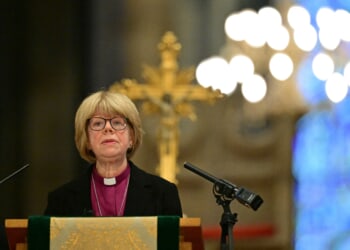
The vast majority of conversions, according to the study, occurred in 1994, driven largely by the Church of England’s decision to approve female ordinations to the priesthood. Last month, the Church of England named Sarah Mulally as the next Archbishop of Canterbury, the chief cleric of the Church of England. Mulally is currently the Anglican Bishop of London and is known for her progressive views, including favoring blessings for same-sex unions and tacit support for abortion. “I would suspect that I would describe my approach to this issue as pro-choice rather than pro-life although if it were a continuum I would be somewhere along it moving towards pro-life when it relates to my choice and then enabling choice when it related to others,” the next Archbishop of Canterbury said in 2012. Earlier this year, however, she joined other Anglican bishops in opposing further decriminalization of abortion in the United Kingdom.
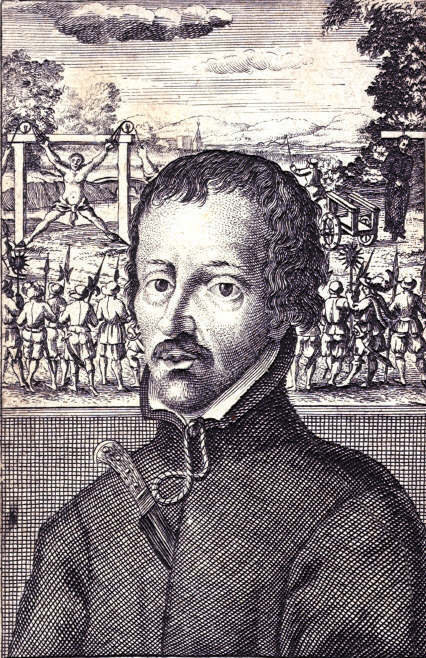
The Church of England formally renounced the authority of the Pope, the Bishop of Rome, in 1534, under the reign of King Henry VIII. In the following years, many Catholic priests were hunted down and executed. One of the most famous of these priests, Saint Edmund Campion, had previously been an Anglican cleric. A brilliant Oxford scholar and a favorite of Queen Elizabeth I, Campion held reservations about Anglican doctrine and theology when he was ordained an Anglican deacon in 1569.
The 1559 Book of Common Prayer and the Anglican Thirty-Nine Articles (especially Articles 28 and 31) explicitly rejected the Catholic teaching of transubstantiation, the belief that the bread and wine used during Mass do contain the True Presence of Christ. Campion’s study of Scripture and the Early Church Fathers led him to believe that the Anglican position was incorrect, that Christ was truly present, Body, Blood, Soul, and Divinity, in the Blessed Sacrament, and that the Church had held this belief unwaveringly for centuries.
He also rejected the Anglican view of the priesthood and apostolic succession, perceiving the Church of England as a “new invention” rather than a continuation of the Christian Faith in England as it had existed since Augustine of Canterbury converted the English at the end of the sixth century, and could not accept Elizabeth I’s claim to be the spiritual head of the Church in England, holding that a monarch could exercise civic or judicial authority over the Church but not spiritual authority.
Fearing punishment if his views were to become known, Campion fled first to Ireland and then to what is today France, where he entered into full communion with the Catholic Church and was ordained a sub-deacon. He traveled to Rome and joined the Jesuits and was ordained a priest in Prague in 1578. In 1580, Campion returned to England, on a mission to proclaim the truth of the Catholic Faith.
For just over a year, Campion preached, celebrated Mass and the sacraments, and wrote numerous tracts and pamphlets explaining the flaws in Anglican theology and doctrine. In his Decem Rationes, the Jesuit priest outlined ten arguments against Anglican theology and in favor of Catholic theology. Notably, he called on Anglican leaders to openly debate him, clarifying that his mission was not political. During the 1581 commencement at St. Mary’s, Oxford, Campion and his Catholic companions left 400 copies of the treatise on benches, intensifying the urgency of Elizabeth I’s hunt for the priest.
Despite his insistence that his mission was neither political nor treasonous, when Campion was finally captured in July of 1581, a paper was pinned to his hat, reading, “Campion, the Seditious Jesuit.” He was imprisoned in the Tower of London for four days, in a small cell nicknamed “Little Ease,” designed so that a prisoner could not fully stand, sit, or lie down. Campion was questioned numerous times by members of Elizabeth I’s Court and was asked whether he accepted her as the true monarch of England, which he said he did. The Jesuit was held over four months in the Tower and was reportedly tortured on several occasions. Anglican leaders even circulated false reports that Campion had recanted his Catholic positions and converted to Anglicanism.
In November of 1581, Campion was indicted, falsely charged with conspiracy to treason and plotting to overthrow Elizabeth I. At trial, Campion declared, “I am a Catholic man and a priest. In that faith have I lived and in that faith do I intend to die, and if you esteem my religion treason, then I am guilty.” He further warned those present, “In condemning us, you condemn all your own ancestors, all our ancient bishops and kings, all that was once the glory of England — the island of saints, and the most devoted child of the See of Peter.”
Campion was hanged, drawn, and quartered at Tyburn, along with fellow Catholic priests Ralph Sherwin and Alexander Briant, on December 1, 1581. The execution is broadly considered one of the worst political blunders of Elizabeth I’s reign. Following the notorious Jesuit’s death, Catholic seminary enrollments more than doubled, from roughly 100 in 1580 to over 250 by 1585, and Catholic conversions surged, especially at Campion’s alma mater, Oxford. At least 60 Oxford scholars not only converted but became Catholic priests in the decades immediately following Campion’s death. The Catholic recusant population more than doubled, from only about 20,000 in 1580 to as many as 50,000 by 1603. William Weston, Campion’s successor as the Jesuit superior in England, wrote in his autobiography that “the death of Father Campion … brought more to the Church than the labors of many years.”
In the centuries since Campion’s death, numerous Anglicans have followed his example and converted to Catholicism. Saint John Henry Newman was an influential and nationally-recognized Oxford academic and Anglican priest until he converted to Catholicism in 1845. He became a Catholic cardinal and is now both a Saint and a Doctor of the Church. Robert Hugh Benson was the son of the Archbishop of Canterbury and, like his father, became an Anglican priest in 1895. Less than a decade later, however, he had converted to Catholicism and became a Catholic priest, later serving as a chamberlain to Pope St. Pius X and authoring several powerful Catholic novels, including Lord of the World and Come Rack! Come Rope! Another literary convert was Ronald Knox, a friend of G.K. Chesterton’s and Agatha Christie’s who was ordained an Anglican priest in 1912. Five years later, he became a Catholic and was ordained a Catholic priest in 1918.
The Church of England has, by this point, accumulated nearly 500 years of history. Unfortunately, much of that history is riddled with theological errors, culminating in a church which openly endorses female ordinations, the blessing of same-sex unions, and even abortion, to an extent. There is still, however, one great Anglican tradition worth pursuing: converting to Catholicism.
READ MORE from S.A. McCarthy:
Top Catholics Respond to USCCB’s Immigration Message
Bishops Blast Trump on Immigration, but Not Biden on Abortion



![Donald Trump Slams Chicago Leaders After Train Attack Leaves Woman Critically Burned [WATCH]](https://www.right2024.com/wp-content/uploads/2025/11/Trump-Torches-Powell-at-Investment-Forum-Presses-Scott-Bessent-to-350x250.jpg)


![Kamala Comes Unglued, Makes Bogus Claim About Her Landslide Loss to Trump [WATCH]](https://www.right2024.com/wp-content/uploads/2025/10/Kamala-Comes-Unglued-Makes-Bogus-Claim-About-Her-Landslide-Loss-350x250.jpg)