This content was produced via a partnership with KCPAC. The views and opinions expressed in this commentary are those of the authors and do not reflect the official position of the Daily Caller.
Xi Jinping: Chess Master of an Indo Pacific Board Game
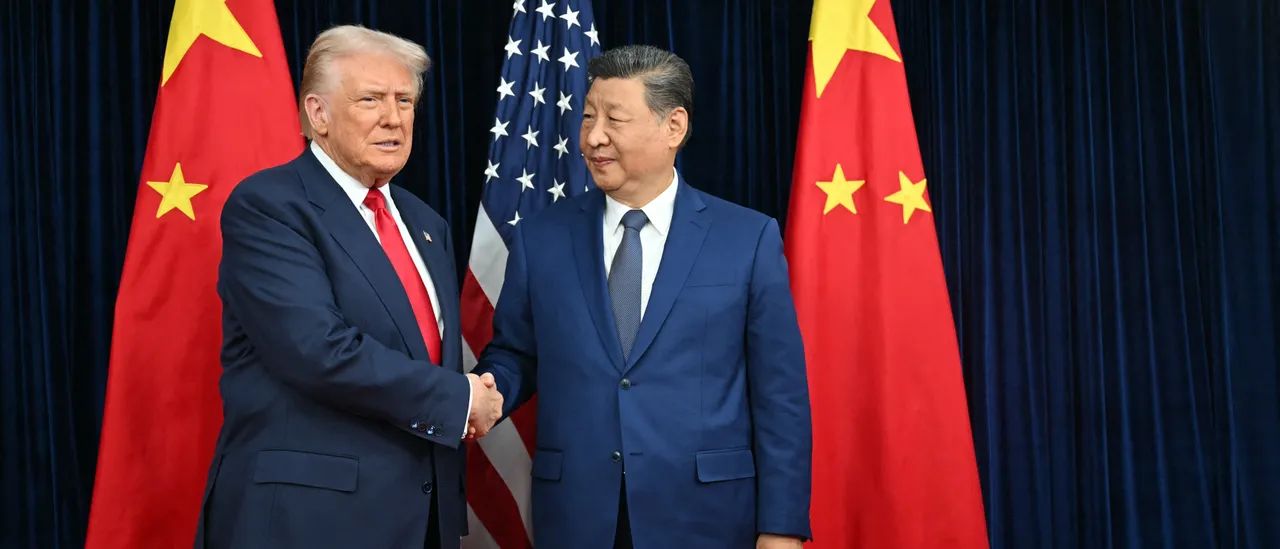
There are blinding flashes of cameras as Chinese President Xi Jinping shakes hands with President Donald Trump. It is Oct. 30, 2025, and the two of them are at the Asia-Pacific Economic Cooperation (APEC) Leaders’ Summit in Gyeongju, the former “City of Gold” in South Korea. What did the world take away from this? A sense of stability? A step towards business as usual for China-US relations?
Not so fast, though. Not all of us were fooled by this masterful trap. In fact, Xi Jinping played yet one more strategic move towards his end game. Washington, D.C., breathed a sigh of relief at the apparent de-escalation in tensions between the two men while Beijing deftly executed its shrewd move.
What if Xi’s rare decision to visit South Korea was not only motivated by business reasons and diplomatic advantages? What if his goal was to exploit a moment of seeming U.S. disinterest in South Korea to isolate it and move it irreversibly into being a pawn in China’s orbit? Did it turn out to be a timely, successful move across the Indo-Pacific board game?
A “Golden Window”
Xi Jinping rarely travels abroad and, when he does, he is looking for a strategic payoff. His presence in Gyeongju signaled to us that Beijing views 2025 as a critical “golden window” to break the U.S.-South Korea Alliance. South Korea is currently paralyzed by internal political conflicts and faces a leadership crisis. Xi knows this. By engaging directly with the U.S. President on Korean soil, Xi created the optical illusion that the Korean Peninsula is a matter to be settled between superpowers, with Seoul a mere bystander.
His second winning move was to demonstrate Beijing’s dominance. His actions tell the Korean political elite that their future lies with Beijing, not Washington. This unusual visit served to legitimize the activities of growing pro-China factions living in Korea. They had something to celebrate, and we have written about those events in a previous article on South Korea. His physical presence empowered them to push for policies that distance Korea from the U.S.-South Korea Alliance. If this over-seventy-year-old agreement that has protected the peace for South Korea could be weakened, then his visit would be worthwhile. It was made with an excuse of ‘balanced diplomacy,’ but his goal was to undermine the alliance by setting Seoul on a path free from U.S. influence. (RELATED: Dangerous Mindsets In Asia: Another Long March By China)
A Silent Bargain
A disturbing trend appears to suggest that both Washington and Beijing may have reached a silent bargain. The U.S. seeks temporary stability overseas to focus on domestic issues. China seeks time to manage its economic slowdown and attempt to bypass technological and other sanctions. A tacit truce is a dangerous illusion for South Korea — while the U.S. steps back to “manage” the relationship, China will ramp up its subversive aggression against South Korea. Without active U.S. pushback, Beijing will use economic interference and political infiltration to gradually control South Korea. Any silent bargain would allow Beijing to quietly advance its takeover bid without triggering a unified response from America and the West. They are exercising an ongoing and long-term push towards regional and eventually global dominance.
A Troubled Nation
South Korea may be entering its most politically sensitive year. The nation is torn by internal battles over national security, economic weakness and the lowest birth-rate of any country. China is actively taking advantage of the chaos disturbing the whole population. (RELATED: CARLA SANDS And BART MARCOIS: U.S.-South Korea Summit Offers Clear Choice To Korea)
If you simply look at the national planning of both countries then one difference immediately stands out. China operates on multi-decade strategies to achieve its goals. By contrast, South Korea operates on short, chaotic election cycles. Beijing is exploiting this fundamental difference. They are covertly carrying out political influence campaigns, subtly manipulating public opinion and using economic leverage to ensure that the next political shift in Korea favors China as opposed to America.
China’s long game is to ensure that whoever holds the post of South Korean president becomes answerable to the interests of Beijing, which will eventually hollow out the U.S.-South Korea Alliance.
The Threat of Invasion
This is not just about internal South Korean politics. It is about the security of Northeast Asia, which relies on the military capability of what is known as the First Island Chain. This is the chain that runs southwards from Japan through Taiwan and the Philippines towards Malaysia and Indonesia. It acts as a geographical barrier to invasion of the Pacific from China and its allies. If South Korea succumbs to Chinese pressure and adopts a temporary stance of “neutrality,” the U.S. military footprint in Northeast Asia will become untenable. The dangerous prospect is that any silent bargain may ultimately impact the entire Indo-Pacific region.
A subdued South Korea will lead to the loss of critical radar systems, missile defense batteries and intelligence capabilities directed at China and North Korea. A silent bargain may buy Washington a moment of peace but the price may well be the loss of its most important forward operating base in the Pacific. Losing access to Korean bases would force the U.S. to retreat to Japan and Guam, drastically reducing its ability to project power and defend allies in the region. (RELATED: US-ROK Alliance: Washington Sees Only What It Wants To See)
The Gyeongju Trap
The geopolitical atmosphere after the Gyeongju Summit is deceptive. Official statements speak of cooperation but the reality on the ground is a slow move towards checkmate with South Korea finally in China’s orbit. The U.S. should not be lulled into complacency by Xi Jinping’s smiling diplomacy. Be wary of China, who is not seeking coexistence but long-term dominance. We urge Washington to see through what we have called the Gyeongju Trap, the chess game that was played by China at the APEC meeting. Now is not the time for we have called the silent bargain.
Now is the time to reinforce the U.S.-South Korea Alliance before the game is over. The U.S. should step up and actively support South Korean efforts to resist Chinese coercion. There is talk of “civilizational erasure” for Europe but the same may be the fate of centuries of Korean culture if, after 70 years of the alliance, the U.S. abandons South Korea and the region.





![Donald Trump Slams Chicago Leaders After Train Attack Leaves Woman Critically Burned [WATCH]](https://www.right2024.com/wp-content/uploads/2025/11/Trump-Torches-Powell-at-Investment-Forum-Presses-Scott-Bessent-to-350x250.jpg)



![Two Dead, 14 Injured After Gunfire Erupts Following College Football Game in Alabama [WATCH]](https://www.right2024.com/wp-content/uploads/2025/10/Two-Dead-14-Injured-After-Gunfire-Erupts-Following-College-Football-350x250.jpg)