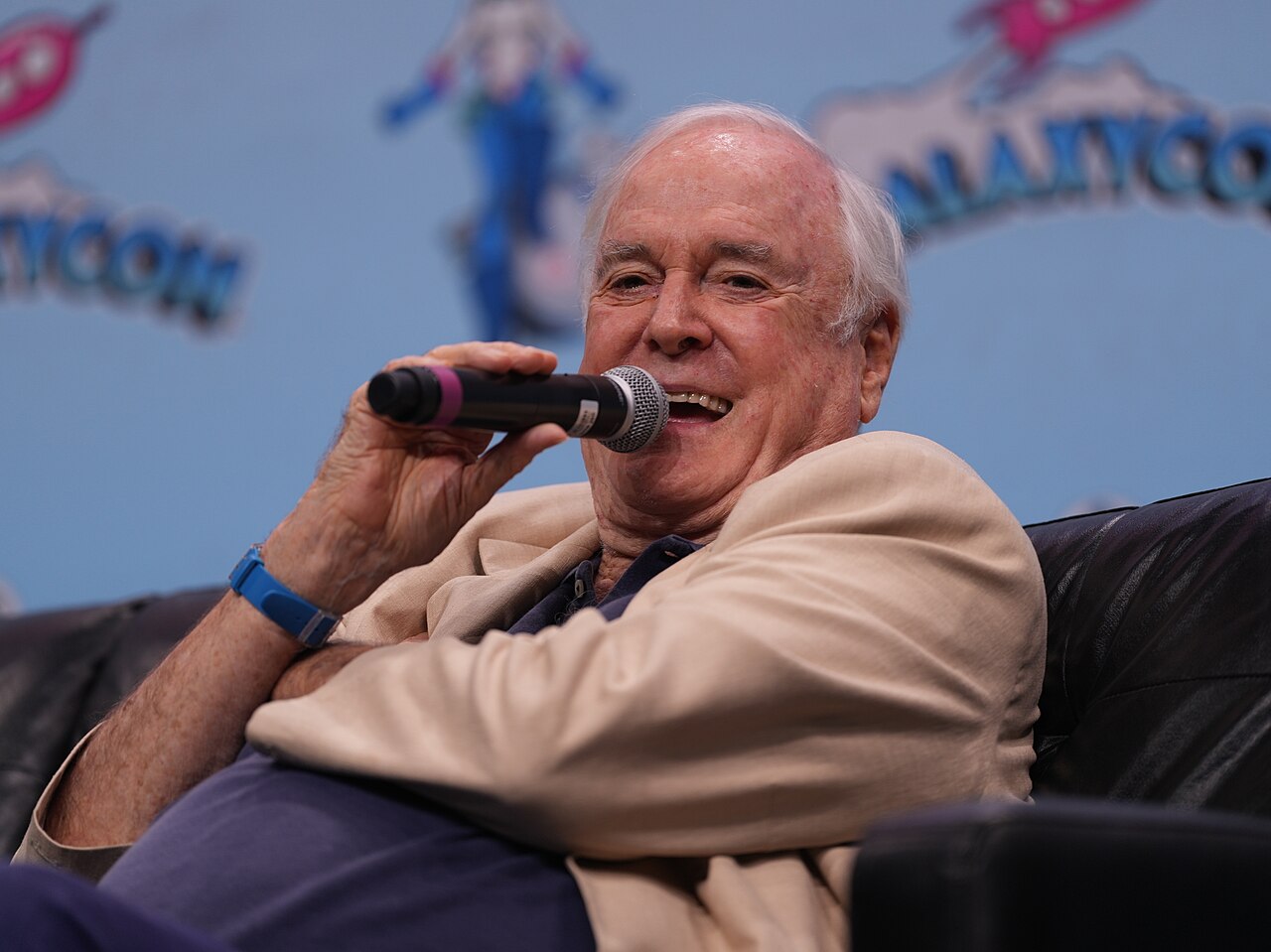
John Cleese causes outrage at 86. He did at 36, too.
But many of the people who laughed then grumble a frown-faced “that’s not funny” now.
In response to London Mayor Sadiq Khan proclaiming, “British people love having diversity,” Cleese responded on X: “The British do not like the kind of diversity that intends to take over Britain and kill any infidel that does not convert to Islam.”
The comments pertained to Muslims flooding Trafalgar Square to bow prostrate on the ground as prayers in Arabic blared over a loudspeaker. For a country with three crosses on its flag ruled by a “Defender of the Faith,” the scene exemplified the destruction of an England for English people. If Bobby Bare recruited Alabama to relocate to Mecca to sing “Dropkick Me Jesus (Through the Goalposts of Life)” in unison five times a day, some of those face-down on prayer mats in Trafalgar Square might appreciate Cleese’s concern.
London contains more Muslims than Dallas does people. When Monty Python’s Flying Circus premiered, fewer Muslims lived in the entire United Kingdom than people now live in Worcester, Massachusetts.
Cleese’s notice of the importation of the Third World into the capital city of Western Civilization itself draws notice. Cultural guardians regard it as a cardinal sin to notice aloud (except when they notice us noticing).
“There is something uniquely deflating about watching a figure once synonymous with sharp, absurdist brilliance slip into reactionary cliché,” reflects Brooke Ivey Johnson, a pop-culture writer with zero tweets but a rainbow flag and she/her pronouns on her X account.
She confesses to wincing at his post and to a preference for a “broader, more inclusive” comedy, such as that delivered “by the multicultural cast of the uproariously funny new UK Saturday Night Live,” which had aired exactly one episode when Miss Johnson issued this judgment.
She writes, “Cleese is a comedian whose work helped build the foundations of modern British comedy — a foundation that often included mocking the kind of closed-minded, isolationist, pompous Brit with whom he now seems to earnestly identify.”
Cleese and his confederates, whether in the Ministry of Silly Walks or Upper Class Twit of the Year skit, ridiculed authority. In the Arthur “Two Sheds” Jackson sketch, they mocked pretension (and maybe mocked the pretensions of anti-pretentious people, too). And in everything, they found the absurd in the normal.
One struggles not to find the absurdity of so much that passes for normal in 2026. And the authorities, as pretentious as ever, even if they do not wear a badge or a collar or a top hat and tails, still impose shibboleths that make little sense to common people. As Miss Johnson demonstrates, the authorities still hate mockery, which, as any child upsetting the headmaster knows, just makes the joke funnier.
John Cleese still mocks authority. Johnson and so many others who once enjoyed his comedy struggle to grasp that they became the punchline at which they once laughed.
And yet, one does find a grain of truth, even if unintentional, in the cottage industry of lover-scorned critiques of Cleese. For years, Monty Python’s Oxonians and Cantabrigians pilloried Christianity. The false messiah in Life of Brian, the attack on Christian symbolism in Monty Python and the Holy Grail, and the song “Every Sperm Is Sacred” in The Meaning of Life all played a role in hollowing out Christian belief in Great Britain (and beyond), even if laughter and not undermining faith served as the intention.
When you discredit Jesus, what did you expect to replace Him? John Cleese found out late in life.
The current conversation evokes memories of the famous debate about Life of Brian between Pythons Cleese and Michael Palin, on the one hand, and professional curmudgeon Malcolm Muggeridge and Church of England Bishop Mervyn Stockwood, on the other. In real time, the larger-than-life Bishop Stockwood stood out as the guy truly meant for stage and screen, and Cleese and Palin, mainly by turning so much into jokes, appeared as the victors.
In hindsight, Muggeridge looks like the victor.
“If you had made that film about Mohamet, you see, there would have been an absolute hullabaloo in this country,” he explains to the Pythons. “All the sort of anti-racialist people would have risen up in their might — the same people who would approve of this.”
Palin and Cleese, in weasel-like manner, reject the idea that their film about a crucified man with 12 apostles was really about Jesus. And then, angrily, they blame Christianity for so many of history’s great evils and wonder why Christians do not join them in taking leftist positions. They could not help themselves in rebutting their own point in the naked display of anti-Christian animus.
Muggeridge laments the end of Western Civilization and implores: “Remember, that that story of the incarnation was what our civilization began with.”
Alas, comedians should concern themselves with the ensuing laughter and not the cultural consequences of jokes. Anything else would be a corruption of purpose. When Cleese gets stoned to death for saying “Jehovah” in Life of Brian, it was funny. Cleese’s critics loved the cultural consequences of those earlier gags. But did they ever truly get the joke?
The people who laugh out of ideological solidarity rather than the inherent funniness of a joke ultimately become the punchline.
READ MORE from Daniel J. Flynn:
Cesar Chavez, Rapist, Pedophile, Progressive Icon








![Kamala Comes Unglued, Makes Bogus Claim About Her Landslide Loss to Trump [WATCH]](https://www.right2024.com/wp-content/uploads/2025/10/Kamala-Comes-Unglued-Makes-Bogus-Claim-About-Her-Landslide-Loss-350x250.jpg)