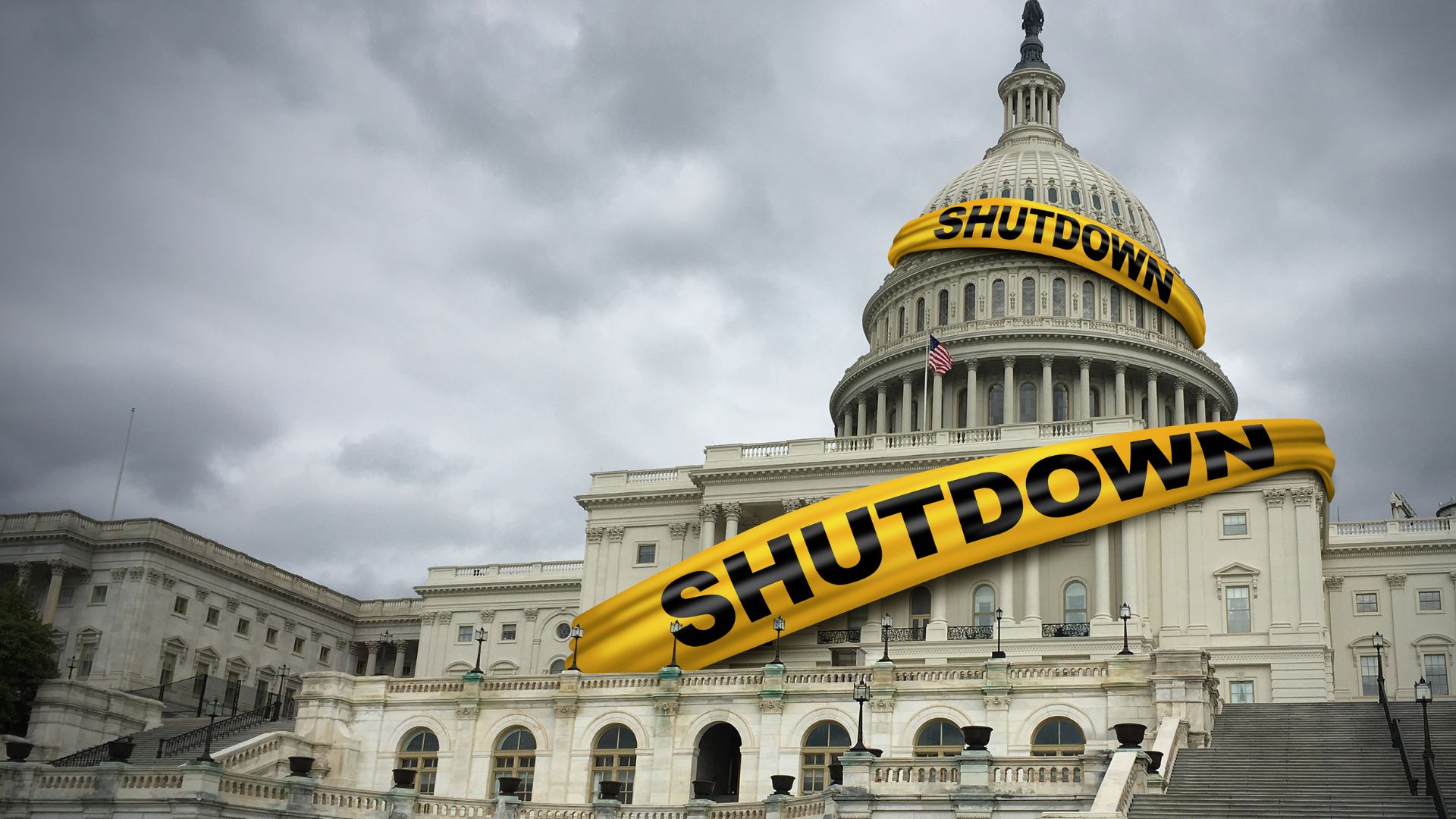
Senate Minority Leader Chuck Schumer declined on Tuesday to rule out the possibility of another government shutdown as Democrats continue pressing Republicans to extend enhanced Affordable Care Act subsidies ahead of an approaching federal funding deadline.
President Donald Trump ended the longest government shutdown in U.S. history on Nov. 12 after signing a spending package that funded the government through the end of January and restored pay to federal workers who had been furloughed during the lapse.
With government funding set to expire again on Jan. 30, lawmakers are facing renewed pressure to pass additional appropriations bills or a temporary funding measure to avoid another shutdown.
During an exchange with reporters, Schumer repeatedly avoided giving a direct answer when asked whether Democrats would once again tie government funding to their demand for extending enhanced Obamacare premium tax credits, a strategy Democrats used during the previous shutdown.
“Mr. Chairman, you mentioned January 1. There is also a January 30 deadline to fund the government. Do you have any expectation that Democrats might tie back to ACA like you did last time to try to get a result?” one reporter asked.
“Look, just as I said, it’s on the Republicans that we haven’t had health care done after January 1. It’s very, very hard to put it back in the bottom,” Schumer responded.
When reporters asked directly whether Democrats would vote to shut down the government on Jan. 30 if they failed to secure an extension of the ACA subsidies, Schumer again declined to give a clear commitment.
This Could Be the Most Important Video Gun Owners Watch All Year
“As I said, the bottom line is very simple, and that is that the way to solve this problem, because the toothpaste is already out of the tube, is get it done by January 1. The Republicans, if they care so much and feel the heat, they should make sure they pass our bill,” Schumer said.
Pressed again on whether Democrats would use the looming government funding deadline as leverage for health care demands, Schumer refused to clarify his position.
“That doesn’t sound like you’ve arrived on a strategy for how to handle January 30. So is that in play? Yes or no? The health care issue, the same as it was in the government shutdown this fall?” a reporter asked.
“I answered the question,” Schumer replied.
“That doesn’t sound clear, though,” one reporter noted.
“The bottom line is very clear. You can’t do it after January 1st, especially when the issues of Hyde and all these people. It’s expired already. It’s not the same as it was before. Once it expires, the toothpaste is out of the tube,” Schumer said.
Government funding is scheduled to expire on Jan. 30, and Congress has not passed any additional appropriations bills since the shutdown ended in November, according to Congress.gov and the Congressional Research Service.
Under the agreement that ended the shutdown, President Trump signed three appropriations bills that fund roughly 10 percent of the federal government and the Supplemental Nutrition Assistance Program through the fiscal year.
The remaining nine appropriations bills, accounting for about 90 percent of federal spending, remain unfunded unless Congress passes them or approves a continuing resolution, according to CRS data.
The signing ceremony followed a House vote approving a Senate-passed funding package by a margin of 222–209.
The vote largely split along party lines, though Reps. Thomas Massie of Kentucky and Greg Steube of Florida voted against the measure despite being Republicans, while six Democrats voted in favor of it.
Democrats ended the November shutdown without securing their primary demand for extending enhanced Obamacare premium tax credits.
As part of the shutdown resolution, Senate Majority Leader John Thune agreed to schedule a December vote on a Democratic bill aimed at extending the ACA subsidies. House Speaker Mike Johnson has not agreed to take up the measure.
The Democratic bill faces significant hurdles in the Senate, where it would need to clear the chamber’s 60-vote threshold to advance.
With funding deadlines approaching and major portions of the federal government still unfunded, Schumer’s refusal to rule out another shutdown has added uncertainty to negotiations as Congress moves toward the Jan. 30 deadline.





![Donald Trump Slams Chicago Leaders After Train Attack Leaves Woman Critically Burned [WATCH]](https://www.right2024.com/wp-content/uploads/2025/11/Trump-Torches-Powell-at-Investment-Forum-Presses-Scott-Bessent-to-350x250.jpg)