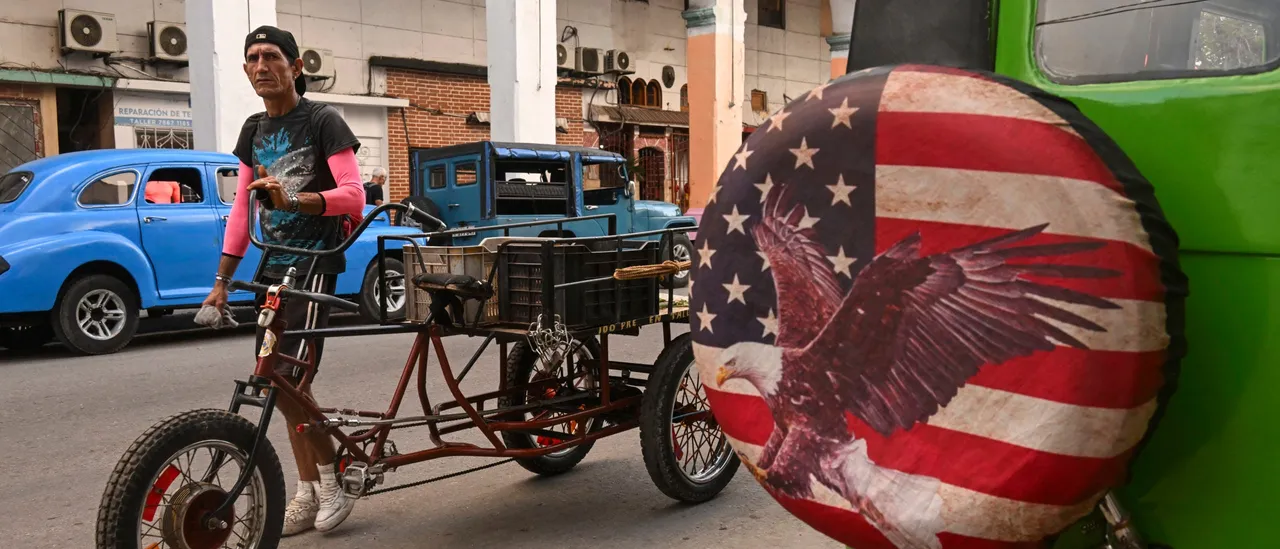
The Trump administration is reportedly considering a full blockade of oil to Cuba as the Communist regime sways under economic pressure.
Politico reported Friday that U.S. Secretary of State Marco Rubio is pushing for a naval blockade as a pressure point for a potential regime change. Discussions come after Rubio announced humanitarian aid packages earlier in the month in coordination with the Catholic Church as concerns of a humanitarian crisis in Cuba swirled.
Trump previously announced the cessation of Venezuelan oil to Cuba in a Truth Social post on Jan. 11 before encouraging the Cuban government to come to the table for negotiations, “BEFORE IT IS TOO LATE.” (RELATED: Two Republicans Side With Democrats In Failed Attempt To Stop Trump On Venezuela)
The Cuban embassay in Washington could not be reached for comment but in a statement yesterday before the United Nations in New York, Permanent Representative Ernesto Soberón Guzmán decried, “the intensified U.S. blockade against Cuba.”
Once again, #Cuba condemns the blockade imposed by the US government.#DropTheBlockade pic.twitter.com/gWbJ9XZiie
— Embacuba_Canada (@EmbacubaCanada) January 24, 2026
China authorized $80 million in aid and 60,000 tons of rice on Thursday as a renewed pledge of support for the island nation while Mexican President Claudia Sheinbaum announced a review of oil shipments from Mexico.
Republican Florida Rep. María Elvira Salazar, who represents part of Miami, known for its large Cuban diaspora, challenged Sheinbaum on X to “stop funding the Cuban regime with free oil.”
Blackouts, internet outages and food shortages have marred the nation for years, which has been ruled by communists since Fidel Castro forced out the Fulgencio Batista government in 1959.
The U.S. has maintained sanctions on Cuba since February 1962 when President John F. Kennedy imposed the embargo in a lead up to the Cuban Missile Crisis. President Bill Clinton reinforced Kennedy’s actions by signing the Libertad Act (also known as the Helms-Burton Act) in 1996 strengthening America’s embargo of Cuba.
The White House and Department of State could not be reached for comment.
![Donald Trump Slams Chicago Leaders After Train Attack Leaves Woman Critically Burned [WATCH]](https://www.right2024.com/wp-content/uploads/2025/11/Trump-Torches-Powell-at-Investment-Forum-Presses-Scott-Bessent-to-350x250.jpg)


![Two Dead, 14 Injured After Gunfire Erupts Following College Football Game in Alabama [WATCH]](https://www.right2024.com/wp-content/uploads/2025/10/Two-Dead-14-Injured-After-Gunfire-Erupts-Following-College-Football-350x250.jpg)