When it comes to gas prices and partisanship in Washington, what a difference a few years make.
During President Biden’s administration in 2022, Democrats rallied around Ukraine when average gas prices exceeded $5 per gallon after the Russian invasion, saying it was important to defend democracy even if it meant more pain at the pump.
Rep. Raul Ruiz, a Democrat, said $7-per-gallon gas in California was the price of solidarity with Ukraine.
“I, for one, am going to pay that price,” Mr. Ruiz said at the time.
Back then, Republicans pilloried Mr. Biden over soaring prices. Now, they find themselves in a similar pickle as President Trump works to build popular support for the war on Iran, while Democrats criticize Mr. Trump’s war for causing higher gas prices.
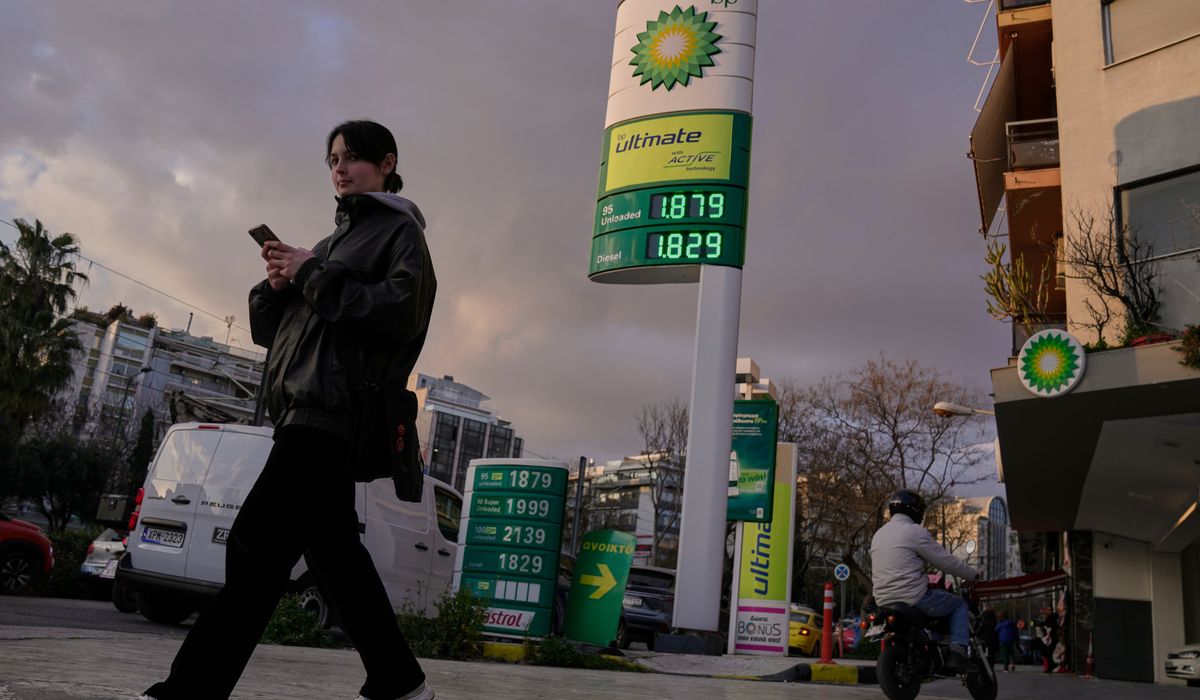
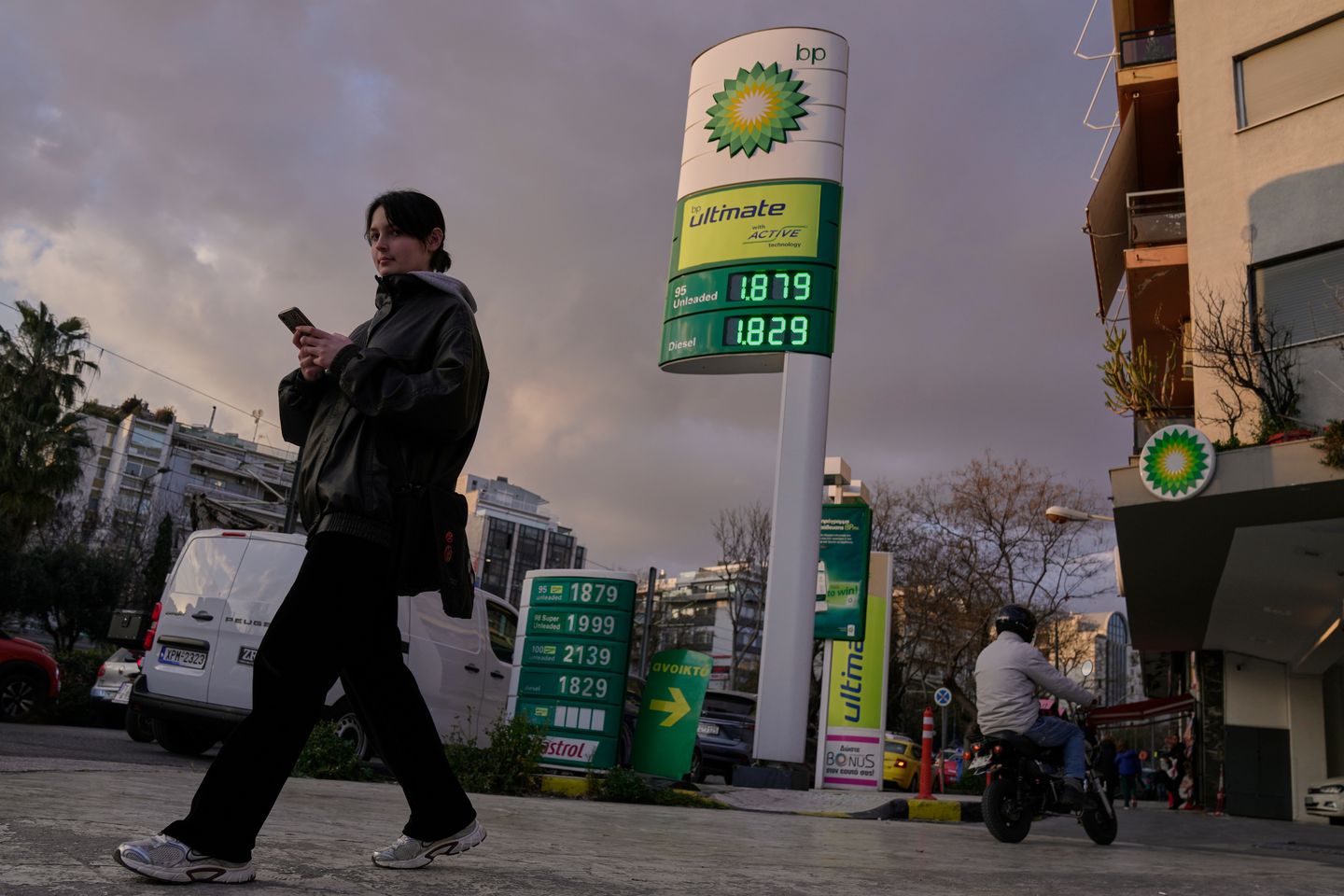
The AAA motor club said the average price of a gallon of gas stood at $3.98 per gallon on Wednesday, a $1 increase per gallon from one month ago.
Gas prices reached a higher point after the Russian invasion of Ukraine during Mr. Biden’s term, reaching an all-time high of $5.02 per gallon as a national average.
Some Republicans have justified higher prices this month as an unfortunate byproduct of defeating the world’s foremost sponsor of terrorism. But they’re mainly hoping that prices will ebb before the midterm elections.
Environmental Protection Agency Administrator Lee Zeldin announced Wednesday that the administration will now allow year-round sales of high-ethanol gasoline, temporarily waiving summer pollution restrictions to relieve concerns about rising gas prices.
House Speaker Mike Johnson called higher prices “a temporary blip” while Sen. Lisa McClain, Michigan Republican, said it was a “snapshot in time.”
“Once these combat operations are over, this administration is going to continue to unleash American energy dominance,” White House press secretary Karoline Leavitt said Wednesday. “We’re going to see prices at the pump go back down just as we have over the last year because of this president.”
That message is proving to be a difficult sell, especially after Mr. Trump campaigned in 2024 on lowering costs and ending foreign wars.
A poll from the Associated Press—NORC Center for Public Affairs Research on Wednesday found 59% of Americans think U.S. military action in Iran has been excessive.
The poll said 45% of Americans are “extremely” or “very” concerned about their ability to afford gas in the next few months, up from 30% in a similar poll after Mr. Trump won a second term.
A Reuters/Ipsos poll this week found 35% of Americans approve of U.S. strikes on Iran, down from 37% last week, and only one-quarter of Americans approve of Mr. Trump’s handling of the cost of living.
Together, those factors drove Mr. Trump’s approval rating down to 36%, the lowest rating in this survey of his second term.
The situation is heaping pressure on Mr. Trump to wind down the conflict – or at least offer a clearer narrative of what it’s supposed to accomplish.
“He and his top officials have been all over the map in justifying the war and explaining his overall strategy,” said Darrell West, a senior fellow in governance studies at the left-leaning Brookings Institution. “The war divides his base since many of his voters supported him when he campaigned on ending wars and reducing the U.S. role around the world. They have difficulty reconciling the Campaign Trump with the President Trump.”
Americans by and large supported sending supplies and weapons to Ukraine, and U.S. troops were not drawn into the conflict directly. Mr. Biden could also point to an outside force as the cause of higher prices.
“Democrats didn’t cause this problem. Vladimir Putin did. Putin’s gas tax has pushed prices higher,” Mr. Biden said at the time.
The rate of inflation has come down to 2.4% during Mr. Trump’s second term, after peaking at 9.1% under Mr. Biden. However, new concerns about gas prices come on top of lingering affordability worries in a midterm year.
“Everyone sees gas prices on street corners, so it is hard to hide the rising cost of filling up cars and trucks. That was a challenge for Biden, and now it is difficult for Trump,” Mr. West said.
Mr. Trump joined forces with Israel to begin bombarding Iran on Feb. 28, hoping to dismantle its missile program and nuclear ambitions while diminishing its support for terror proxies in the Middle East.
The president had warned Iran for months about a possible attack, and built up U.S. military assets in the region, though Americans woke to news of the strikes on a Saturday morning with little direct warning.
A CBS News-YouGov poll this week found two-thirds of Americans feel the Iran conflict is a “war of choice” while close to one-third think it is one of necessity.
Only 32% of respondents thought the Trump administration had clearly explained U.S. goals in Iran, while 68% thought it had not.
Mr. Trump says his objectives are clear: Keeping Iran from getting a nuclear weapon and decimating its navy, missile program and ability to support terror proxies in Middle East.
The White House defended its sales pitch to the American public on the war, pointing to robust support among Republicans in the MAGA base for the president’s actions.
“President Trump campaigned proudly on his promise to deny the Iranian regime the ability to develop a nuclear weapon, which is what this noble operation is accomplishing,” said White House spokeswoman Olivia Wales. “President Trump also campaigned proudly on his energy dominance agenda – and the president has been clear that these are short-term disruptions and that Americans will see oil and gas prices drop rapidly again once the necessary objectives of Operation Epic Fury have been achieved. The president does not make these incredibly important national security decisions based on fluid opinion polls, but on the best interest of the American people.”
There are signs that the economic pain is easing as Mr. Trump and Iran open a tentative diplomatic channel to end the war.
U.S. stocks jumped on Wednesday after reports that the American side sent a multi-point peace plan to Iran. Pakistan officials offered to mediate talks, though Iranian state media reported that Iran “does not accept a ceasefire.”
Iran did, however, say it would allow safe passage of “non-hostile” ships through the Strait of Hormuz, driving down oil prices.
Lower oil prices should, in turn, result in less pain at the gas pump in the coming days or weeks.
The Trump administration also outlined efforts to backfill fertilizer stocks that have been caught in the Strait of Hormuz bordering Iran.
Agriculture Secretary Brooke Rollins said 80% of farmers bought fertilizer before the war began, so they are all set for the spring planting season.
“There shouldn’t be much disruption,” she told Fox Business’ “Mornings with Maria.” “For the 20% that have yet to buy fertilizer, we’re seeing some of the stories, how expensive it got. The president has opened up lines from Venezuela.”
She also pointed to Mr. Trump’s 60-day waiver of the Jones Act, a longstanding shipping law, to ease economic concerns around the war on Iran.
The 1920 law says the transport of products between U.S. ports must be conducted by American vessels, though it’s been criticized as a costly obstacle to trade.
The president’s waiver is intended to increase the number of oil tankers that can move oil between U.S. ports.
• Mary McCue Bell contributed to this story.


![Two Dead, 14 Injured After Gunfire Erupts Following College Football Game in Alabama [WATCH]](https://www.right2024.com/wp-content/uploads/2025/10/Two-Dead-14-Injured-After-Gunfire-Erupts-Following-College-Football-350x250.jpg)