History will likely remember 2025 as the year energy corporatists finally stopped pretending there is a climate crisis. For a decade, a bizarre theater of the absurd played out as titans of the oil and gas industry apologized for their core business while pledging allegiance to a “green transition” that existed mostly in the imaginations of Western bureaucrats. But the curtain has seemingly fallen.
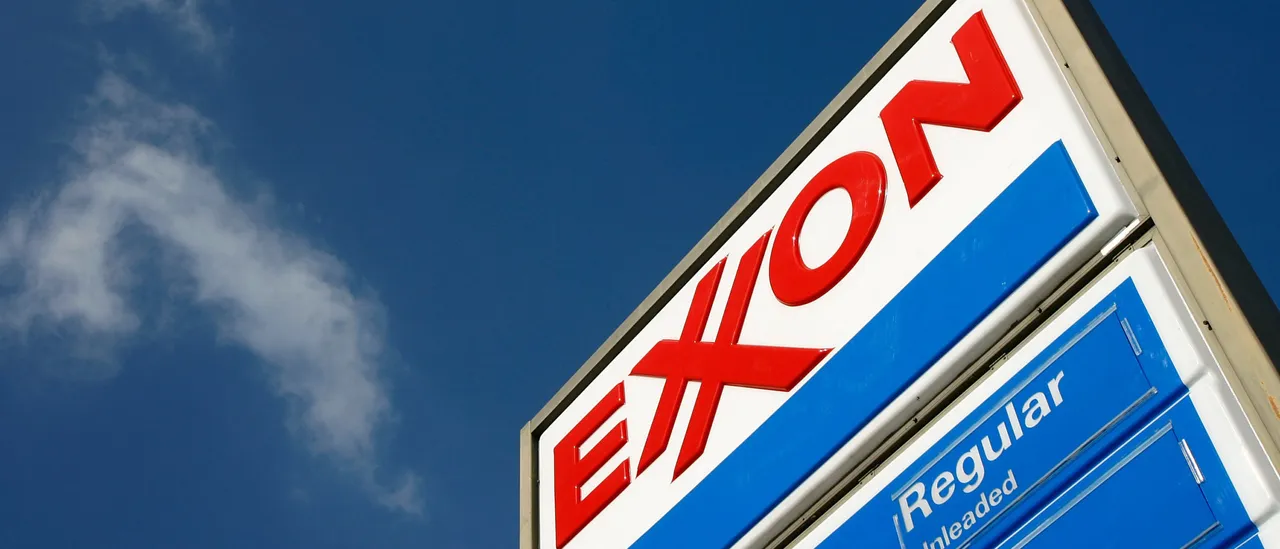
ExxonMobil, one of the world’s largest energy producers, has slashed $10 billion from its low-carbon investment commitments through 2030. Simultaneously, the company announced that it expects $25 billion in earnings growth from 2024 to 2030 to be powered primarily by increases in oil and gas production, which will push daily output to 5.5 million barrels of oil equivalent by the end of the decade.
This is not a company abandoning climate responsibility but rather at last recognizing what has long been obvious: The path prescribed by the climate industrial complex is economically destructive and operationally impossible – even with massive government subsidies.
For years, the global energy strategy has been surreal. Companies that built the modern world on the back of energy-dense hydrocarbons indulged those celebrating the arrival of wind turbines and solar panels to power civilization. But reality, stubborn and unforgiving, has interrupted the psychedelic revelry.
ExxonMobil’s low-carbon investments will be paced to policy support and customer demand, says the company. That is corporate speak meaning that spending on green projects is paused unless the government – using our tax dollars – subsidizes the risk or until a market exists. (RELATED: Why America Might Find Coal In Its Stocking This Christmas — And Be Jolly)
Megaprojects, once heralded as the future, are now in line for deferral. Why? Because without taxpayer handouts, the economics of trying to bury underground a plant food like carbon dioxide simply do not work – and defy common sense.
The energy sector is pivoting from a strategy of “grow clean at all costs” to “returns first, transition last.” “Green” projects are being relegated to a secondary capital bucket – a token for good PR instead of a core activity.
Europe’s Shell and Aker BP and Canada’s Enbridge have withdrawn from the Science Based Targets initiative to establish “science-based emissions reductions.” This was a retreat from what is described as a “credible, science-based net-zero framework” because there was neither credibility nor science. It was a political suicide pact. The energy giants looked at the cliff’s edge and refused to jump.
British multinational BP, having abandoned its promise to go “Beyond Petroleum,” has raised its oil and gas spending and softened its renewable targets.
ENEOS Holdings, a Japanese refiner, has discarded hydrogen production targets, with CEO Tomohide Miyata explaining that “the shift toward a carbon-neutral society appears to be slowing.”
These U-turns represent a renaissance in policy realism. Energy needs do not disappear because politicians make speeches at climate summits or corporations allocate funds to ESG programs or governments attempt to control consumption and choices of appliances and automobiles.
Second thoughts about an inevitably doomed “green” transition is a victory for the single mother in the U.S. trying to budget for winter heating and for the small business owner in the U.K. whose margins are crushed by one of the highest commercial electricity rates in the world. And for the billions of people in developing nations, this pivot could be salvation from generational poverty.
The question now is whether governments will recognize what corporations have made clear: that the energy transition was a fantasy infused with scientific language and draped in moralistic gingerbread. Or will they continue to increase subsidies and regulations?
Very likely, there will be a bifurcation: on the one hand, western bureaucracies, particularly in Europe, continuing an economic decline under mandates and taxes, and on the other, pragmatic governments, many of them in Asia, pursuing prosperity with fuels and technologies that work.
Vijay Jayaraj is a Science and Research Associate at the CO2 Coalition, Fairfax, Va. He holds an M.S. in environmental sciences from the University of East Anglia and a postgraduate degree in energy management from Robert Gordon University, both in the U.K., and a bachelor’s in engineering from Anna University, India. He served as a research associate with the Changing Oceans Research Unit at University of British Columbia, Canada.
The views and opinions expressed in this commentary are those of the author and do not reflect the official position of the Daily Caller News Foundation.
All content created by the Daily Caller News Foundation, an independent and nonpartisan newswire service, is available without charge to any legitimate news publisher that can provide a large audience. All republished articles must include our logo, our reporter’s byline and their DCNF affiliation. For any questions about our guidelines or partnering with us, please contact licensing@dailycallernewsfoundation.org.
![Scott Bessent Explains The Big Picture Everyone is Missing During the Shutdown [WATCH]](https://www.right2024.com/wp-content/uploads/2025/11/Scott-Bessent-Explains-The-Big-Picture-Everyone-is-Missing-During-350x250.jpg)