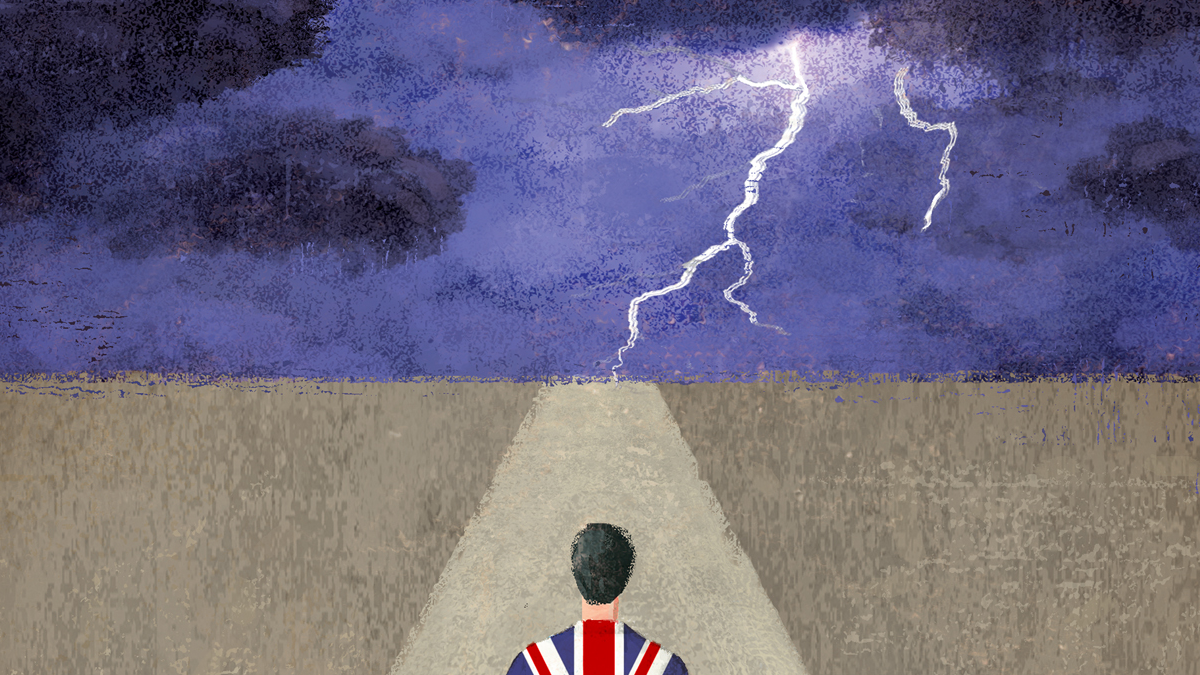
The problem with facing up to unpleasant realities is that even though simply doing so can be difficult enough, that isn’t the end of it. Just as important is facing up to them quickly enough. Today’s papers are dominated by two stories – the latest peace negotiations over Ukraine and Rachel Reeves’ looming Budget – which illustrate the point.
Each centres on a painful reality adjustment, but perhaps not yet an adequate one.
On Ukraine, the headlines are about the furious response of European leaders to the latest terms cooked up between Washington and Moscow, and their efforts to present alternatives less favourable to Russia. But beneath the sound and fury, the significant trend is that everyone’s position – including Kiev’s – is substantially closer to Vladimir Putin’s objectives than in the past.
When the latest bout of the war started in earnest, in 2021, Ukraine’s war aims were ambitious but simple: the reclamation of all its sovereign territory, including the Crimea. Deals which included any sort of handover were off the table. Yet over the past year or so that objective has been quietly abandoned; freezing the conflict along the current front line (a move which would leave Russia in control not only of Crimea but a broad swath of what it calls ‘Novorossiya’ in the Donbas) is now the optimistic position.
To those inclined to view the war through an exclusively moral lens, this seems ridiculous: the terms are worse for Ukraine than those being floated in 2023 or 2024, an unconscionable reward for Vladimir Putin’s willingness to press onward with his invasion. But the grim reality underpinning this shift is simple: Russia is winning.
This fact might not be obvious if you only pay attention to overall maps of the front lines, which have moved very slowly compared to the sort of big, arrow-filled offensives one sees in a war of manoeuvre. But despite heroic resistance by the Armed Forces of Ukraine, the Russian army has pried them out of one fortress town after another; even as the Russians’ pace of advance increases, 2025 was the first year in which Ukraine mounted no major strategic operations at all.
Short of actually deploying their own militaries, there is only so much either America or Europe can do about this; not only are they out of weapons which can be easily spared, but even all the weaponry on Earth wouldn’t solve Kiev’s most critical military shortage, which is of actual soldiers. So their positions, and that of the Zelensky Government, have shifted.
But are they shifting fast enough? The obvious problem is that if Russia is winning on the ground, it is going to be bolder in its demands in the negotiations; the more of the Donbas it can secure on the battlefield, the less Ukraine has to bargain which (however unhappy the bargain might be). In retrospect, as some US generals did say at the time, the best time for Kiev to negotiate a peace was probably before its failed offensive in 2023, when its military was at maximum strength. But that very strength made accepting that impossible.
On the domestic front, the Chancellor is victim to fundamentally similar forces. Like its Ukrainian counterpart, the Starmer Government took office with objectives which were bullish to the point of irreality; the return of economic growth, like the total reconquest of Kiev’s pre-2014 borders, offered an attractive prospect which avoided the need to make painful decisions – and because those decisions could be avoided, nobody wanted to make them.
Sadly, restoring economic growth turned out not merely to be a matter of getting the Tories out and the grown-ups back in the room. Labour finds itself in exactly the same public spending vice as were the Conservatives, but without the benefit of the country’s apparently unshakeable residual belief that the Tories are to be trusted on the economy. So Reeves started making concessions: breaking her promise not to raise taxes, alongside an abortive attempt to cut the welfare bill.
Again, however, she is pursuing reality rather than facing it. Hiking taxes in middle earners will allow her to avoid another confrontation with Labour backbenchers over welfare spending, but it is not a solution, either to the country’s overall economic prospects or even to the Government’s medium-term woes. Raising tax to fund revenue expenditure is one thing, but doing it to prop up runaway revenue budgets is simply sucking money out of the productive economy to spend unproductively.
Likewise, there is no sign that the Prime Minister is going to attempt any second thoughts about the Employment Rights Bill, which is by some margin the most obvious non-spending initiative a growth-oriented government would dispose of. At this point, the question is simply to what extent the Government is refusing to orient itself to reality because its backbenchers won’t let it, versus because its most senior people genuinely don’t recognise that their economic, fiscal, and regulatory ambitions don’t add up.
This is not an exclusively Labour problem, by any means – I wrote in 2023 about Jeremy Hunt’s misuse of the long term:
“In modern British politics, there are two versions of “the long term”. The first is the real future, which will actually arrive at some point, and in which difficult decisions taken today will pay off – or the costs of difficult decisions deferred come due. We very rarely encounter this version.
“The second is a time, an indeterminate but comfortably distant point in the future, at which we will get around to taking those difficult decisions once the urgent demands of our present moment – which must, of course, be our immediate priority – have abated.”
It is an unhappy fact that the best time to deal with a problem is so often the point at which dealing with it can be most easily put off. Yet sooner or later, the real version of tomorrow, not the magic kingdom full of better, braver people to whom you delegated the solving of problems but the world in which you reap what you sowed, eventually arrives. The choice is between facing up to it, or keeping up the increasingly futile quest for another, better tomorrow – when you’re still not building one.
![Donald Trump Slams Chicago Leaders After Train Attack Leaves Woman Critically Burned [WATCH]](https://www.right2024.com/wp-content/uploads/2025/11/Trump-Torches-Powell-at-Investment-Forum-Presses-Scott-Bessent-to-350x250.jpg)

![Kamala Comes Unglued, Makes Bogus Claim About Her Landslide Loss to Trump [WATCH]](https://www.right2024.com/wp-content/uploads/2025/10/Kamala-Comes-Unglued-Makes-Bogus-Claim-About-Her-Landslide-Loss-350x250.jpg)