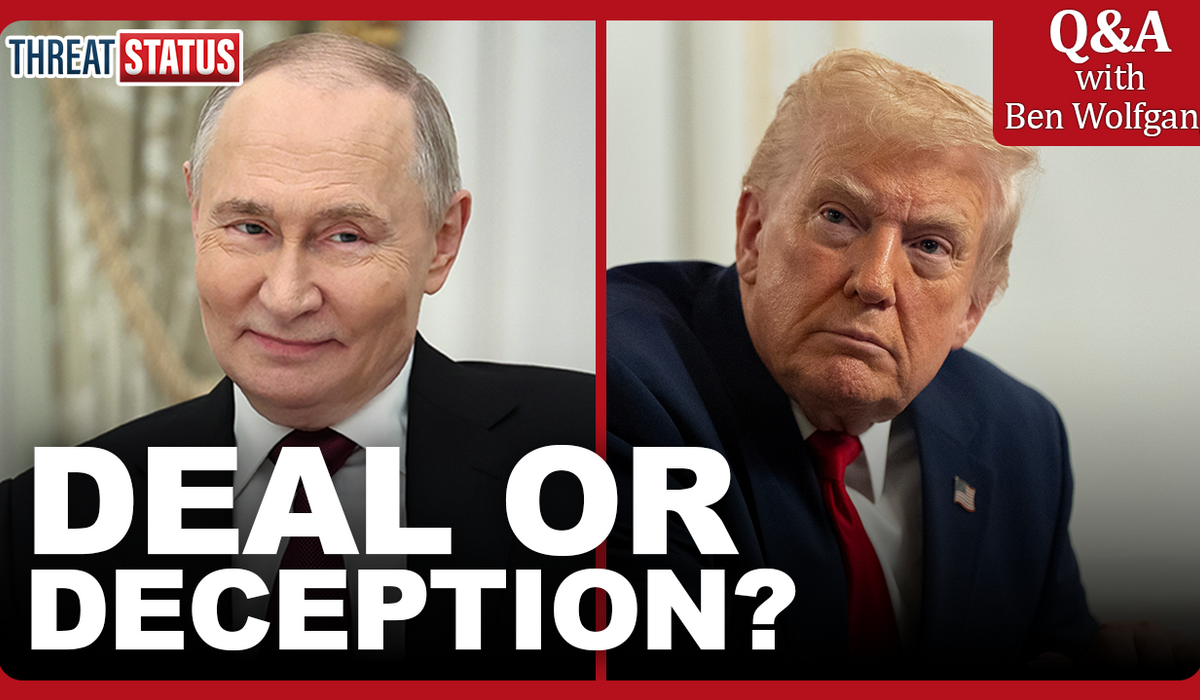
Can a peace plan with Russia really end the war with Ukraine, or is this just the latest in a long line of promises that Russia will break?
After weeks of talks between American, Ukrainian, European, Russian officials, including White House envoy Steve Witkoff’s trip to Moscow on December 2nd to meet with Russian President Putin, negotiators say that Trump’s peace proposal is now the most productive framework that we’ve seen so far to potentially end the war, which is coming up now in its fourth anniversary.
Ukrainian President Zelenskyy says that Kyiv finally has the list of necessary steps to end the war. And he reiterated just this week that Ukraine is committed to achieving real peace, guaranteed security, lasting security in Eastern Europe and all across Ukraine.
But even as momentum builds here, there’s a deeper skepticism hanging over the process. A lot of critics warn that Russia’s past promises to respect the borders of its neighbors, take part in ceasefires, actually adhere to them, and respect the sovereignty of countries around it have repeatedly been violated and ultimately followed by military aggression from Russia.
I’m Ben Wolfgang, National Security correspondent at the Washington Times and host of the Threat Status podcast.
And this is a question and answer session diving into President Trump’s Ukraine-Russia peace push, and whether it’s actually going to work.
Why should anyone trust Russia’s promises now?
So the key question I think we want to dive into here is whether anyone should trust Russia and the promises that it makes. And there are a lot of reasons, quite frankly, to think that we probably shouldn’t. I mean, you can tick through a bunch of past deals. For example, the 1970s-era Helsinki Accords, in which the then-Soviet Union talked about respecting borders and sovereignty, and refraining from military aggression, which of course they violated later. The Budapest Memorandum, in the early 90s, after the fall of the Soviet Union, in which the U.S. played a role in convincing Ukraine to give up its stockpile of Soviet-era nuclear weapons in exchange for peace guarantees from Russia that it would respect Ukraine’s borders. There was the 2003 treaty on the Ukrainian-Russian state border, which was signed by President Putin, who’s still in office, in which the two countries agreed to respect each other’s borders. After Russia’s invasion and seizure of Crimea in 2014, European powers negotiated the Minsk agreements, which Russia and Ukraine both signed to de-escalate fighting in Ukraine’s Donbas region and hopefully lead to peace between those two sides. All of those deals —I mean virtually every one — have, of course, been violated. Now, the Russian side has its own interpretation of these events, right? They would argue that Ukraine violated these deals first, or the U.S. or Europe violated them in some way, or that somehow there’s been technicalities involved for why Russia took the actions that it did. But certain things in national security and foreign policy are black and white, and there are black and white words on a page that Russia agreed to and subsequently violated.
What makes Trump’s plan different from past broken agreements?
So that leads us to why Trump’s plan might be different from those past broken agreements. And the short answer is, I think a lot of people fear that it won’t be. Now, you do have a very persuasive president in President Trump, who has repeatedly put himself personally into this process to say, “if I were president, Russia wouldn’t have invaded Ukraine a few years ago. And that if, you know, if I had been president at this particular juncture, I could have gotten a peace deal.” So he believes that just his presence, the force of his personality in these proceedings will help get a deal done and make it actually last. That remains to be seen. And, of course, it’s also worth noting as a political note that President Trump isn’t going to be in office forever. So you have to wonder if even if that’s true for at least the short-term future of the next two, three, four years, is that true? Does it remain true for whoever the next president is going to be? Would Moscow still respect that deal?
What real deterrence would keep Russia from invading again?
What analysts tell me, national security insiders, current and former Pentagon officials, negotiators across NATO, Europe, etc., the issue is deterrence, really, at the end of the day. Whatever is on that sheet of paper, you know, it’s the old Reagan-era mantra, trust but verify, right? You can’t trust Russia to actually do whatever it’s going to say unless you have real, concrete mechanisms in place to hold them to that. So the idea is deterrence. Now, what deterrence is there? That’s another great question that I don’t think we’re entirely sure of right now because the initial draft of President Trump’s proposal called for limits on the size of the Ukrainian military and basically a pledge that Ukraine would never join NATO. Those are two really key instances of deterrence, two really key factors that would actually potentially deter Russia. So if you’re going to take those off the table, that’s a problem in terms of deterrence because we’ve seen the economic sanctions angle doesn’t work. Strongly worded statements or U.N. resolutions or what have you, none of that stuff really seems to work. What actually would work, analysts tell me, experts tell me, is military deterrence. So we have to see if that’s going to be on the table.
Watch the video for the full conversation.
Read more about the attempts at peace deals with Russia and Ukraine:
![Donald Trump Slams Chicago Leaders After Train Attack Leaves Woman Critically Burned [WATCH]](https://www.right2024.com/wp-content/uploads/2025/11/Trump-Torches-Powell-at-Investment-Forum-Presses-Scott-Bessent-to-350x250.jpg)