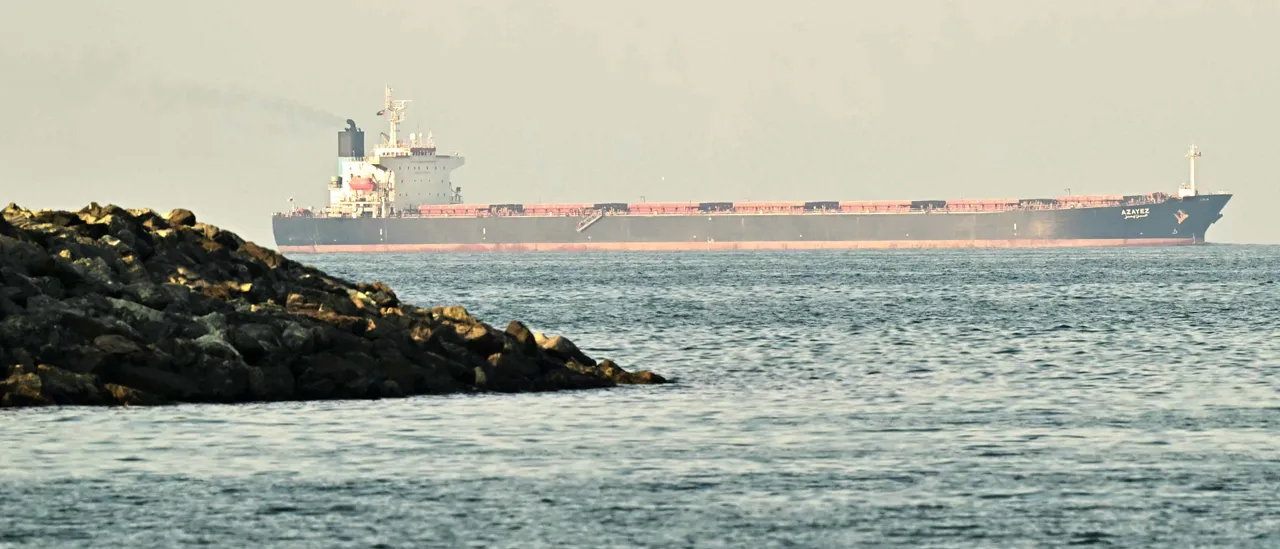
For days now, the world has been laser-focused on the Strait of Hormuz, through which 20% of the world’s daily oil demand flowed on tankers before the war with Iran.
In an attempt to ease concerns over spiking oil prices, President Trump has insisted that this critical chokepoint is now safe enough to pass through due to sufficient damage to Iran’s navy at the hands of the U.S. military. It’s only a matter of “guts.” The dynamics on the ground, however, are far more complicated and risky than the president and the administration seem to realize. Factor in Iran’s drones and sea mines — the latter of which haven’t reportedly been used yet — and the Strait of Hormuz crisis shows no signs of ending anytime soon.
Strait Of Hormuz Traffic Remains Close To Zero
Shipping traffic through the strait remains at a virtual standstill as of early, mid-March. Despite no attacks on maritime vessels within the past 48 hours (as of Monday), the Joint Maritime Information Center (JMIC) warned that the threat level in the Strait of Hormuz, the Arabian Gulf, and the Gulf of Oman is still “critical.”
“The absence of new attacks in the past 48 hours should be interpreted as a temporary lull rather than a change in adversary intent,” the JMIC said Monday. “Maritime operators should anticipate that threat activity may resume with little warning following operational pauses.”
Between Feb. 28 and March 8, the United Kingdom Maritime Trade Operations recorded 10 attacks on commercial vessels and three incidents involving “suspicious activity” in the region, according to gCaptain, a maritime news website. Since the start of the war, seven seafarers have reportedly been killed and several others seriously injured.
Traffic through the Strait of Hormuz has ground to a virtual halt, unleashing the most severe energy crisis since the 1970s. https://t.co/UgDxLFQaqS
— The Wall Street Journal (@WSJ) March 8, 2026
gCaptain also noted that several “dark tankers” have passed through the Strait of Hormuz but did so after deliberately turning off their transponders to avoid being tracked. According to the outlet, these tankers had destinations that included China, India, and Japan.
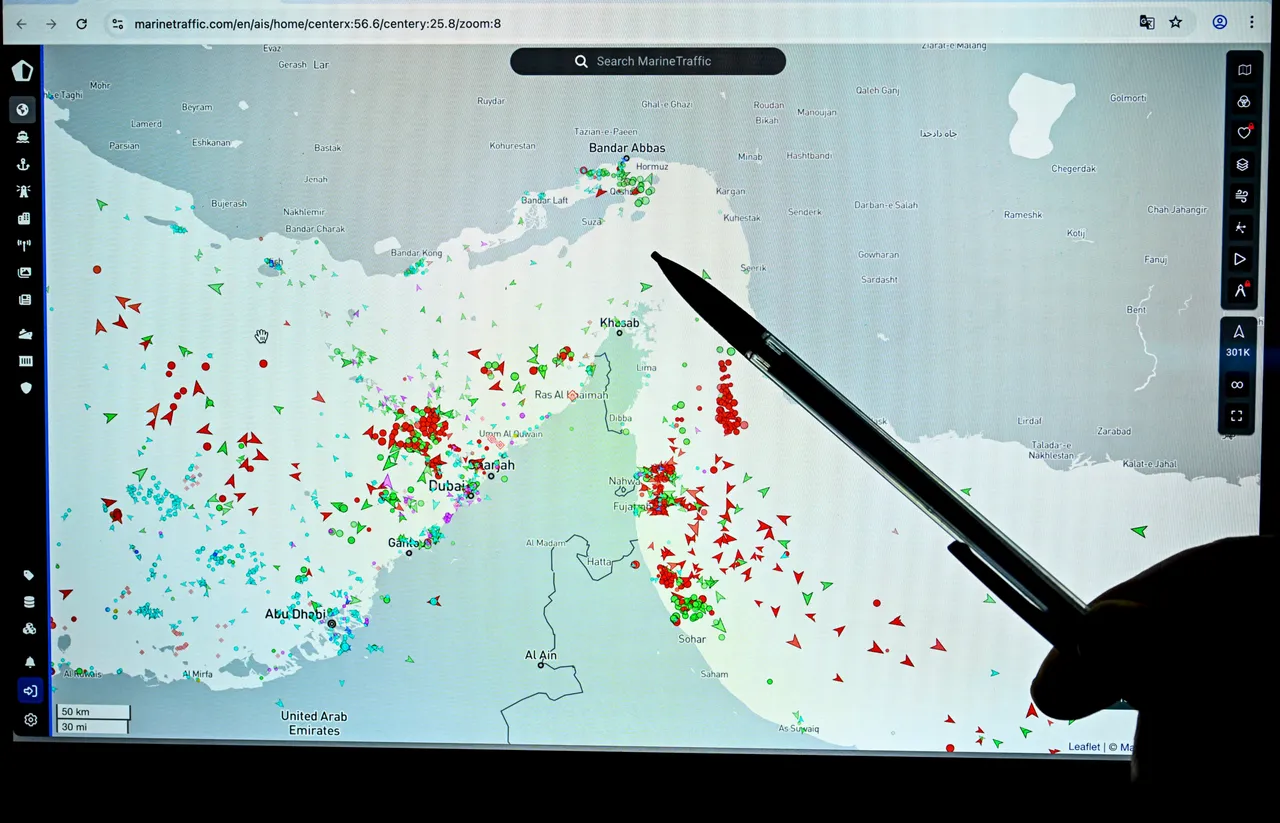
A person points at a page on the Marinetraffic website that shows commercial boats traffic on the edge of the Strait of Hormuz near the Iranian coast, in Paris on March 4, 2026. (Photo by JULIEN DE ROSA / AFP via Getty Images)
Trump’s Plan
President Trump said March 4 that the U.S. government would offer insurance backstops and naval escorts to guarantee the flow of energy shipments through the Strait of Hormuz. Details of the plan remain scant as of March 9. Hypothetically, it would involve the U.S. International Development Finance Corporation, a government agency that provides loans, guarantees, equity, and risk insurance to development projects led by the private sector, usually in developing countries. (RELATED: Trump Vows To Protect Key Energy Chokepoint Strait Of Hormuz As Global Oil Prices Surge)
As Bloomberg noted, an “updated US-organized version to cover oil, gas and fuels across the Persian Gulf would be on a far larger scale, and more complex, given the number of producers and consumers involved.”
‘SHOW SOME GUTS’: President Trump addressed the recent spike in oil prices during an interview with @kilmeade as the conflict in Iran enters its second week.
“These ships should go through the Strait of Hormuz and show some guts, there’s nothing to be afraid of… They have no… pic.twitter.com/pbIqLgGFID
— FOX & Friends (@foxandfriends) March 9, 2026
Meanwhile, shipping companies, ship owners, and safety officers remain skeptical that Trump’s plan will even come to fruition, Bloomberg reported. Bimco, the world’s largest shipping industry association, has warned that protecting every single ship that passes through the strait would be unrealistic.
“Providing protection for all tankers operating in areas currently threatened by Iran is unrealistic as this would require a very high number of warships and other military assets,” Jakob Larsen, Bimco’s chief safety and security officer, said.
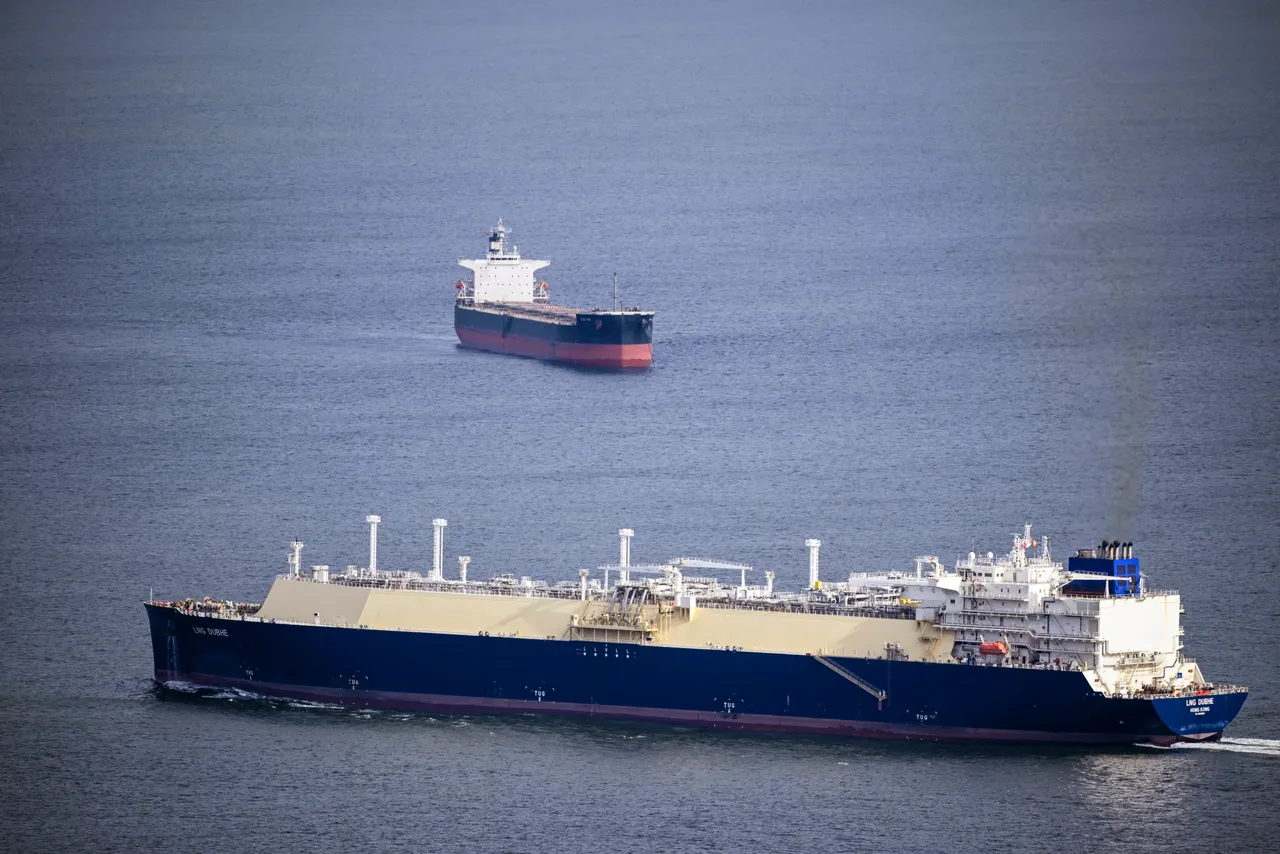
The vessel Lng Dubhe, a LNG tanker sailing under the flag of Hong Kong, leaves the Port of Bilbao after her stopover at the Bizkaia Bay Gas (BBG) regasification plant in the Spanish Basque city of Zierbena on March 9, 2026. The US-Israeli war on Iran has expanded across the Gulf and beyond, upending global energy markets and trade, and virtually halting traffic in the Strait of Hormuz, through which a fifth of the world’s crude oil travels. (Photo by ANDER GILLENEA / AFP via Getty Images)
Khalid Hashim, a managing director of a Thai firm that owns bulk carriers, told the outlet that “nothing is sure and we need immediate clarity.”
“Lives are at risk, cargoes are at risk, ships are at risk. We need immediate cover that protects us from all this.”
Analysts at RBC Capital Markets LLC, a global investment bank, expressed skepticism that the plan could be pulled off quickly enough.
“While President Trump’s comments about insurance and tanker escorts caused a pullback in oil prices, we question how much planning has been done on the insurance backstop thus far and think there could be a number of challenges in executing this plan quickly,” they said in a note.
What Iran Has Up Its Sleeve
As Warren Patterson, head of commodities strategy at banking giant ING, told Bloomberg, American “Naval escorts would be helpful, but again, this effort will take time. Naval escorts will be sitting ducks to Iranian attacks.”
According to Reuters, Iranian drone attacks could disrupt the Strait of Hormuz for months.
The outlet reported that Tehran still has the industrial capacity to produce 10,000 drones a month, though that could certainly change in the next few weeks, and has anywhere between 2,500 and 6,000 missiles. Further, if missiles and drones were to run out or fail, Iran reportedly has upward of 5,000 sea mines at its disposal. These mines can be planted at the bottom of the sea, drifted into waters, or propelled by a rocket toward vessels, Reuters noted. (RELATED: Attack Of The Drones: How Iran’s ‘Asymmetric Warfare’ Could Send Shockwaves Through The Cloud)
“If sea mines are laid, it will take a long time to deal with them,” Cormac McCarry, director at Control Risks, told the outlet. “That’s where we will be looking at months of destruction.”
Reuters reported that there is no indication Iran has planted any sea mines yet. This leads one to believe that they are waiting for traffic to pick up again, thanks to American insurance guarantees or U.S. Naval escorts.
In this scenario, things could get very dicey for both the commercial seafarers and America’s seamen.







![Donald Trump Slams Chicago Leaders After Train Attack Leaves Woman Critically Burned [WATCH]](https://www.right2024.com/wp-content/uploads/2025/11/Trump-Torches-Powell-at-Investment-Forum-Presses-Scott-Bessent-to-350x250.jpg)