What Really Matters: Restoring a Legacy of Faith, Freedom, and Family
By Craig Osten, Timothy S. Goeglein
Fidelis Publishing, 2026, 264 pages, $9 (Kindle)
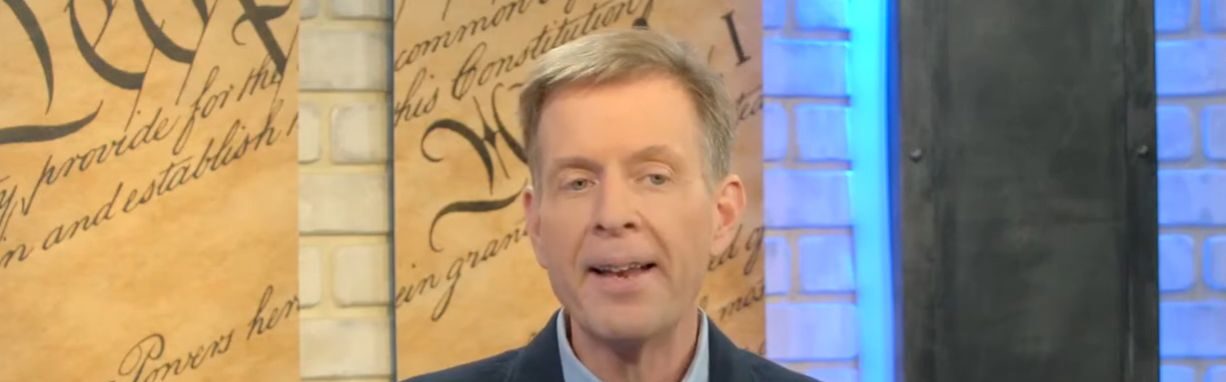
Tim Goeglein, vice president of Focus on the Family’s Washington, D.C., office and a longtime public servant — including senior roles in the U.S. Senate and eight years in the George W. Bush administration — offers in What Really Matters a thoughtful defense of the traditional moral framework that shaped American society and is increasingly challenged in today’s culture.
At the center of Mr. Goeglein’s argument is the conviction that the lifelong marriage of a man and a woman — who welcome children and raise them within the moral framework of Judeo-Christian faith — remains the essential foundation for a stable and flourishing society. When this foundation weakens, he argues, the consequences extend far beyond the private sphere and eventually affect the health of the nation itself.
The book is organized into six thematic chapters addressing marriage, family life, the renewal of American manhood, the restoration of a well-ordered society, the recovery of faith, and the preservation of historical memory. Drawing on essays written throughout his career in public service and cultural commentary, Mr. Goeglein reflects on the moral and social challenges confronting modern America and the cultural assumptions that have contributed to them.
In What Really Matters, he challenges popular notions of “the good life,” particularly the cultural elevation of personal autonomy and perpetual singleness as the pathway to fulfillment. By contrast, Mr. Goeglein argues that the deeper and more enduring satisfactions of life are found in the responsibilities and sacrifices inherent in marriage and family life. Through family commitment, parents not only nurture their children but also help form the character and civic responsibility necessary for a healthy republic.
A central theme of the book is Mr. Goeglein’s appeal to what he calls the “Prodigal Father”—the American father who must rediscover his vocation as leader, role model, and provider within the home. He urges a renewal of male identity rooted in the character of the true gentleman, marked by responsibility, sacrifice, and moral integrity. Fathers who embrace this calling, he suggests, provide the stability children need and the moral leadership families depend upon.
In the end, Mr. Goeglein writes as both a concerned father and a hopeful patriot, urging Americans to reconsider the cultural path they have taken.
“As the family goes, so goes the nation,” Mr. Goeglein reminds readers. In examining contemporary social trends, he argues that the erosion of marriage and the weakening of family structures have contributed to many of the difficulties now confronting American society. Declining birth rates, rising social fragmentation, and growing dependence on government institutions all reflect, in his view, deeper cultural shifts away from family formation and long-standing moral commitments.
Education plays an important role in addressing these challenges. Mr. Goeglein emphasizes that values are formed both at home and in the classroom and that schools must help cultivate civic responsibility as well as intellectual knowledge. When education neglects the moral and civic dimensions of learning, he argues, society risks producing citizens who lack the historical understanding and ethical framework necessary to sustain a free republic.
Faith also occupies a central place in Mr. Goeglein’s analysis. When religious belief diminishes, he writes, loneliness and isolation often increase while self-interest replaces a sense of shared responsibility. These cultural trends not only affect personal well-being but also shape public life. Declining marriage and birth rates, demographic pressures on programs such as Social Security and Medicare, and rising social disconnection all point, in his view, to the consequences of a culture that has gradually distanced itself from its spiritual roots.
Mr. Goeglein also expresses concern about the way American history is increasingly interpreted and taught. He warns that historical narratives emphasizing only national failures risk obscuring the ideals and sacrifices that shaped the American experiment. Without an honest and balanced understanding of the past, citizens lose the context necessary to understand the present and preserve the freedoms they have inherited.
At times, the essay format produces a degree of repetition, but the book’s central message remains clear. In the end, Mr. Goeglein writes as both a concerned father and a hopeful patriot, urging Americans to reconsider the cultural path they have taken and to recover the enduring values of faith, family, and civic responsibility that once formed the moral backbone of national life.
Thomas Lapacka, M.A., M.Ed., D.Min., pastor emeritus, LCMS, missionary, educator, and author of Out of the Shadows (CPH).
Disclosure: The reviewer has known the author professionally for many years.




![Donald Trump Slams Chicago Leaders After Train Attack Leaves Woman Critically Burned [WATCH]](https://www.right2024.com/wp-content/uploads/2025/11/Trump-Torches-Powell-at-Investment-Forum-Presses-Scott-Bessent-to-350x250.jpg)
![Two Dead, 14 Injured After Gunfire Erupts Following College Football Game in Alabama [WATCH]](https://www.right2024.com/wp-content/uploads/2025/10/Two-Dead-14-Injured-After-Gunfire-Erupts-Following-College-Football-350x250.jpg)