If you’ve been watching the various segments Melissa and I have been doing about AI at The Spectacle Podcast in recent weeks — and if you haven’t, what on earth is the matter with you? — you’ll know that I’m the sunny optimist of the two. Melissa, by comparison, is almost convinced SkyNet is going to kill us all before the Yankees next win the World Series. (RELATED: The Spectacle Ep. 350: Here’s What to Look Out for With AI)
It’s not that I can’t see that happening. I do believe in chaos theory, though. I’m a little like Jeff Goldblum’s character in the Jurassic Park movies — I’m the guy who says, “Yeah, you think that’s how it’s going to work, but… it probably isn’t going down that way.” (RELATED: The Robot Revolution Is Nigh)
I wrote a scene in Blockbusters, my last novel, where the protagonist decides to take the plunge and ride in a Waymo while he’s in L.A. And when the driverless taxi gets off the highway to deposit him downtown, he finds himself stuck in the middle of an ICE riot. The cartel thugs starting the trouble insist that he depart from his ride — because they’re going to set the Waymo ablaze.
Because the cartels control the taxi companies, you see, and Waymos are not good for the traditional taxi business.
It turns out that burning Waymos isn’t exactly the preferred method of Luddite rebellion. Instead, people simply open the car doors, and the Waymos now can’t go anywhere. Waymo is now paying DoorDash drivers to come by and shut the doors of the disabled robotaxis so they can get back to work.
Anyway — pranking Waymos won’t stop SkyNet. AI is still coming.
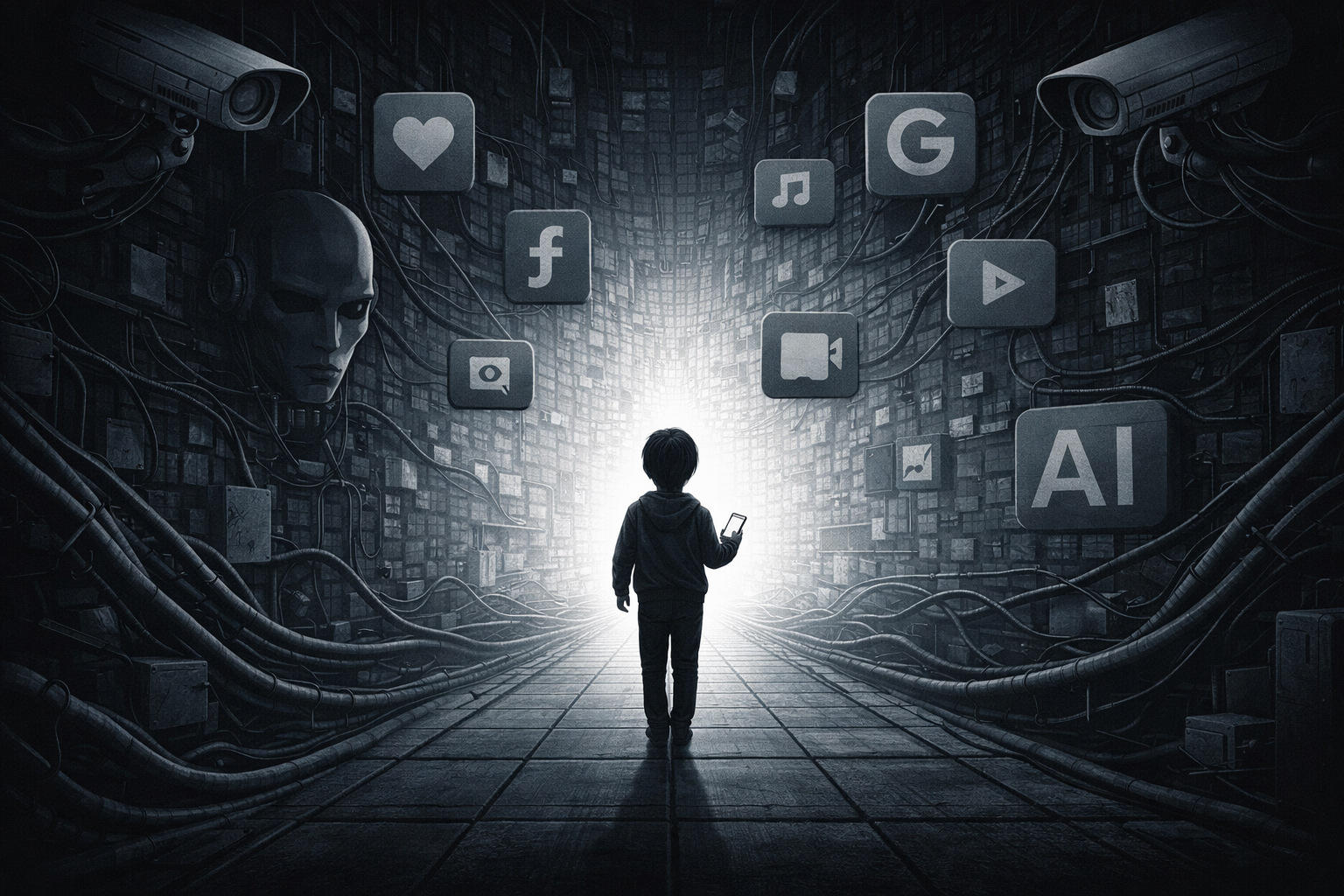
In fact, America is entering a moment that might prove more consequential than the early days of the internet itself. AI is quickly becoming the infrastructure behind how information flows, how speech is moderated, how money moves online, and even how truth is interpreted in digital spaces. (RELATED: When Effort Becomes Optional)
The public conversation often focuses on which company will “win” the AI race. A lot better question is one Melissa keeps asking in those fabulous Spectacle segments: what values are being programmed into these systems that will soon help govern modern life? (RELATED: The Peril and Promise of AI)
That question becomes especially urgent when it comes to the kids.
Over the past decade, parents have slowly come to realize that the internet children inhabit is very different from the one many adults first encountered. Digital platforms, once described as harmless entertainment, are now powerful cultural ecosystems shaping our identity, behavior, and belief.
And not in a way we’ve voted for.
Online environments designed for kids have repeatedly been linked to disturbing content and predatory behavior.
Some of those platforms have struggled — and others have barely bothered — to protect young users. Online environments designed for kids have repeatedly been linked to disturbing content and predatory behavior. Reporting and investigations have documented cases involving explicit sexual material, grooming, violent simulations, and other deeply troubling experiences accessible to minors.
This problem is not hypothetical. We’ve all seen the headlines. Law enforcement has testified about the dangers. Advocacy groups working with victims say the scale of exploitation facilitated through digital platforms is appalling and getting worse.
One example of how bad things are is the scandal around the massive gaming platform Roblox Corporation. Marketed primarily to younger audiences, the platform allows users to build and share games with millions of others. But its open design has also created opportunities for inappropriate content and interactions that can be difficult for parents to monitor.
Roblox represents only one piece of a much larger system, though. The digital ecosystem children encounter every day is heavily shaped by the technology giants that control search engines, advertising pipelines, recommendation algorithms, and social media feeds. Companies such as Google and TikTok influence what children discover online long before they ever log into a game or social platform.
Now those same companies are rapidly integrating artificial intelligence into nearly every layer of the internet, meaning there isn’t even a manager you can ask to see.
AI is already being used to filter content, recommend videos, moderate speech, and determine which advertisements are approved or rejected. In the near future, these systems will play an even larger role in determining who can communicate online and how digital economies function. (RELATED: Suing Social Media Won’t Save the Children — But It Could Silence Everyone)
Brent Dusing, founder of TruPlay, a faith-based gaming app for kids, believes the implications of this shift are enormous…
As AI becomes more powerful and ubiquitous, it will be making decisions on who can post on social media, who receives payments, how resources are allocated, and even interpreting what is true. For the survival of our nation, these models must be based on the moral foundations of our civilization, including western ethical traditions, the common law, and the Bible.
AI systems learn by absorbing enormous amounts of information and pattern recognition from the data used to train them. That training process inevitably reflects the worldview of the organizations building the technology.
If the values embedded in those systems diverge sharply from the cultural and moral traditions that shaped American society, critics warn that the consequences could extend far beyond social media feeds.
“We cannot allow AI models based on the values of Communist China or leftist atheist big tech companies to destroy American civilization,” Dusing says.
These concerns become even more serious when viewed alongside the ongoing crisis of online child exploitation.
The internet is the primary tool used by predators to identify and manipulate vulnerable children. Messaging apps, social platforms, and gaming communities can all provide avenues for grooming and exploitation when safeguards fail.
Lawmakers from both political parties have begun to acknowledge the severity of the problem. A bipartisan measure known as the Renewed Hope Act seeks to strengthen the process for identifying and rescuing children who are victims of online sexual exploitation. The legislation would improve coordination between tech companies and law enforcement working to locate victims and dismantle trafficking networks.
Faster identification can mean the difference between life and death for children trapped in abusive situations.
This is the issue that Heisman Trophy winner and former NFL quarterback and philanthropist Tim Tebow has spoken forcefully about lately. During testimony before a Senate committee, Tebow described reviewing investigative evidence documenting the exploitation of children and urged lawmakers to take stronger action.
That same scrutiny may also need to extend to how major technology platforms treat companies attempting to build safer alternatives for children. Dusing’s TruPlay, the faith-based children’s gaming and entertainment platform, says it has repeatedly had advertising blocked by Google and TikTok despite promoting content designed specifically to protect kids from many of the dangers discussed above.
Why on earth would Google be blocking TruPlay?
Dusing believes his company is being singled out because it’s a Christian outfit, even as other controversial content continues to circulate freely across those same platforms. If companies that claim to prioritize child safety are sidelined while problematic material flourishes, lawmakers should ask why.
In fact, many legal experts are now calling on Congress to examine whether dominant technology platforms are applying their advertising and moderation policies fairly. Freezing the Christians out of the digital marketplace so that soulless Silicon Valley tech bros can dominate the childhood of your kids certainly isn’t what most of you would vote for.
Despite those calls for action, Big Tech’s response so far is a fat yawn.
All they care about is growth, ad revenue, and user engagement. Child protection? Bo-ring.
Dusing believes ideological bias within certain technology platforms is part of the problem.
“Clearly Google and TikTok hate Christianity because they block our ads, while allowing satanic, Buddhist, and children transgender content to advertise,” he says. “Do we really want Google’s AI model deciding what is posted on social media, who receives electronic payments, and what is true?”
The concern is that the same algorithms shaping online visibility today could soon expand their authority into even more powerful areas of digital life.
“We have the receipts that Google’s far-left atheistic AI hates American values,” Dusing says. “And Google is winning the AI race today. Do we want Google’s AI algorithm banning Christians from social media, blocking churches from receiving funds, and classifying the Bible as hate speech?”
And AI — the digital afterbirth of the tech bros, if you will — is rapidly becoming the architecture of the internet itself. The systems being built today, by a number of companies you probably hadn’t even heard of a year ago, will influence speech, commerce, and culture for decades to come.
So freezing the TruPlays out of the digital space is an awfully bad sign.
If AI systems are trained without clear moral guardrails, which is what seems awfully clear to be the case, they’re going to end up amplifying the very problems parents and lawmakers are struggling to solve. Technology powerful enough to identify predators could also be used to silence voices or reshape cultural norms.
The challenge facing the country here isn’t really technological. It’s moral and civic.
We’re going to have to decide whether the digital systems guiding the next generation will reflect the moral and ethical foundations that built us, or are we stuck with the priorities of a handful of powerful corporations run by people who really, really don’t identify with us?
The answer will shape the world our children inherit. God help us.
READ MORE from Scott McKay:





![Donald Trump Slams Chicago Leaders After Train Attack Leaves Woman Critically Burned [WATCH]](https://www.right2024.com/wp-content/uploads/2025/11/Trump-Torches-Powell-at-Investment-Forum-Presses-Scott-Bessent-to-350x250.jpg)

![CNN's Kaitlan Collins Fact-Checks Rep. Jasmine Crockett Over False Trump Ballroom Claim [WATCH]](https://www.right2024.com/wp-content/uploads/2025/10/1761954330_CNNs-Kaitlan-Collins-Fact-Checks-Rep-Jasmine-Crockett-Over-False-Trump-350x250.jpg)