If you truly believed a tyrannical king had taken control of your country and launched an illegal war, what would you do? Would you dress up like an inflatable animal and dance in the street? If you genuinely thought a Nazi-like dictator had dragged America into conflict with Iran, would you stand on a sidewalk filming a sea of screaming activists, only to go home an hour later and post it on Instagram?
The organic participants in these events are seeking something more human: the need to feel important.
The uncomfortable answer is that many people would — because protests like “No Kings” are not primarily about changing government action. Dark money organization from Indivisible and 50501 aside, the organic participants in these events are seeking something more human: the need to feel important.
“The desire for a feeling of importance is one of the chief distinguishing differences between mankind and the animals,” Dale Carnegie wrote in his book How to Win Friends and Influence People. The observation cuts straight to the heart of what’s really driving attendance at the “No Kings” campaign. Strip away the generic slogans, the online fanfare, and the shifting political causes, and what remains is something far more primal: the human craving to matter.
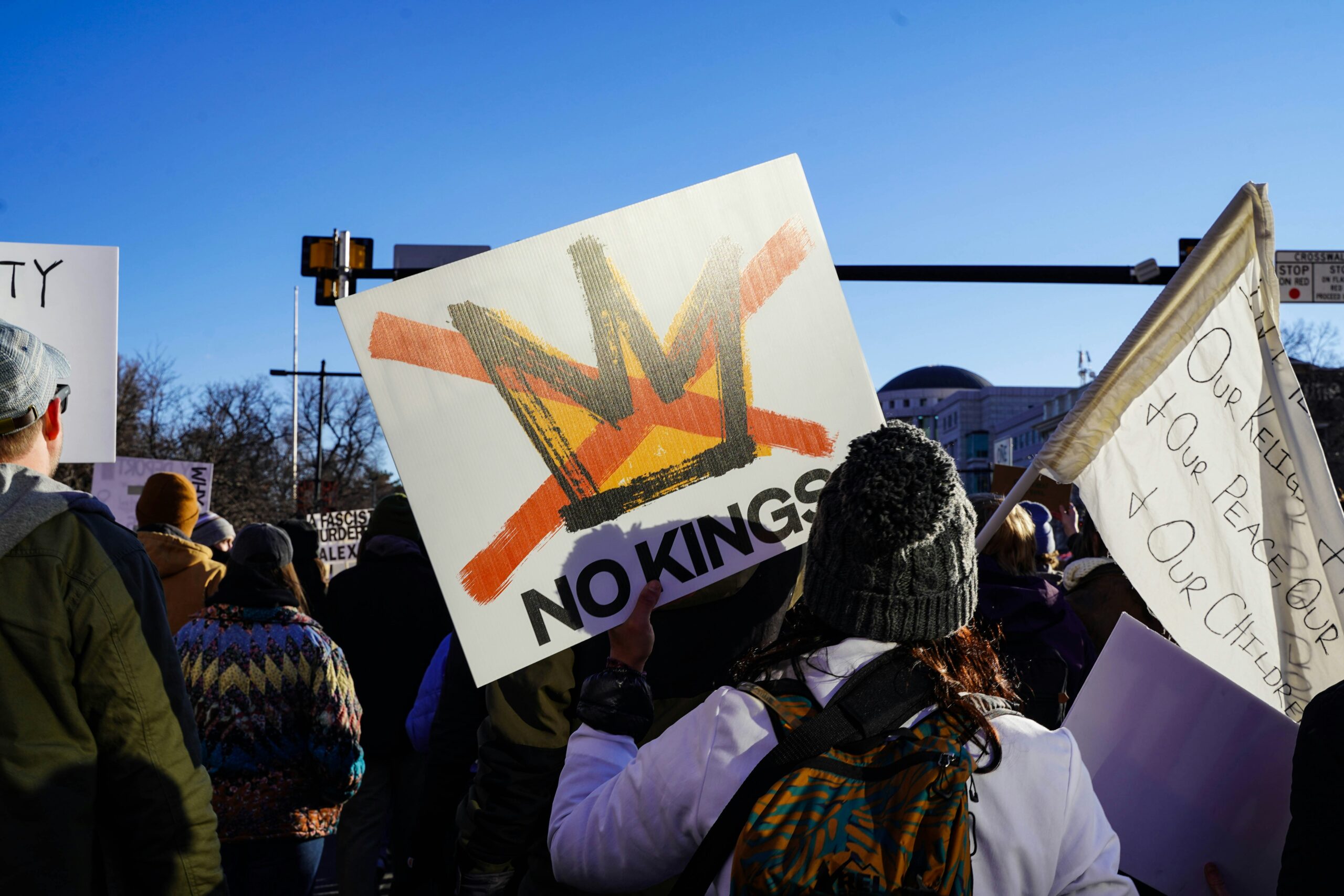
The third wave of the “No Kings” protests, coinciding with opposition to the Iran war, follows the same blueprint as the waves before it. The first iteration was an unfocused expression of anti-Trump sentiment. The second wave coalesced around Immigration and Customs Enforcement (ICE) raids and deportations, offering a slightly more concrete grievance but still lacking clear goals and strategy. Now, with Iran as the focal point, the rhetoric has escalated once again, seething bodies lined up on the sidewalks, but the mass-organized style and disorganized messaging remain unchanged. (RELATED: From The Bacchae to the ‘No Kings’ Rallies)
Protests like this function less as instruments of policy change and more as emotional ecosystems. They give frustrated people something to point their phones at as a backdrop to their anger, signaling their outrage to the world while receiving instant validation in return. The protest becomes a venue for moral grandstanding where big feelings are expressed but concrete solutions are nowhere to be found. (RELATED: Don Lemon: T-Shirt Hero)
The protest becomes a venue for moral grandstanding where big feelings are expressed but concrete solutions are nowhere to be found.
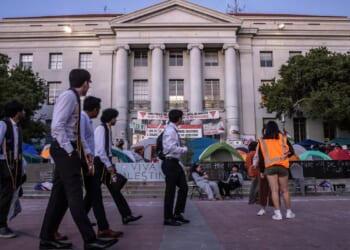
Democrat voter Kirk Wolff, who drove by his local “No Kings” rally, captured this disconnect perfectly in a recent op-ed published by the Knoxville News Sentinel titled “I’m a Democrat. ‘No Kings’ Day is an embarrassment.” As he put it, I “saw hundreds of people protesting, but not for any particular thing,” with signs making vague demands for “science” or “justice” and participants “dancing in costumes, like dinosaurs and toads,” behavior that seemed wildly out of step with the apocalyptic rhetoric being invoked.
Wolff’s critique goes deeper than aesthetics. He points out the fundamental contradiction at the core of these demonstrations. If protesters actually believe they are living under a fascist regime, their response should reflect the gravity of that claim. “If you TRULY believe the moment justifies the language and comparison,” he writes, “it demands real action, not snark.” Instead, what he witnessed was a bizarre spectacle where “participants tire themselves out making signs and standing by roadways to honks from passersby, then pat themselves on the back and think they’ve fought fascism.”
A false sense of accomplishment is the engine that drives these protests despite their lack of results. They are not designed to produce change. Communication with President Donald Trump, or his administration, is not an outcome of interest. Negotiation is not the goal. “No Kings” protests are meant to produce a feeling in their participants. Like a group therapy session, emotional release is the outcome.
What unfolds at these rallies begins to look less like civic engagement and more like a ritual. There is a gathering, a shared language, a set of symbols, and an emotional climax. People arrive carrying private frustrations — about politics, about culture, about their own lives — and leave having externalized them, having transformed diffuse anxiety into a collective performance of outrage. The crowd becomes a kind of mirror, reflecting those feelings back with affirmation: you are right, you are justified, you are not alone.
That affirmation is powerful because it answers a deeper, quieter question that modern life often leaves unresolved: Do I matter?
In a society where traditional sources of meaning — family structures, religious institutions, tight-knit communities — have weakened, individuals increasingly search for significance elsewhere. Politics, particularly in its most theatrical forms, has rushed in to fill that void. A protest like “No Kings” offers instant belonging. Just show up, adopt the language, and you are part of something larger than yourself.
And not just part of something — part of something that feels important.
This is where the emotional logic of these protests fuses with one of the most enduring elements of American culture: the underdog myth. Americans are not merely sympathetic to the “little guy”; they are drawn to inhabit that role themselves. It is a moral shortcut, a way of assigning virtue without the burden of proof. If you are the underdog, you are a victim, and you are righteous by definition. If you are resisting power, you must be on the side of good, right?
“No Kings” hands its participants that identity wholesale. It frames ordinary political disagreements in the language of tyranny and resistance, elevating the act of showing up into something that feels historic. The stakes are rhetorically inflated like the inflatable costumes some people show up wearing, all because this heightens emotional payoff. The more dramatic the narrative, the more important the individual feels within it.
The problem, of course, is that feeling important is not the same as being effective. Emotional release and validation cannot replace strategy, organization, or tangible action. The cycle of protest and applause gives participants the illusion of impact, politicians some dramatic images and soundbites to reference on cable news, and the public a brief spectacle to scroll past on social media. But hey, at least it must have felt good.
It is hard to entirely condemn this desire. Who among us hasn’t wanted to feel seen, to know that our outrage and our care can register somewhere beyond the private confines of our own heads?
“No Kings” may go down in history as the largest communal therapy session ever staged. There is something profoundly human in the act of gathering, shouting, waving, and being counted. But if the protest exists chiefly to soothe the soul rather than to challenge power, then what is the point of marching at all?
READ MORE from Julianna Frieman:
The Epstein Effect: Men, Women, and the Spectacle of Scandal
How COVID Created the 15 Second Generation
Julianna Frieman is a writer who covers culture, technology, and civilization. She has an M.A. in Communications (Digital Strategy) from the University of Florida and a B.A. in Political Science from UNC Charlotte. Her work has been published by The American Spectator and The Federalist. Follow her on X at @juliannafrieman. Find her on Substack at juliannafrieman.substack.com.



![Kamala Comes Unglued, Makes Bogus Claim About Her Landslide Loss to Trump [WATCH]](https://www.right2024.com/wp-content/uploads/2025/10/Kamala-Comes-Unglued-Makes-Bogus-Claim-About-Her-Landslide-Loss-350x250.jpg)