STOCKHOLM — The Justice and Peace Commission of the Catholic Diocese of Stockholm has published a document urging Catholics and “all people of goodwill” to engage actively in Swedenʼs general elections on Sept. 13 in what observers describe as a notable intervention in a largely secular Nordic political climate.
The text presents political participation as a legitimate expression of Christian responsibility while encouraging the faithful to be informed, take part in public life, and vote in line with the principles of Catholic social teaching.
Distinguishing between moral absolutes and matters of prudence
The documentʼs approach rests on a crucial distinction between two categories of values. On matters of “practical wisdom,” including policy issues such as the economy, climate, crime, and migration, the document acknowledges legitimate disagreement among believers. Democracy, it explains, functions as “not a community of opinion but a system for the peaceful resolution of conflicts of values.” On these contested issues, Catholics are encouraged to apply principles such as solidarity, subsidiarity, and the common good while ultimately retaining freedom of judgment.
However, the document takes a different stance on what it identifies as nonnegotiable moral issues. It asserts that “every human beingʼs right to life from conception to natural death” constitutes a foundational “absolute value,” describing abortion and euthanasia as “serious violations of human dignity.”
The timing of this moral clarity is significant. In Sweden, several political parties have proposed a constitutional amendment to guarantee access to abortion. Because constitutional changes in Sweden require approval by two successive parliaments with a general election in between, the proposalʼs future depends on whether the next Riksdag maintains support. If adopted, the amendment could take effect on Jan. 1, 2027. Simultaneously, the government is modernizing the nationʼs abortion framework by updating its language, adding advances in abortion procedures, and expanding access to at-home chemical abortion.
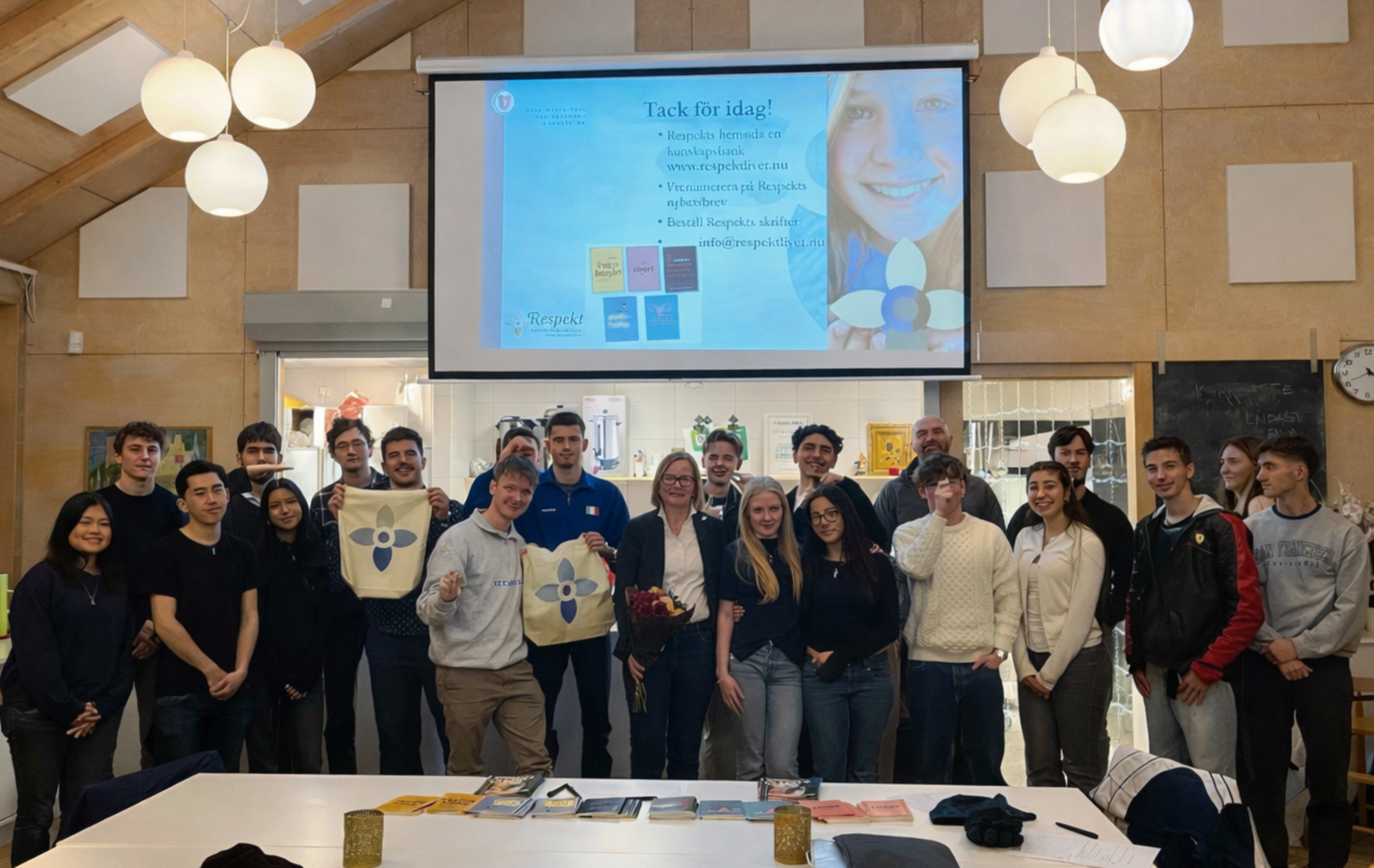
Young people pose at a youth pro-life event organized by the Catholic Diocese of Stockholm in Sweden. | Credit: Photo courtesy of the Diocese of Stockholm
While acknowledging that abortion enjoys broad political support across parties, the document frames euthanasia as a still contested issue, positioning it as part of a wider cultural struggle against what Church teaching describes as a “culture of death.”
A careful balance between conviction and pluralism
Despite these firm moral positions, the document concludes with a call for restraint and pluralism among believers. It cautions against equating any particular political stance with Catholicism itself, noting that “two equally good Catholics, who have allowed their practical wisdom to be guided equally by faith, may and can therefore arrive at entirely different party-political conclusions in all fields of practical wisdom.” This nuanced approach reflects an attempt to guide conscience without dictating votes.
EWTN News spoke to Father Thomas Idergard, SJ, chairman of the commission. He framed the document as a response to a recurring pastoral need rather than a political intervention. “With elections approaching, the faithful request some guidance on how to apply faith in their choices as voters,” he explained. Beyond pastoral concern, he noted a broader social rationale: Christians must be equipped with the “necessary tools to participate in public life,” doing so in a way that employs “secular language and secular arguments for universality” while remaining transparent about faith as a “driving force.”
Idergard said the documentʼs framework for discernment operates in two stages. “The first step considers the effect my vote will have on legislation in matters regarding absolute values,” particularly those concerning life and death, “where faith binds the conscience.” The second step, he added, “considers all issues for practical wisdom where faith informs,” while allowing room for personal and secular judgment.
Within this framework, Idergard identified euthanasia as the primary pro-life issue where voters may have tangible impact in the next parliamentary term, noting that “there are different positions among the political parties” across the spectrum that could influence legislation. Regarding abortion, by contrast, “all are on the same line,” he observed, a reality that highlights the documentʼs significance in a political landscape where the issue has achieved unusual consensus.
Idergard said the document does not signal a new direction for the Catholic Church in Sweden but rather reflects an ongoing commitment. “The Catholic Church in Sweden has always been visibly active on pro-life issues,” he noted, citing initiatives such as the annual “Respect for Life Sunday.”
A bold voice in secular Sweden
Benedicta Lindberg, secretary-general of Respekt, the pro-life organization of the Catholic Diocese of Stockholm, described her reaction to the document as reflecting “a significant and, in the Swedish context, a rather bold step.” She pointed to the countryʼs political and cultural landscape, where abortion is widely regarded as a settled matter beyond political contestation.

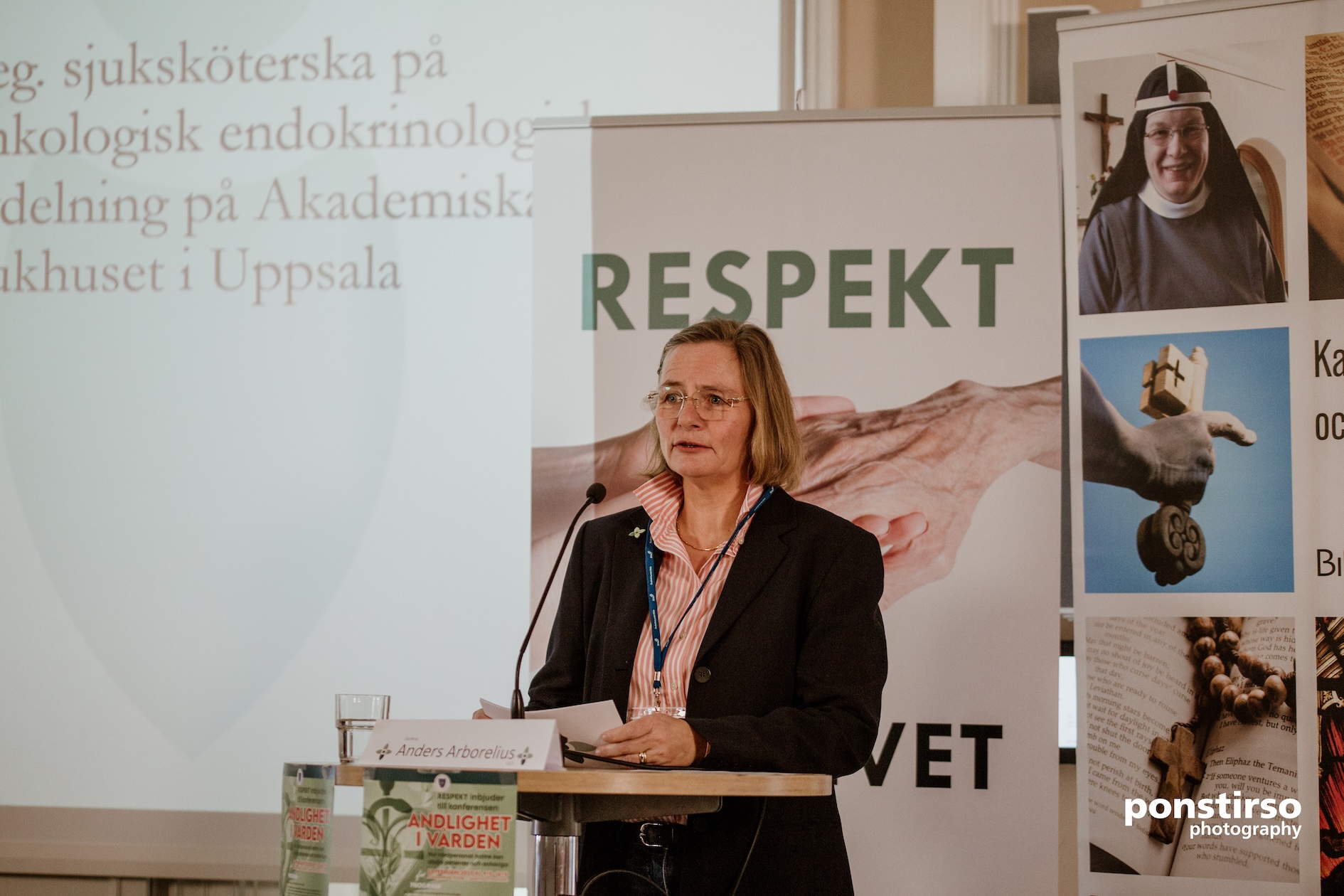
Attendees listen to a presentation at a Respekt event on the beginning of life in Sweden. | Credit: Photo courtesy of Respekt
Lindberg noted that Swedish Cardinal Anders Arborelius had observed in 2024 that no parliamentary parties currently seek to challenge what is commonly referred to as a “right” to abortion in any substantial way. This consensus, she suggested, has contributed to hesitation among Swedish Catholics to engage visibly in party politics.
“Issuing such a document in an election year is meaningful because it makes a distinctly Catholic voice more visible in public debate,” Lindberg said. She added that the guidance “could help encourage a more visible pro-life presence, although probably not a mass political movement in the short term.”
The documentʼs release arrives as Swedish society confronts fundamental questions about the scope of abortion access and the legal status of euthanasia. By grounding its argument in Catholic social teaching while respecting democratic pluralism, the Diocese of Stockholm has attempted to offer guidance that is both morally clear and pastorally sensitive, a balance that may prove instructive for Catholic communities navigating secular political contexts elsewhere in Europe and beyond.