One definite takeaway from the Iran war is a renewed interest in the military and economic value of choke points.
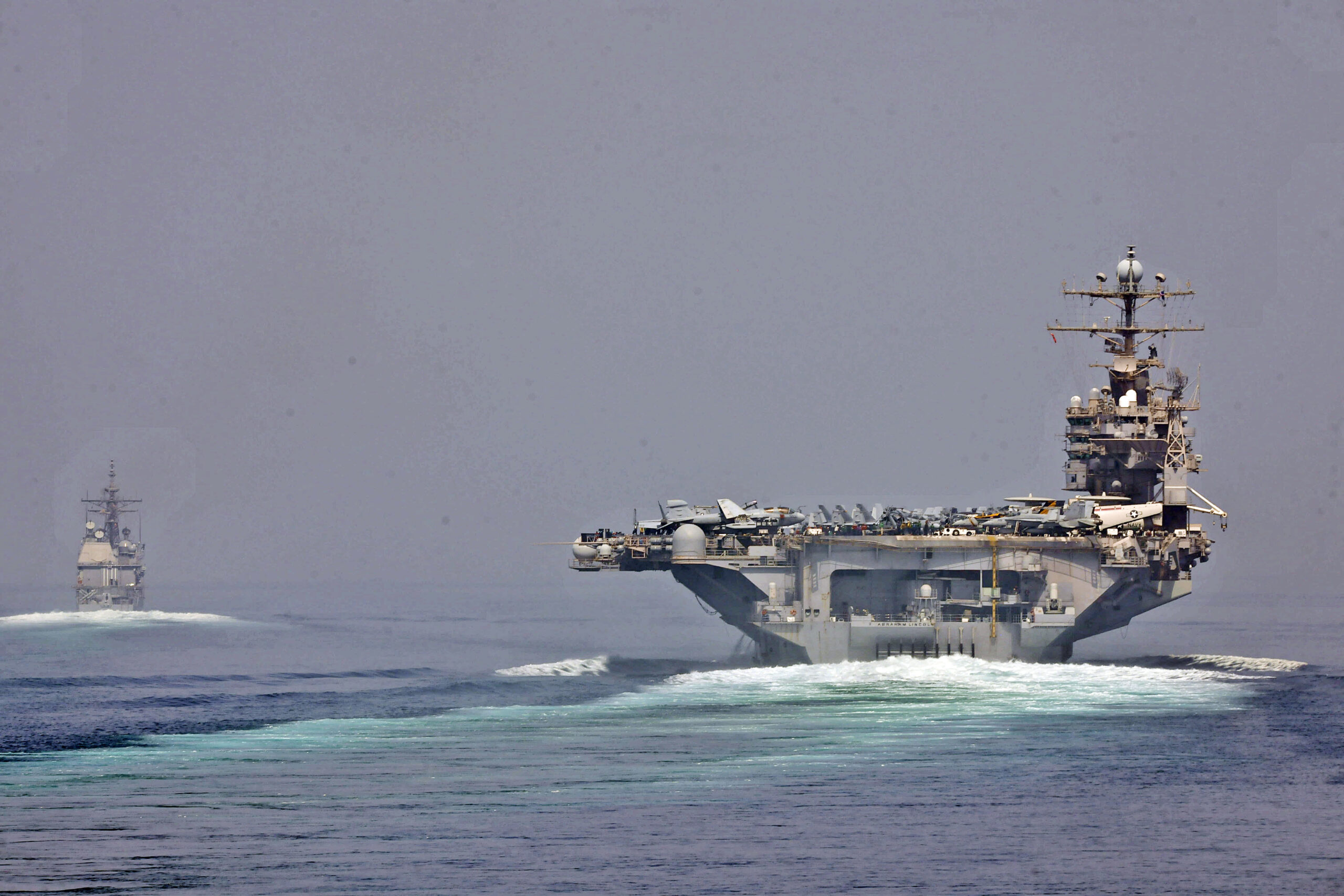
Choke points were a key for the United States in bottling up the Russian navy in the event of conflict, but since the end of the Cold War, freedom of navigation had been assumed. All that changed during the Iran conflict. Both sides have closed the Straits of Hormuz using military means. Petroleum and natural gas products bound for Europe and China can’t get out, but Iran also can’t export those products due to the American naval blockade. Other than Iran, the nation that has been most hurt by the two blockades has been China. We should be sending her a clear message: invade Taiwan, and we can do it again both in the Straits of Hormuz and the Red Sea. That alone would virtually ensure a cut-off of 90 percent of China’s oil and natural gas imports, a crippling blow to her military as well as her civilian economy. That is real deterrence.
This concept keeps with the spirit of that desire, but allows the Marine Corps to show flexibility and adaptability to adjust to changing times and technology.
The problem is how we would make good on that threat? Nearly the whole U.S. Navy would be needed for the fight in the South China Sea. I believe the answer is the U.S. Marine Corps. A Marine Expeditionary Brigade (MEB) in Hormuz and one MEB at the Bab El Mandeb in the Red Sea could do the job. Marine aircraft using anti-ship missiles could sink and surface warships trying to break the blockade, and Marine riflemen on organic helicopters could board and seize merchant vessels trying to run the blockade, as recently happened in Hormuz.
However, there is a fly in the ointment. As currently configured, MEBs do not have all the tools needed to make the threat credible. Without tanks and heavy engineers, MEBs are pretty much light infantry supported by aircraft. They would need engineers to quickly build revetments and bunkers that would protect them from the inevitable rain of missiles and suicide drones that would greet their arrival. Tanks would be needed to counterattack Iranian, Yemeni, or even Chinese attempts to dislodge the MEBs by amphibious landings. They would also be needed to spearhead a shore-to-shore American amphibious attack to dislodge Iranian or Houthi mobile missile launchers unable to be eliminated by aerial bombardment alone. The troops needed to man this equipment, as well as artillery, would be flown in to marry the tanks and engineering assets aboard Maritime Prepositioned Ships (MPS), which now lack the equipment mentioned above.
The reason for this deficiency is that the 38th USMC commandant divested all of the tanks, heavy engineers, and much of the Corps heavy artillery to afford the missile and radars needed to implement his ill-fated Force Design strategic concept. Technology has rendered Force Design obsolete before it is fully implemented. Only one battery of NEMSIS anti-ship missiles, which are subsonic and relatively short ranged, exists after six years. The battery is located in the Philippines, and that nation’s government will not let it be used in a Taiwan conflict.
The hypersonic anti-ship missiles being developed by the other services have far greater range and are just as accurate as NEMSIS. That obviates the need for small missile-armed Marine Corps units to hide among islands in the South China Sea. Logistically supporting Force Design in such circumstances presents problems that the Marines have not yet fully addressed.
If the Corps can be convinced or required to abandon the Force Design concept and refocus its efforts on choke point warfare, it would be able to afford the tanks and equipment needed to train new tank crews and engineers, as well as replenish the MPS Squadrons with enough equipment to make the choke point concept viable. The former commandant stated the reason for developing Force Design was to return the Corps to its naval roots and assist the Navy in the South China Sea. They would be doing this thousands of miles away from the choke point concept. It is a splendid example of military theorist Basil Liddell-Hart’s concept of the indirect effect in warfare.
This concept keeps with the spirit of that desire, but allows the Marine Corps to show flexibility and adaptability to adjust to changing times and technology. We have a new Navy secretary. Perhaps he will be more willing to tackle the Force Design issue than was his predecessor.
READ MORE from Gary Anderson:
The Mirage of Airpower Supremacy
We Should Learn From the Present War, the Chinese Will
Gary Anderson is a retired Marine Corps officer who has written extensively on Force Design and choke point warfare. He is the author of Beyond Mahan, a Proposed Naval Strategy for the 21st Century.




![Two Dead, 14 Injured After Gunfire Erupts Following College Football Game in Alabama [WATCH]](https://www.right2024.com/wp-content/uploads/2025/10/Two-Dead-14-Injured-After-Gunfire-Erupts-Following-College-Football-350x250.jpg)
![James Carville Admits Democrats Had No Shutdown Endgame, Mishandled Strategy [WATCH]](https://www.right2024.com/wp-content/uploads/2025/11/1763070634_James-Carville-Admits-Democrats-Had-No-Shutdown-Endgame-Mishandled-Strategy-350x250.jpg)