Press Releases
|
May 04, 2026
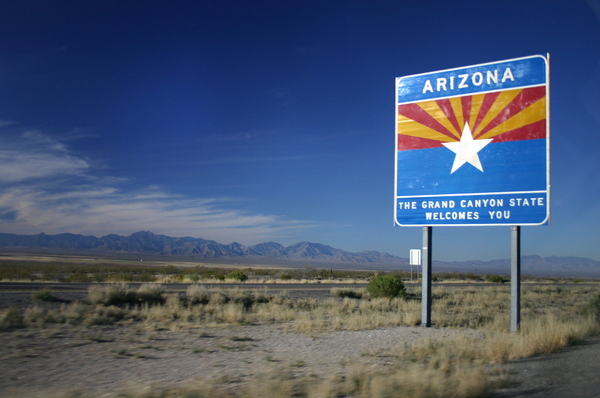
(Washington, DC) – Judicial Watch announced today that the Arizona Court of Appeals overturned a lower court’s decision that allowed Arizona State Attorney General Kris Mayes to hide documents about its anti-Trump legal actions with a controversial outside left-wing group. The decision cited failures by the Mayes’ office to both properly search for and justify the secrecy of records concerning its coordination with States United Democracy Center.
A spokesman for Mayes told a media outlet the office would not appeal the ruling.
Judicial Watch filed the lawsuit in February 2025 in Maricopa County Superior Court after the attorney general’s office failed to comply with a public records request seeking records about its dealings with the States United Democracy Center and the Voter Protection Program (Judicial Watch Inc. v. Mayes (CV 2025-005732)). The request included records concerning discussions about investigating electors or challenging the 2020 election involving Donald Trump.
The attorney general’s office produced only limited records in December 2024. It withheld additional documents, citing attorney-client and work-product privilege—but provided no explanations for the withholdings as required under Arizona law.
In its opinion, the Arizona Court of Appeals agreed with Judicial Watch about the withholdings and the failure of the lower court to consider Judicial Watch’s arguments:
At a status conference in May 2025, Judicial Watch asked the trial court to require the attorney general’s office to provide additional information regarding the assertedly privileged documents. The court declined to do so. It apparently concluded that the office had provided a sufficient index identifying those documents.
***
As noted, the attorney general’s office supplied Judicial Watch with an index of assertedly privileged documents that were otherwise responsive to Judicial Watch’s request. The index contained two entries. Those entries referred collectively to twenty-one emails and twenty-nine attachments that the office had withheld.
***
Here, the index provided by the attorney general’s office supplies no context about the withheld emails that would allow a court or any other party to determine if a privilege applies. The index therefore falls short … It follows that the office has not made a prima facie showing of privilege.… (existence of attorney-client relationship required to show privilege). We thus agree with Judicial Watch that the privilege log’s insufficiency prevented the trial court from adequately scrutinizing the office’s privilege assertions.
***
Judicial Watch additionally argues that the trial court erred by not analyzing whether the attorney general’s office properly redacted the names of States United employees “principally responsible for the engagement” from the engagement letter. The unredacted portions of the letter do not provide any context as to these employees’ roles within States United. Even assuming that they were attorneys and the office had validly claimed privilege, an attorney’s identity generally falls outside the privilege’s protections…. And, to the extent the office might have some valid basis for the redaction, neither the index nor the context of the letter itself supplies it.
***
We therefore conclude that the attorney general’s office has not met its burden of showing that it adequately searched its records … The office was not entitled to disregard Judicial Watch’s unambiguous records request in favor of its own, narrower interpretation.
***
For the foregoing reasons, we vacate the trial court’s judgment and remand this case for further proceedings consistent with this opinion.
(A November 2024 report revealed correspondence between the Arizona attorney general’s office and the nonprofit States United Democracy Center in the lead-up to the state’s prosecution tied to Donald Trump’s 2020 presidential campaign.)
“Judicial Watch is excited that the court has slapped back the unlawful secrecy about anti-Trump lawfare abuse by Arizona’s AG Kris Mayes,” said Judicial Watch President Tom Fitton. “We are pushing hard in court for full disclosure about the details of what looks to be a conspiracy by the AG’s office to punish Trump supporters for exercising their fundamental rights.”
In November 2026, Judicial Watch received records from the Michigan Department of Attorney General in a Michigan Freedom of Information Act (FOIA) request that show the state’s coordination with the nonprofit States United Democracy Center, which pushed indictments of President Donald Trump’s supporters, lawyers, activists, and Republican Party officials who disputed the 2020 election. Indictments of Trump alternative electors by Michigan Democratic Attorney General Dana Nessel were thrown out by a judge earlier this year. The documents suggest a broad conspiracy by several states to prosecute Americans over 2020 election disputes.
In April 2026, Judicial Watch received records from the State of Nevada Office of Attorney General in a Nevada Public Records Act lawsuit that show the state’s close coordination with States United Democracy Center.
Judicial Watch continues to work to obtain records from Wisconsin.
Attorney David J. Hoffa assisted Judicial Watch in this case.
###





![Kamala Comes Unglued, Makes Bogus Claim About Her Landslide Loss to Trump [WATCH]](https://www.right2024.com/wp-content/uploads/2025/10/Kamala-Comes-Unglued-Makes-Bogus-Claim-About-Her-Landslide-Loss-350x250.jpg)