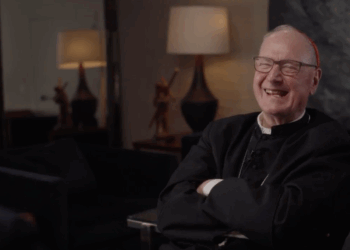
As children in Haiti face unimaginable conditions, a religious sister and her team are changing thousands of lives by providing protection, education, and faith formation in the nationʼs most dangerous slum, Cité Soleil.
Sister Paesie was born Claire Joelle Phillipe in Lorraine, France. Raised in a faith-filled Catholic home, she felt called to religious life at a young age.
Inspired by Mother Teresa’s dedication to serving those most in need, Sister Paesie was drawn to the Missionaries of Charity. With a strong desire to spend her life loving Jesus through loving the poor, she made her final vows in 1996.
Sister Paesie chose her name in connection to St. Thérèse of Lisieux and a woman who showed great repentance. In St. Thérèse of Lisieux’s autobiography, “Story of a Soul,” “she refers to a woman who was known as a sinner and who converted and died of love,” Sister Paesie said. The woman, known as Paesie, was detailed in “the lives of the fathers of the desert,” which tells her story of repentance and salvation.
After various missions around the world, Sister Paesieʼs service as a Missionary of Charity took her to Haiti in 1999, where she worked for several years.
“I had been a Missionary of Charity … for about 30 years, but in 2017, I founded a new community under the bishop of Port-au-Prince,” Sister Paesie told EWTN News during a recent visit to the U.S. “My inspiration for that actually came from Mother Teresa, from one of her visions she had before founding the Missionaries of Charity: She saw Jesus on the cross showing her a group of children in the dark. Then Jesus told her, ‘Do you see those children? They do not love me because they do not know me. So go bring my light to them.’”
Sister Paesie continued: “When I was in Haiti … I saw all the children wandering about in the streets. These words of Jesus really came back to me strongly, and I felt the Lord was asking me to do something to protect them from the dangers of the streets, and then to bring his light to them.”
“I spoke about it with the bishop, and he encouraged me,” she said.
Sister Paesie left the Missionaries of Charity to begin the Kizito Family, a religious community named in honor of St. Kizito, a 14-year-old Ugandan martyr known as a protector of children, especially those facing danger, moral trials, and educational challenges.
On June 3, 2018, the Kizito Family received approval from the archbishop of Port-au-Prince as a pious association of the faithful — the first step in establishing a religious community at the diocesan level.
Sister Paesie then established the Kizito Family as a nonprofit organization to begin her ministry. Today, it runs seven houses for orphaned, abandoned, and in need children as well as eight schools and numerous centers to provide education and catechism in Cité Soleil, Haitiʼs biggest and most notorious slum.
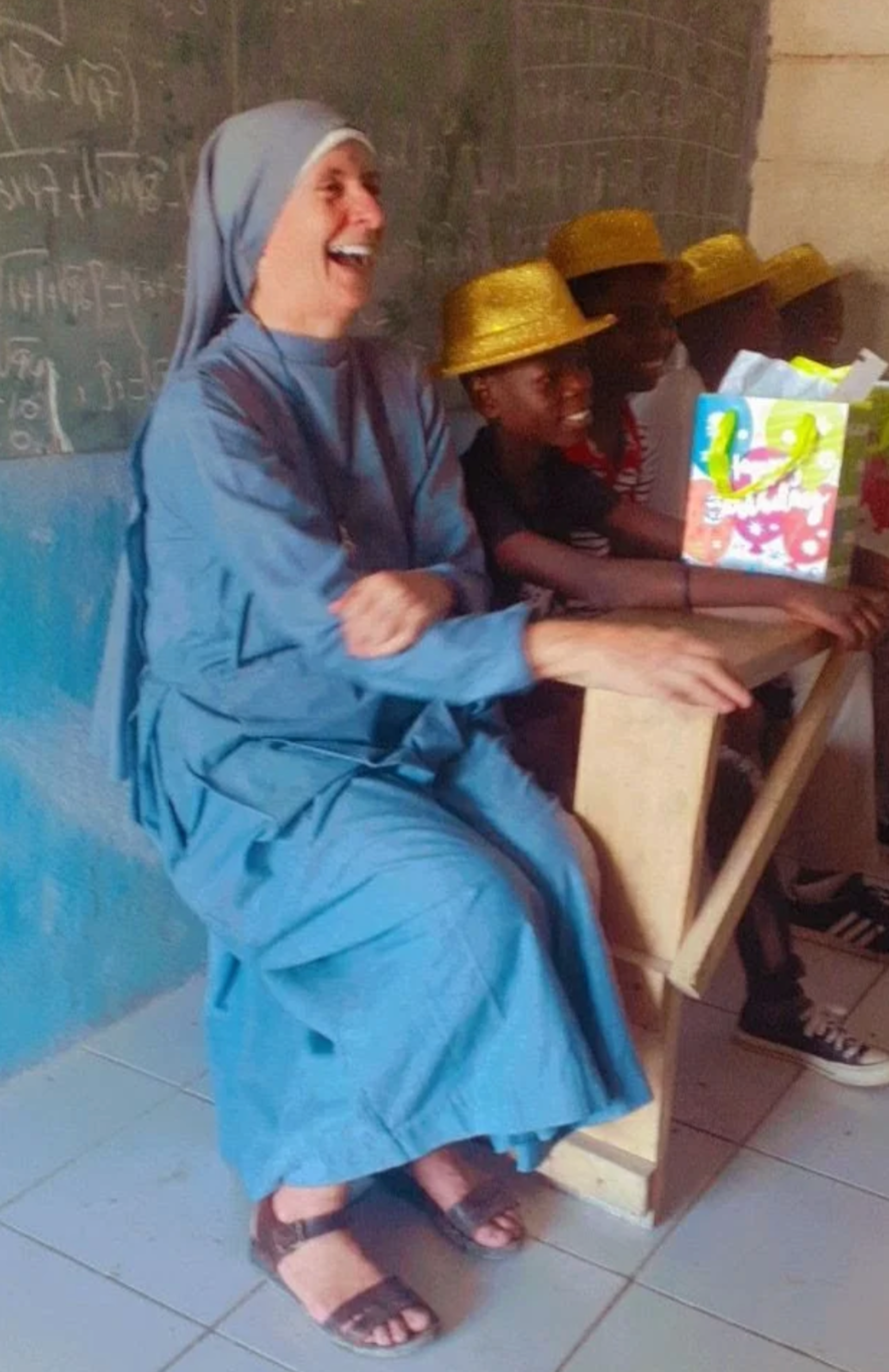
Sister Paesie and some of the Kizito Family schoolchildren. | Credit: Photo courtesy of Sister Paesie
Combating the ‘chaos’ in Haiti
Sister Paesieʼs mission has become even more dire as the state of the nation “has been … sinking deeper and deeper into chaos on the political level,” she said.
Haiti is the most impoverished nation in the Latin American and Caribbean region. Children suffer from cholera without clean water to drink, and nearly 2 million people face emergency levels of hunger. Conflict and natural disasters have displaced approximately 1.4 million people — over half of them are children.
Many children are used to perpetual gang violence; they are trafficked and are victims of daily assaults. Grave violations against children surged 490% between 2023 and 2024, according to a World Vision report.
“The gangs are just becoming stronger and stronger as time goes by,“ Sister Paesie said. ”The gang violence before was limited to the slum areas. But then they began attacking and taking over other areas of the country [and] of the city … which had been peaceful places before.”
The gangs “burn houses, they kill people, they rape women. And people, they just run away and then they donʼt come back because the gang members settle there. They just steal everything from the houses, from the shops. And then after a while, they go attack another place,” Sister Paesie said.
“On Easter Sunday, there was a little Protestant church in the countryside which was attacked and everyone was killed in that church. It was 80 people — women, children. And then they burnt it.”
While Sister Paesie was traveling in the U.S. in April, the area where her organizationʼs homes and schools are located fell under attack.
“My staff members … called me and we had to remove all the children from there because they were scared. They went over to another place. So this is going on, all the time,” she said. “I spoke to some of my teachers, and they told me for a week they had been locked inside the house because the gang members just told people, ‘Donʼt come out.’”
“They are ruling, they are deciding everything,” she said. “So this is the dark side of it. But there are other sides also.”
Offering children ‘a safe place’
Despite the increasing violence, Sister Paesie, other sisters, and staff members remain committed to their mission.
In the Kizito Family schools, there are 3,000 children, 1,700 of whom attend school daily, and 1,000 are in the Sunday schools and catechism centers. The schools offer much more than education but are primarily for safety and to ensure the children receive meals.
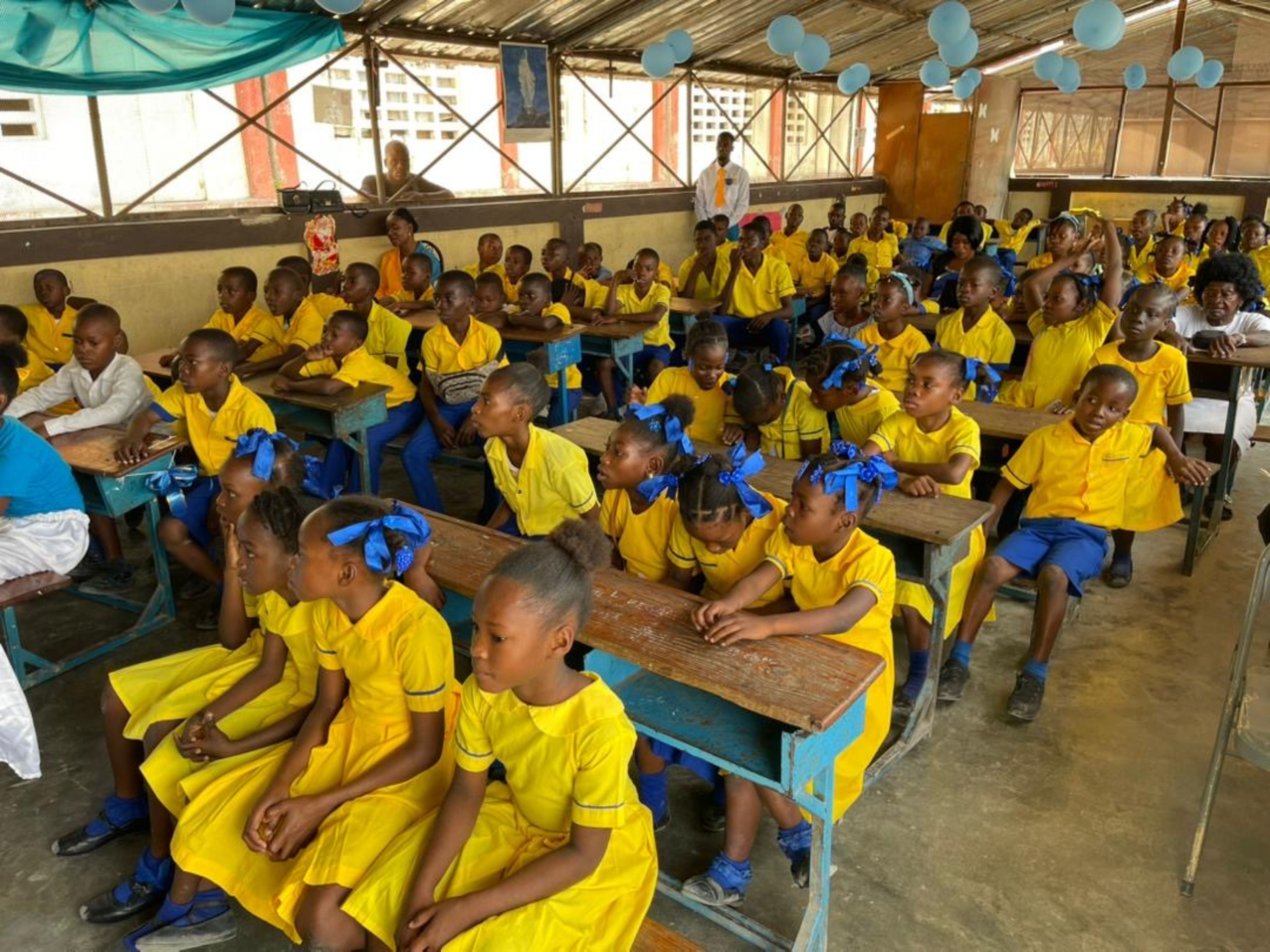
The Kizito Family schoolchildren attend class. | Credit: Photo courtesy of Sister Paesie
“We have our teachers [who] are local staff members,” she said. “They are young people who live there — right there in the slum area.”
“This is what makes it possible for the schools to operate even when there is violence because they are … not far from the schools. We have 210 staff members altogether — teachers, cooks, drivers, all kinds of people, all Haitians.”
The Kizito Family also prioritizes guiding the children to the faith by providing catechism to 800 children and ensuring they are able to receive the sacraments. They often spend time offering prayer intentions and visiting Jesus in the Blessed Sacrament.
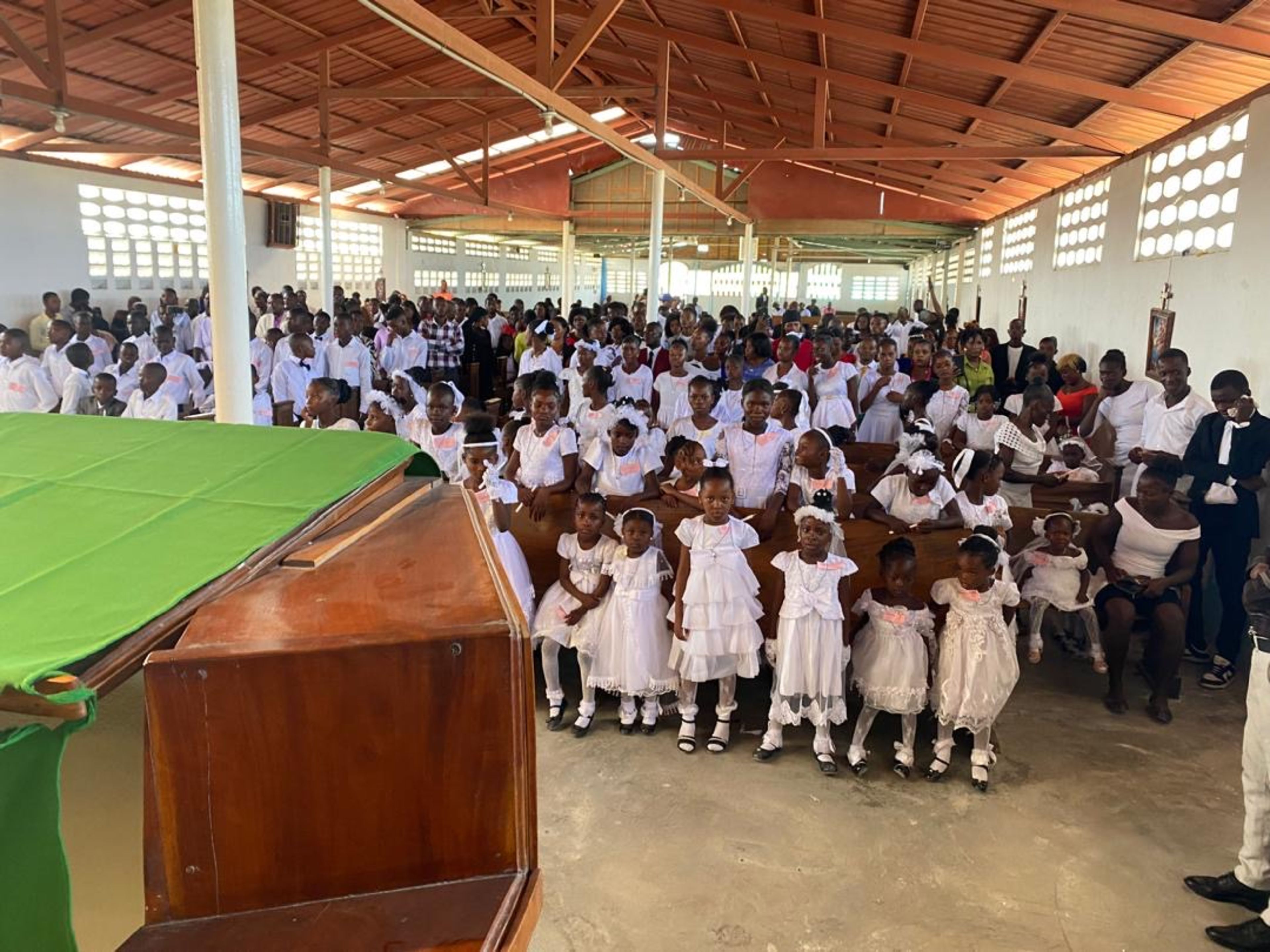
Kizito Family children prepare for their first holy Communion. | Credit: Photo courtesy of Sister Paesie
“The country was largely Catholic, because it had been a French colony. But then, like 40 years back, the evangelicals began coming down a lot from the United States and converting many people. So now itʼs maybe half and half,” Sister Paesie said.
She said itʼs very important to instill the Catholic faith in the children to combat the practice of voodoo, which is common in the nation. “There are people who are Christians and donʼt practice voodoo at all, but many people are kind of one leg in both sides.”
Full-time care
The Kizoto Family staff cares for another 200 children who live with them in the homes full time. They “are kids who were completely on the streets, cut off from their families, or orphans,” Sister Paesie said.
“The adoption process has been nearly stopped completely … because of the violence and because [of] the high level of corruption,“ she said. ”So most countries have just decided to stop.”
“The children who are with us, they are mostly bigger children because they had been on the streets and then they came to us,” she said. But “now, in the last few months, we did receive little ones.”
“We have a group of them, 2 to 6 years old. Most of their parents have been killed in these gang attacks, or some [of] their moms died in childbirth because … the women are not eating properly.”
“So those little ones actually could be adopted, but the situation of the country now is such chaos that you cannot really think of adoption right now.”
Despite adoption being currently closed, the children still receive love and care each day. With the Kizito Family, children in Cité Soleil are able to play, laugh, and worship with a community, Sister Paesie said. Even amid the mayhem, they sense God’s presence, which offers “joy.” What they really need, Sister Paesie said, are prayers.