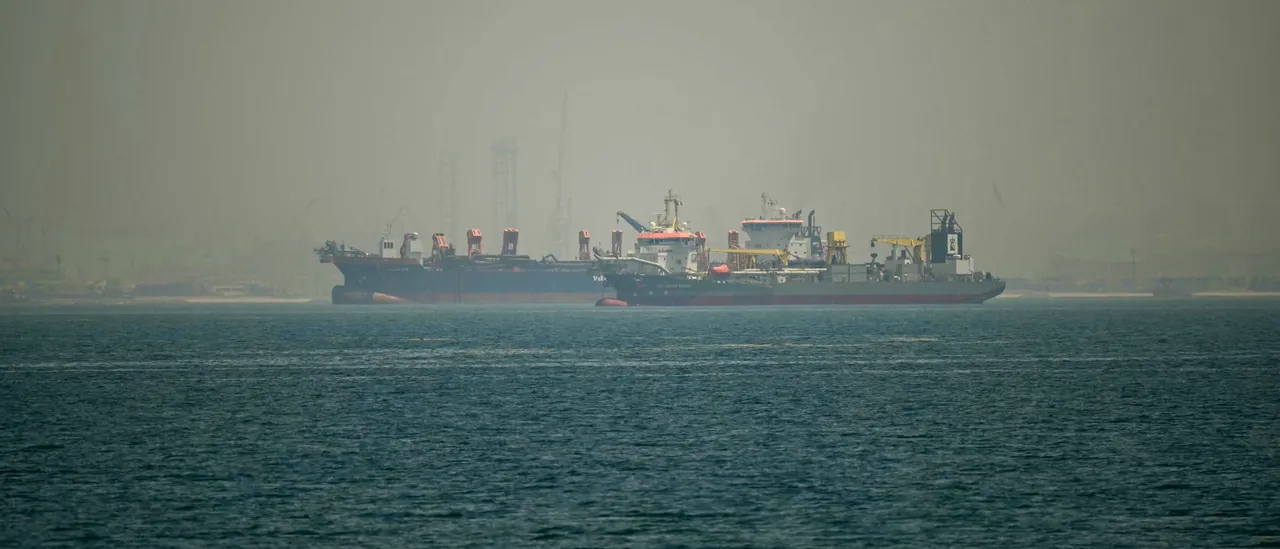
Oil prices have been the talk of the world since Feb. 28, the day the U.S. and Israel launched their war against Iran. But nearly everyone seems to be missing a crucial detail about oil and how its price is measured.
If you flip through the cable news channels or skim through news articles, you will likely come across the words “Brent” and “Crude” in the same sentence.
Brent Crude — cited by virtually every media outlet and pundit on the planet when discussing how the war has affected oil prices — measures the price of oil futures traded on the Intercontinental Exchange. In other words, it’s the global benchmark for the “paper price” of oil. (RELATED: Iran War Pain Quickly Sets In As World Reels From Full Blockade)
So, what exactly are oil futures? As a nuts-and-bolts Investopedia article puts it, oil futures are contracts “that allow investors to buy or sell oil at a predetermined price at a future date, providing a way to hedge against price fluctuations.”
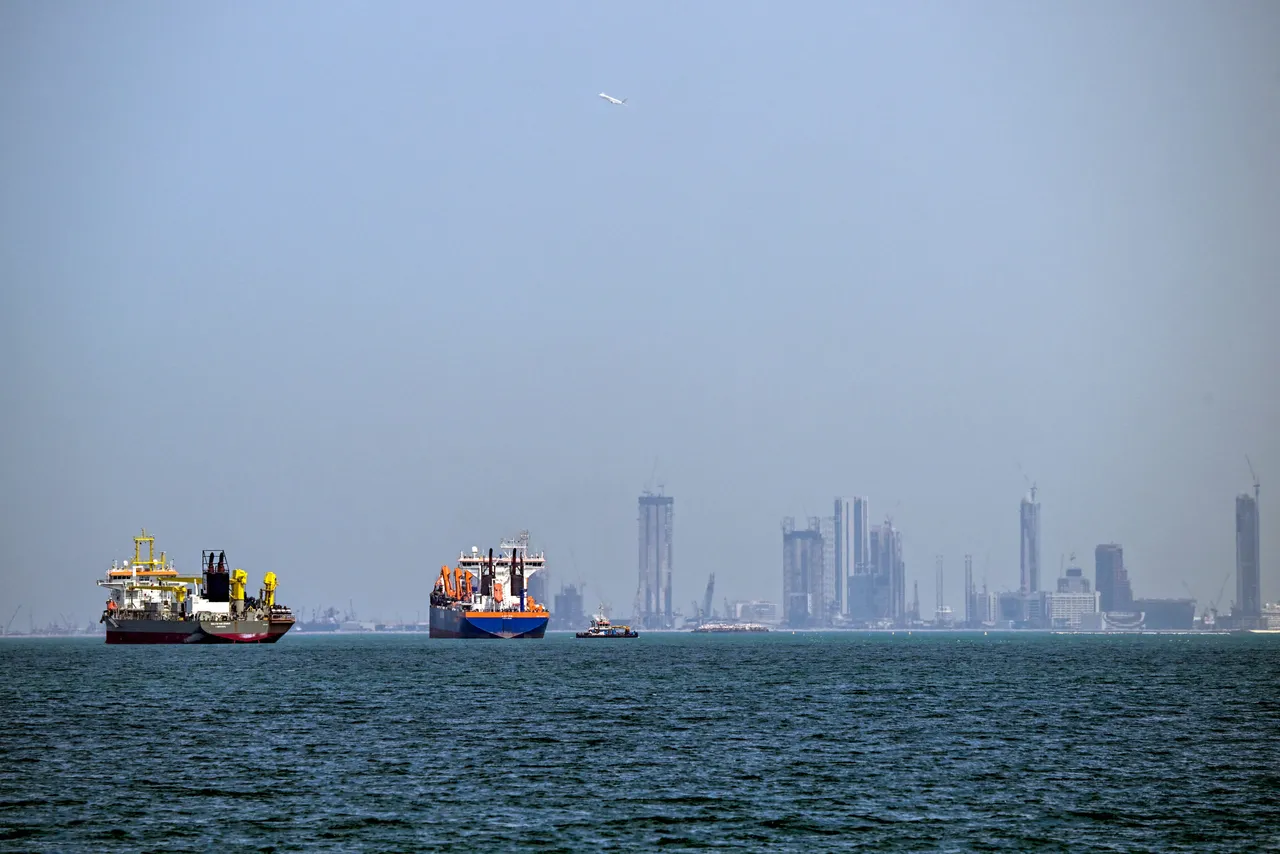
Commercial vessels are pictured offshore in Dubai on March 11, 2026. New attacks hit three commercial ships in the Gulf on March 11, with one of the vessels in flames as Iran pressed its campaign against its oil-exporting neighbours, threatening shipping in the Strait of Hormuz and plunging the global energy economy into crisis. (Photo by AFP via Getty Images)
“Buyers and sellers establish a price that oil (or other commodities) will trade at not today, but on some future date. While no one knows what price oil will be trading at nine months from now, players in the oil futures market predict market prices by agreeing to a future price,” the article says.
The article goes on: “For example, suppose that oil is selling at $30. There is a $35 price for a contract for one barrel dated to come due next January. A speculator who thinks that the price will shoot past that to $45 by January can purchase the $35 contract. If their prediction is correct, they can buy one barrel at $35 and immediately sell it for a $10 profit. But should oil end up falling short of $35 by its expiration date, their contract is worthless.”
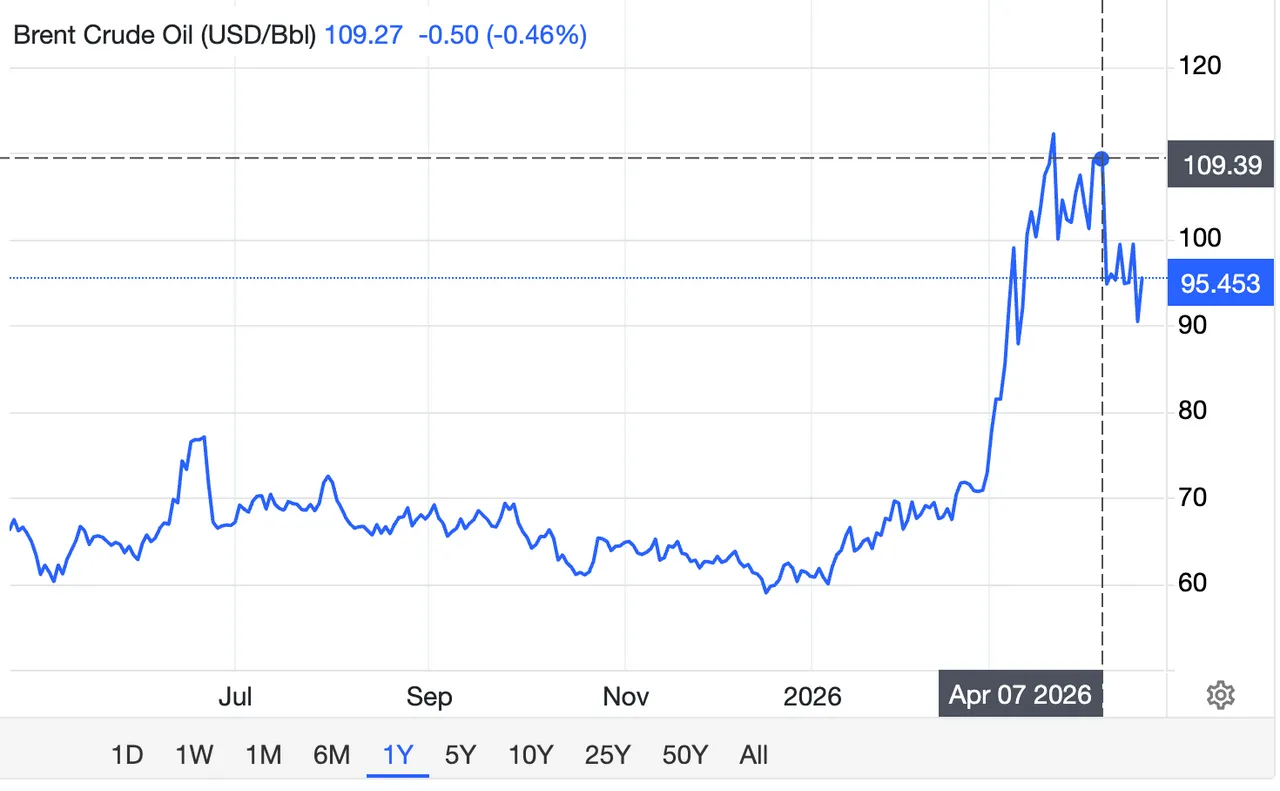
To illustrate the difference between paper and physical, Reuters reported April 7 that European and Asian refineries were paying as high as $150 per barrel of crude oil. Yet, on the same day, Brent Crude oil futures clocked in just over $109 per barrel:
The Wall Street Journal also reported on the stark differences between the paper price and the price of oil measured by Dated Brent on April 14.
“Dated Brent, which reflects oil for actual physical delivery 10 to 30 days out, has risen to $132.74 a barrel as of Monday,” WSJ reported at that time. “Brent futures for the nearest delivery settled at $99.36 a barrel. The gap between the two prices is historic, according to Gary Ross, chief executive officer of Black Gold Investors. Never has the market seen an oil-market disruption of this size, or such uncertainty over what might happen next, he added.”
Meanwhile, according to an April report from the International Energy Agency, the Iran War triggered the “most severe oil supply shock in history.” It also described the disconnect between the paper price of oil versus the physical price as “increasingly acute.”
“With oil-importing nations scrambling to source replacement barrels from an increasingly shrinking pool of supply, physical crude oil prices surged to record levels near $150/bbl, far above the prices in futures markets, with the physical-futures disconnect becoming increasingly acute. Even steeper gains have been seen for refined products, with middle distillate prices in Singapore reaching all-time highs above $290/bbl,” the report said.
A physical barrel of oil recently sold in Sri Lanka for $286 which is wildly above futures prices. This entire war can be seen as a war against Asian economies and it is being interpreted by many there that way: pic.twitter.com/OVFN1SJfED
— Murtaza Hussain (@MazMHussain) April 15, 2026
As we all try to make sense of this war and how it will affect the U.S. and global economies, it’s important to remember this crucial difference. The paper price of oil, as represented in the Brent Crude benchmark, is not the same as the physical barrels, which are being sold at much higher prices.





![CNN's Kaitlan Collins Fact-Checks Rep. Jasmine Crockett Over False Trump Ballroom Claim [WATCH]](https://www.right2024.com/wp-content/uploads/2025/10/1761954330_CNNs-Kaitlan-Collins-Fact-Checks-Rep-Jasmine-Crockett-Over-False-Trump-350x250.jpg)

![Two Dead, 14 Injured After Gunfire Erupts Following College Football Game in Alabama [WATCH]](https://www.right2024.com/wp-content/uploads/2025/10/Two-Dead-14-Injured-After-Gunfire-Erupts-Following-College-Football-350x250.jpg)
![James Carville Admits Democrats Had No Shutdown Endgame, Mishandled Strategy [WATCH]](https://www.right2024.com/wp-content/uploads/2025/11/1763070634_James-Carville-Admits-Democrats-Had-No-Shutdown-Endgame-Mishandled-Strategy-350x250.jpg)