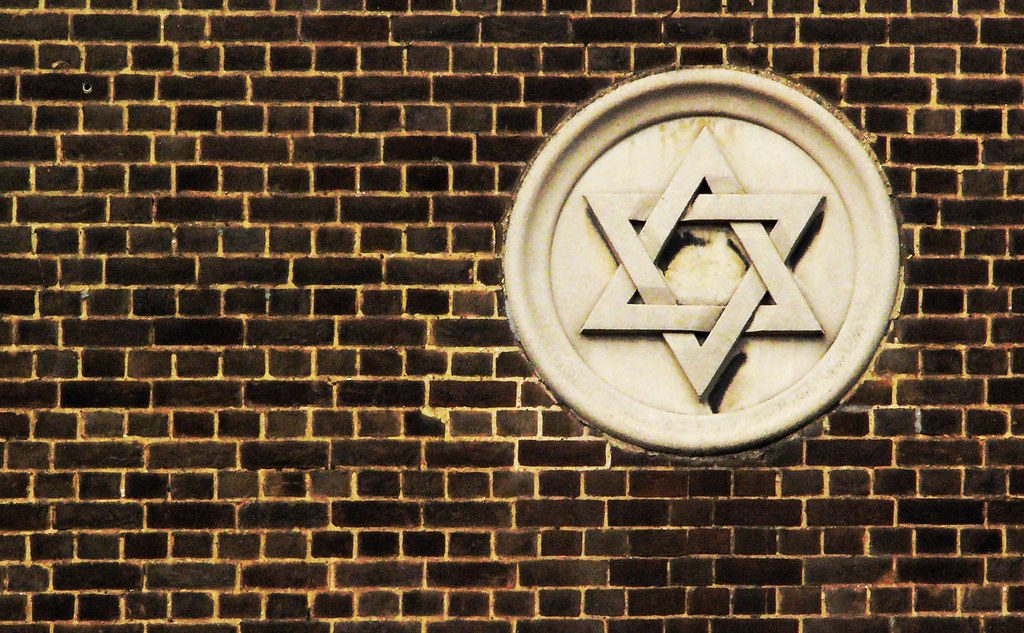
Zack Polanski has helped me realise something. No, this is not a defection to the Greens or anything of the sort.
The Green Party leader’s comments and actions on antisemitism have made me realise that, I fear, I may have been a Jew in denial for the past few years.
It is never easy to admit when one has been wrong, naive or simply too hopeful. But I do so in the hope that others – especially politicians who seem similarly stuck – might confront some uncomfortable truths of their own. My mistake was to assume that Britain remained an unquestionably safe place for Jews; British Jews, even now, the words go naturally together.
More embarrassingly still, I fear my optimism was really a form of denial, a head in the sand. A reluctance to face what many in my own community had been warning about for some time: the extremely sharp rise in antisemitic culture, the perverse effects of Iran’s reach across the globe, and the worrying creep of Islamism.
Of course I could see the signs around me. Security barriers outside Jewish buildings can only grow so high. But I reassured myself that these were responses to isolated incidents rather than symptoms of something broader and well-rooted that threatens the very existence of my community. Bad actors, not a bad environment.
Could it really be that in modern Britain there existed a deeper cultural hostility to Jews? That violent feelings towards events thousands of miles away in the Middle East could so easily be redirected towards Jews here? I didn’t want it to be true so I deemed it too bleak as to be implausible. Not in Britain, not really.
Yet the recent spate of attacks in north-west London has changed something in me. Five incidents in six weeks: the Hatzola ambulance arson on 23 March, the attempted arson at Finchley Reform Synagogue on 15 April, the arson attack on Jewish Futures on 17 April, the arson at Kenton United Synagogue on 19 April, and then the knife attack near Hagers synagogue on 29 April.
The wider figures are deeply troubling too. CST reported that for the first time it recorded more than 200 anti-Jewish hate incidents in every calendar month last year. And for the first time, outside of synagogue or an obviously Jewish event, I have felt unease when it comes to the people I love going about their daily lives as British Jews, especially now in pockets of North West London where family members of mine do just that.
I trusted the British state, and perhaps too readily accepted its familiar language about “division”, “unity” and “hate”. I do not think, as some protesters chanted, that Sir Keir Starmer is “a Jew harmer”, nor do I think Sarah Sackman, the Jewish Labour MP for Golders Green, should resign as some protesters suggested. But I can understand the despair that fuels such anger. It is the despair of feeling this weight of being under attack – one that I have been too eager to try not to feel – for some time, and not seeing proper action. The state aware, but just not taking it quite seriously enough.
That frustration is sharpened by memories of the weekly marches in central London where chants to “globalise the intifada” were heard with too little challenge. It is a direct incitement against Jews that’s natural consequence is attacks like these. How can well wishes and calls for support be enough against this?
What is needed is a proper security response to Islamist radicalisation, whether directed by hostile states, like the IRGC (a group calling itself the Islamic Movement of the People of the Right Hand has claimed responsibility for the attacks on synagogues and ambulances), or grown domestically. Police need to understand how Jewish communities are being targeted, while counter-terror and intelligence agencies should ask hard questions about why known extremists slip through the net. Tackling education, too, at schools and universities is crucial – and I would recommend reading both Robert Peston and Neil O’Brien on the issue.
If the attacks themselves forced this realisation on me, it was the reaction to them that reinforced it.
Hearing Zack Polanksi, who seems to trade off using his Jewish identity while allowing the advance of antisemitism of others in his own party, openly question amid this latest series of attacks whether British Jews are actually unsafe or just have a “perception of unsafety”, only displayed the issue more starkly to me.
It is not a question of perception, it is a matter of reality.
It is a reality that a national political party, polling strongly, has seen local candidates exposed for antisemitic remarks – references to “the Jewish lobby”, or claims that attacking a synagogue is “revenge” rather than antisemitism – and failed to act decisively.
It is a reality that when a man stabbed Jews in the street, and police officers moved to stop him, Polanski’s instinct was to share criticism of the police for being too rough.
Met Police chief Sir Mark Rowley was right to push back at him: “I am disappointed because it is this kind of inaccurate and misinformed commentary — with its associated casual disregard for the incredibly challenging and dangerous work police officers do to protect the public — that is contributing to the rising tensions we are seeing in society and undermines officer confidence to act.”
He added: “Free speech is an important facet of a democratic society. We both agree on that. But against a backdrop of global instability and heightened tensions, the right approach in this situation is to show compassion, lower tensions and not inflame them further by amplifying more ‘us and them’ rhetoric.”
Polanski didn’t make time to comment on the steady stream of antisemitism coming from the candidates in his party, but – alongside criticisms of the police – he did manage to make a sickly statement, hiding behind his existence as a Jewish leader of a political party, that poured cold water on actions the mainstream Jewish community are calling for in response to the attacks.
Green politicians, such as Jenny Jones in the House of Lords, will tweet something like “I abhor cruelty and vindictiveness and hatred. Never mind who from, or who directed against” after an attack against Jews. Why can they not also deal with the specific wrong? Why step around the evil of antisemitism with a general virtue?
Others go further, like deputy leader Mothin Ali, encouraging legal action by councillors suspended over antisemitic comments, including those who suggested the victims of the October 7th attacks were “not innocent” and another who said it took “real effort” not to be antisemitic.
British Jews are finding themselves on the receiving end of a steady stream of hostility from a political force that is no longer fringe. That questions their experiences because, to them, it is politically convenient. How can that be? I wish their failure was similar to mine in hoping that our great nation wasn’t experiencing such a rot just yet, but I think that would just be another element of denying the reality in front of us.
I almost want to say thank you to the Green Party, for being the thing that finally pulls my head out from the sand, peels my eyelids open, and forces me to confront what a state British Jews find ourselves in. It is such a deeply sad one that I have desperately not wanted to acknowledge it, and I feel ashamed about that – it doesn’t seem to be an option anymore, and I hope for politicians who could do something about this, they feel similarly.

![Two Dead, 14 Injured After Gunfire Erupts Following College Football Game in Alabama [WATCH]](https://www.right2024.com/wp-content/uploads/2025/10/Two-Dead-14-Injured-After-Gunfire-Erupts-Following-College-Football-350x250.jpg)

![James Carville Admits Democrats Had No Shutdown Endgame, Mishandled Strategy [WATCH]](https://www.right2024.com/wp-content/uploads/2025/11/1763070634_James-Carville-Admits-Democrats-Had-No-Shutdown-Endgame-Mishandled-Strategy-350x250.jpg)